


All you need to know about camping in Sweden
Road trips and camping are great ways to explore a country, and Sweden is no exeption. With your own car you can travel wherever you feel like and when you also bring your own accommodation, everything is set for the perfect adventure. To make it even better, camping in Sweden is also easier than many other countries. Why? Because of the Allemansrätten. Similar to neighbouring Norway, you have the right to roam in Sweden. Meaning you can legally wild camp as long as you follow some rules. A van life dream? Yes!
Not interested in wild camping? Fret not. Sweden got plently of campsites and designated parking sites for motorhomes and caravans. More on that later.
Why do I know so much about camping in Sweden? Because that was our 2023 summer adventure. And with the travel party consisting of one person interested in basic comfort and notoriously follows rules, one who’s dream is to go off grid, and a dog, it’s safe to say I did my fair share of research. To make it easier for you, I have answered some of the most frequently asked questions about camping and van life in Sweden in this article. Including many of my own experiences.

What is Allemannsrätten and how does it affect camping in Sweden?
Allemansrätten, or the Right of Public Access, is a fantastic benefit for people. It gives everyone permit to freely enjoy nature regardless of ownership. You may walk, camp, cycle and forage for wild berries and mushrooms in the wild. Allemansrätten is rooted in the Swedish culture of balancing freedom with responsibility and respect for both people and the environment.
Hence, the freedom to roam comes with responsibility.
But what exactly does this mean for you as a camper?
It means that you are allowed to camp all over Sweden, but must follow some rules. In short: Make sure to stay at least 150-200 metres away from houses and cabins and don’t block farm roads. Act respectfully towards animals and wildlife as well as people, including fellow campers. Leave no trace but footprints. And by that, I literally mean footprints. As tempting it may be in some locations, refrain from driving on grass – doing so is forbidden and may give you a hefty fine.
Allemansrätten is here to ensure that nature can be enjoyed by all while preserving it for future generations
Make sure to bring with you all garbage and waste, even toilet paper. If you need to do a number two, make sure to dig a 15-20 cm hole in the ground far away from trails and at least 100-200 metres away from any water sources. Last but not least, act responsibly when it comes to bonfires. You don’t want to be that person who caused a wildfire, do you?
By following these rather simple rules, you are all set for a fantastic camping trip to Sweden!
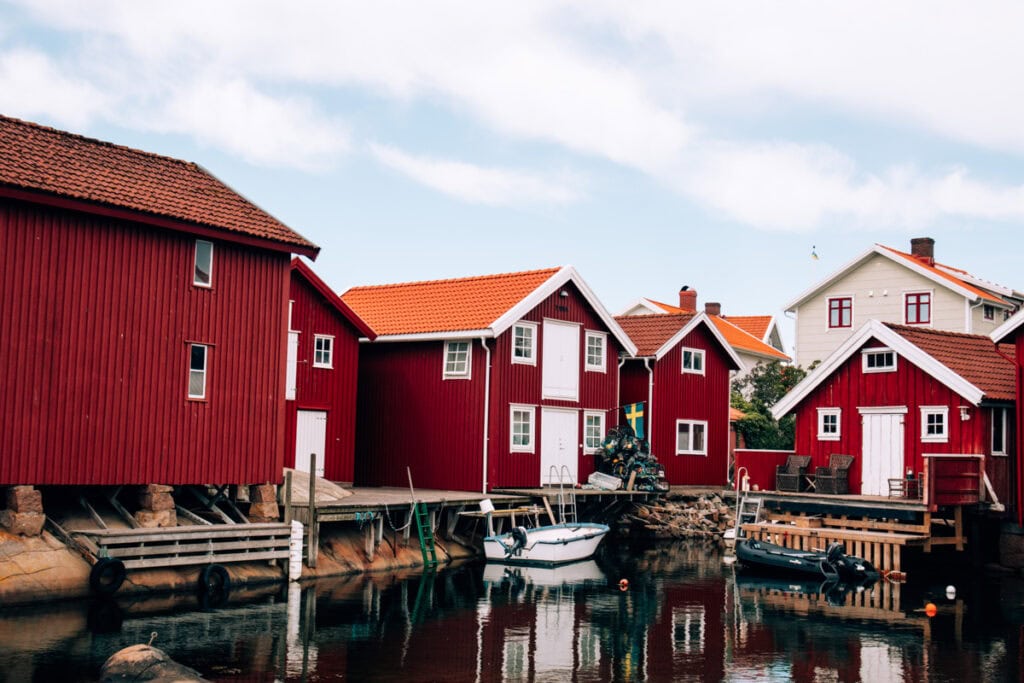
What is the best time to go camping in Sweden?
We went in July, and while the middle of summer surely was a nice time to be in Sweden, it was also super busy with other campers. Compared to our previous camping trips in Norway, we didn’t get one wild camp spot to ourselves. And we also came across camp sites that were fully booked.
So, from my experience, I recommend May-mid June and mid-August-September. In those periods you still have decent weather and temperatures. Maybe even better? For most of our trip in July, we had maximum 20 degrees Celsius + wind.
Is it possible to camp in Sweden during winter?
Absolutely, just be prepared for cold temperatures, more rain and possibly ice and snow. Some campsites may be closed, so do your research before setting out.

Is it safe to wild camp in Sweden?
The short answer is yes, but as always when travelling you should be vigilant and use common sense. There are areas with wolf and bear, but they usually stay away from people. As long as other people camp there, you should be fine.
I always recommend to do some research about the places you visit, and if in doubt ask someone local or go for a camp site instead. The same goes for urban places – trust your gut.
Campsites, ställplats & wild camping: what are the differences?
Campsites…
…are arranged places where you pay to camp, including service facilities such as shared bathrooms and kitchen. There are usually both and pitches for tents and mobile homes available. It is common to be able to choose whether you want electricity or not, in which case you pay extra for this.
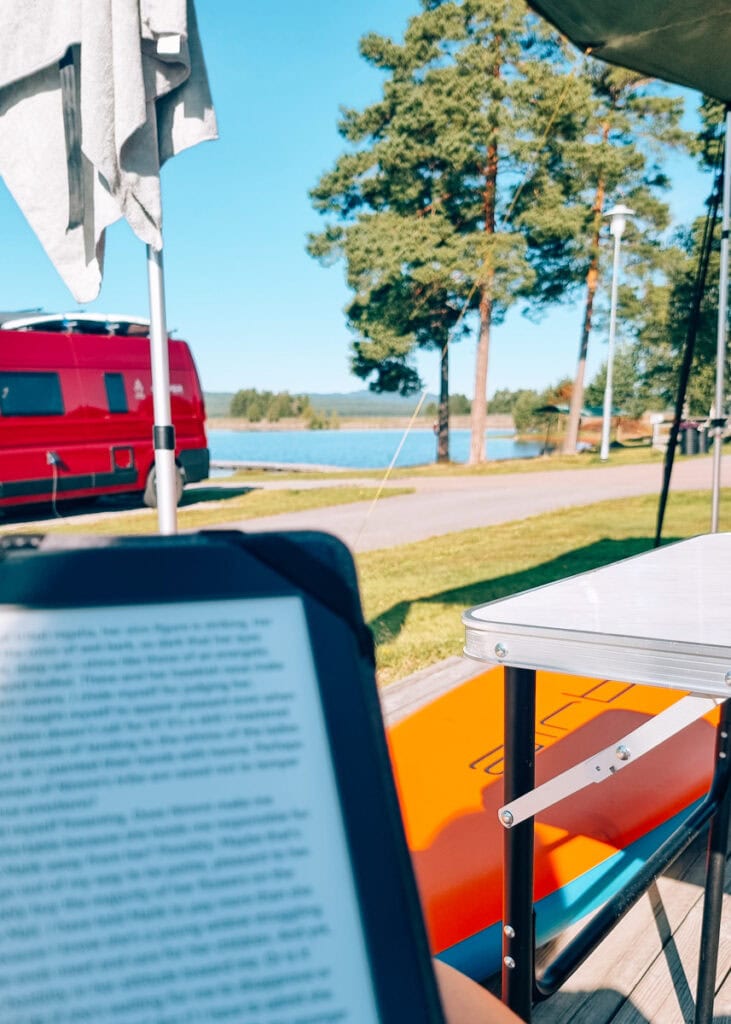

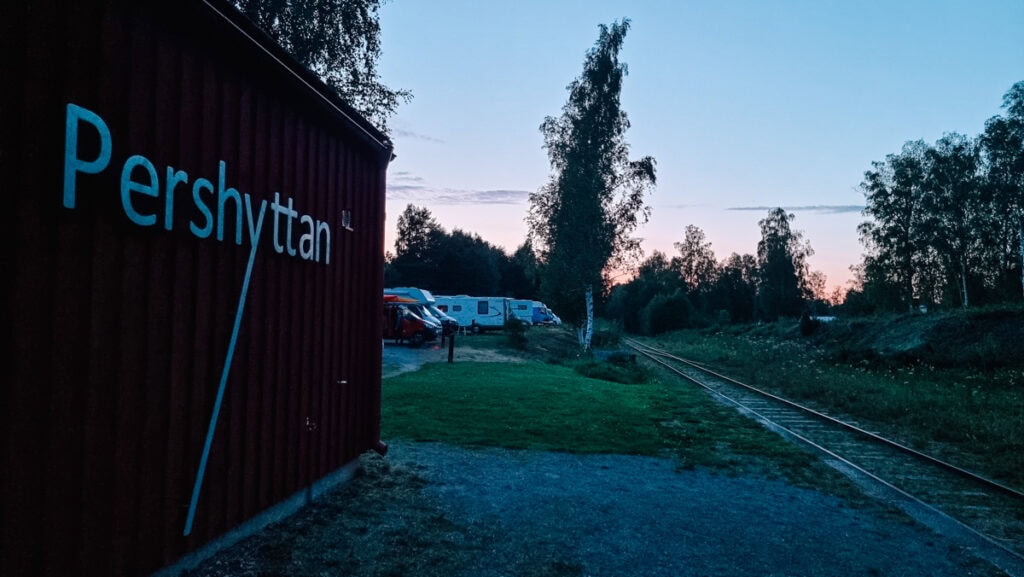
Ställplats…
…are simpler, but designated, parking spots for motorhomes and vans where you can spend the night. We came across these several places in Sweden and found them to be great – especially near town centres! As with campsites, you often have to pay a fee to park here but usually less. Unlike the former, however, you cannot trust they have toilets or other facilities. We usually found there were public toilets nearby.
Wild camping…
…is when you find your own spot to camp for the night. This can be everything from a parking area by a lake to a pocket by a forest dirt road to rest area along the highway. They can be super idyllic to hang out or just a place to sleep before continuing the journey. Because of Allemansrätten this is allowed in Sweden, but please read the rules you should follow further up in this article. It is a fantastic freedom to be allowed to camp almost wherever you like, but it also comes with responsibility.
How to find a campsite or ställplats in Sweden?
You find campsites all over Sweden and for all budgets – from family friendly ones with a lot of activities to very basic ones. The easiest way to find one is simply to type in “camping” or “campsite” in the area you are searching in Google Maps. This should give you options for both campsites and ställplats’.
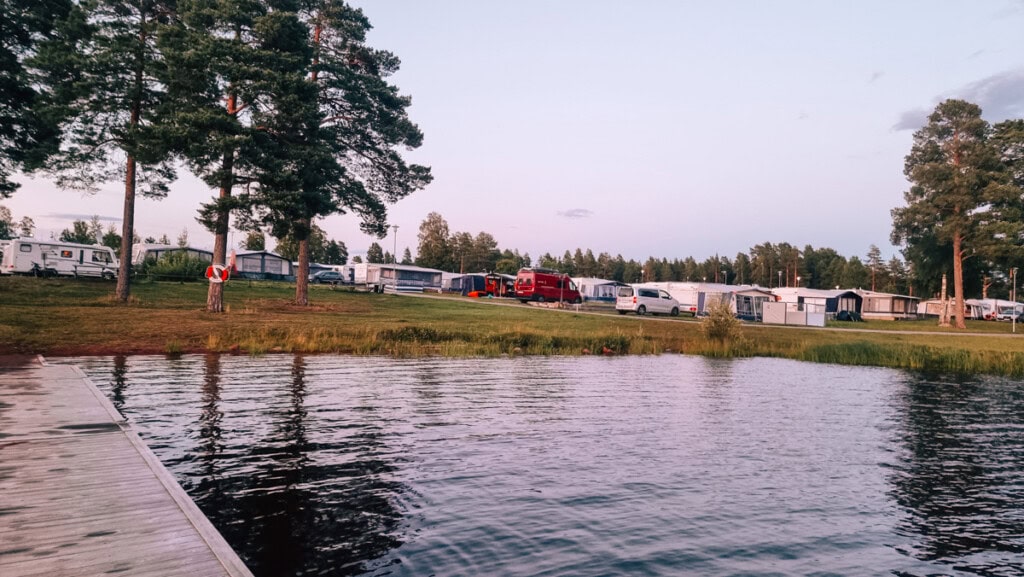
As soon as you got some alternatives, I recommend doing some more research on each one to see if they fit your style and comfort level. Depending on how popular the campsites are, you should consider booking in advance.
First come, first served, was the rule for the ställplats’ we came across – so don’t leave it too late to camp. Especially in popular destinations.
Also take a look at the section below, you may also find campsites and ställplats’ on the app.
How do you find wild camping spots in Sweden?
Well, the short answer here is just to drive slowly and look out for a suitable spot. However, I definitely found this harder in Sweden than in Norway, and even in Norway it’s getting harder due to a surge in campers and vans the last few years.
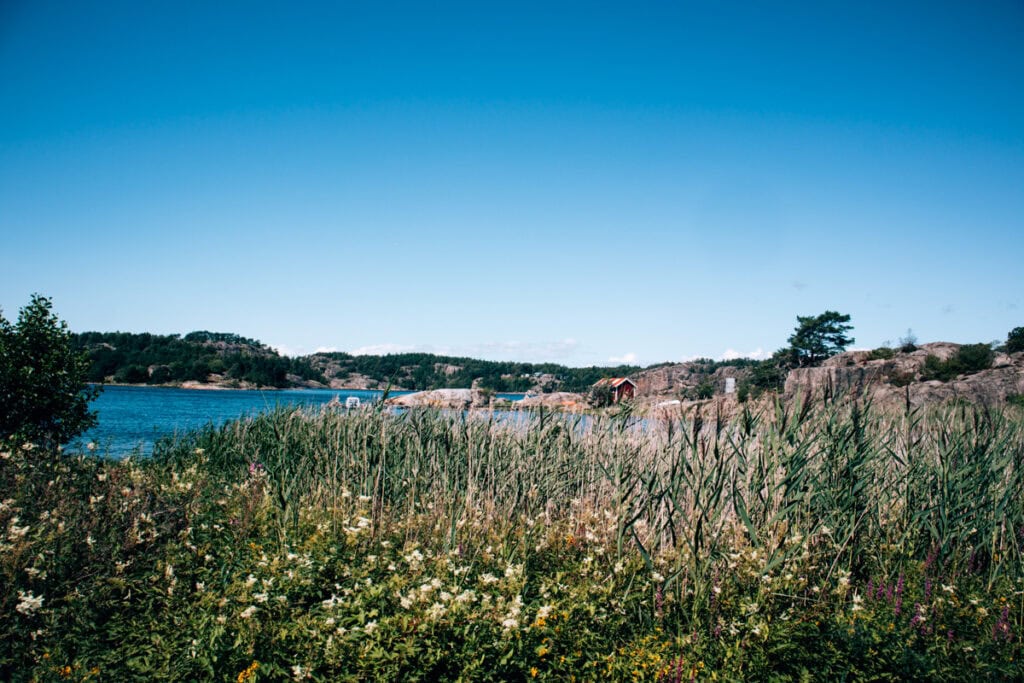
If you are dreaming of parking next to a cute town with white wooden houses and views to the sea on Sweden’s west-coast, I must disappoint you… We couldn’t find one place without a “no camping”-sign next to the coastline. Finding a campsite or a ställplats are the way to go here. On the contrary, we didn’t have to drive far inland to find OK places.
Luckily, there are some tools available. As always on a road trip, Google Maps is your friend. I often turn on satellite view to see if there are gravel roads or parking spots that can work.
The camp-finder app
Then you have the app, which we used more or less every day on our Sweden road trip. And if you have been camping elsewhere over the last years, you know what I mean with the app. It’s an app called Park4Night and is basically a map app where people can list and write reviews of camp spots.
Why do I call the “the app”? Because that’s what everyone we met called it. And no, we definitely weren’t the only ones using it…
You should still use common sense when choosing a place. Remember that the ones listing the places are just random campers, and not all take the responsibilities of the Right of Public Access into account. Places can also be listed years ago, which means they may have changed or closed for camping. Read the reviews and make your own decision.
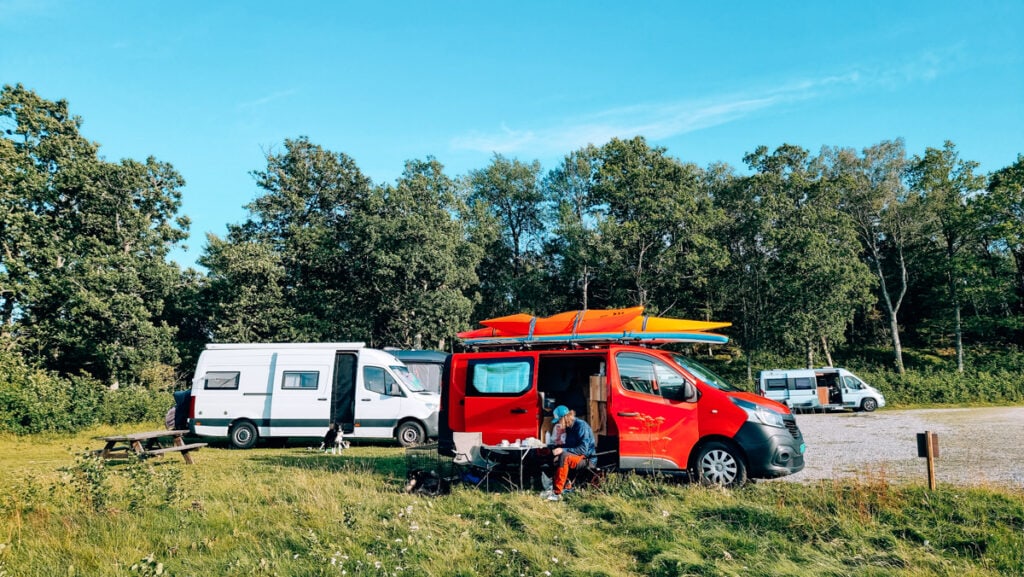
One thing that made me feel a bit uneasy at times, where how crowded some of these places got. There is a reason behind why campsites by law need to have at least 3-4 metres between each parked vehicle. And it’s not because they want to sell fewer places or give their visitors more privacy… We usually tried to find a spot on the outskirts of the places we parked and were quick to pull out our awning and chairs and table. This at least gave us some privacy.
Are you going to Norway too? See my 5-day itinerary for the Lofoten Islands!
How do you handle waste and personal hygiene when wild camping?
Let’s take the easiest first: waste. Take all waste with you, including food waste, and throw it away in a designated waste bin. But! If you are wild camping on for example a car park at a beach, do not fill up the waste bins there. Find one with enough space, if it’s full it’s full. Recycling can be difficult while on the road, but try your best. We got food waste bags at the campsites which I found brilliant! Plastic bottles are super easy to recycle at every supermarket. Just as in Norway, you pay a small deposit for each bottle you buy and get it back when you use the recycling machines.
As for personal hygiene, we usually stay at a campsite where we use the showers every 2-3 nights. In the meantime, we try to go for a dip in a lake, stream or the sea whenever camp near one. If you have a vehicle with an installed shower, well then you know what to do.
What about toilet routines?
This is a topic that really engage me. If you don’t have a toilet in your camper, make sure to leave no trace when going in the wild. Leaving toilet paper is a big no, and don’t even get me started on wet napkins (they are made of plastic, you know). Why? Just take a peek in the bushes near a rest area along the road. And with more campers on the road, the bigger this issue becomes. There are so many beautiful camp spots ruined by people doing their business just metres away from where they park. This also applies for hikers.
So, what should you do? Go as far away from the camp site, trail or parking as possible, and at least 100-250 metres away from streams, lakes, rivers etc. Bring a small spade to dig a 15-20 cm deep hole and close it when finished. Toilet paper should either be burned (be cautious of starting fires) or thrown away in a bin as with other types of waste.
Tip: bring a roll of dog waste bags, they work just as well for toilet paper, tampons and pads as for dog poop.

Where to refill water and do laundry while camping in Sweden?
The easiest and safest is to refill water at campsites. As mentioned, we stay at a campsite to shower and charge batteries every few nights and usually refill water at the same time. Some grey and brown water disposal sites also offer water, but keep hygiene in mind when refilling. Since we’re using large cans for water, we’ve also asked to refill at petrol stations too.
Laundry is also best done at campsites. Most of them got laundry machines to use for a few. It’s off course also possible to do it in the wild using a bucket and hot water, just make sure the detergent is safe to throw out in nature.
What should you pack for a camping trip to Sweden?
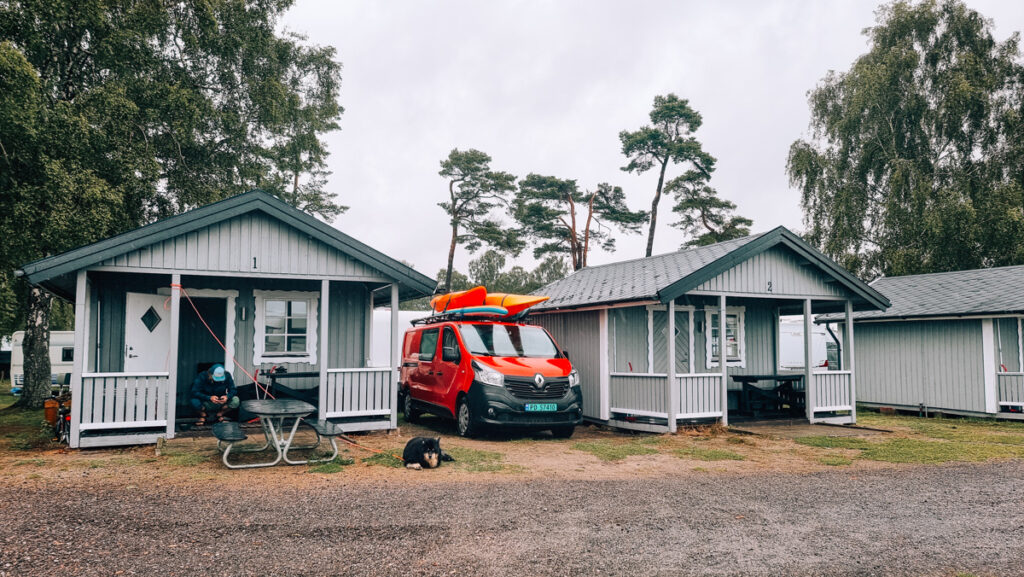
I’m not going to give you a complete list of everything you need to bring to go camping here. That would be too long for this article and most of it are stuff you bring camping wherever you go. Instead, I give you some specific things you should bring to Sweden (and Scandinavia in general). In summary: be prepared for all kinds of weather…
To give you an idea of what you need to think of, here are two pictures taken 1 day apart:


Think layers of clothing:
- Rain and wind proof clothing (light Gore Tex is gold)
- Water proof shoes (wellies or simply Gore Tex hiking shoes)
- Light down jacket (I lived in mine most evenings)
- Wool underwear (I love my Kari Traa half-neck zipper long sleeve)
- Merino wool t-shirts (keep warm when it’s cold and cool when it’s warm)
- Wool jumper or a fleece jacket
- Clothes for warm weather (you might be lucky and have close to 30C the whole time)
- Bathing suit / shorts
- Bamboo and wool socks (bring at least one warm pair for chilly Scandinavian evenings)
As you can see, I’m a big fan of wool. Why? Because it’s the simplest fabric to travel with. The lighter ones can be used in both warm and cold weather, and unlike technical clothes – they don’t need washing as often. Even after sweating, you can simply hang them up for airing and they are good to go the next day.
Are you going camping in winter? Bunker up for all things warm!
For food etc., you get everything you need and more at Ica and Coop supermarkets and they are everywhere.
If you are tenting or got a van without a toilet, remember:
- A small spade (a small garden spade works wonders)
- Dog litter bags (for used toiletpaper, napkins and pads & tampons)
Interested in camping in Norway? Visit Western Norway’s stunning beaches!
Can you bring your dog on your Sweden camping trip?
Yes! You will meet so many cute and fluffy campers all around Sweden. It’s also a very dog friendly country. We didn’t eat out much, but when we did, our dog was always welcome too. He got water and treats even before we had finished ordering.
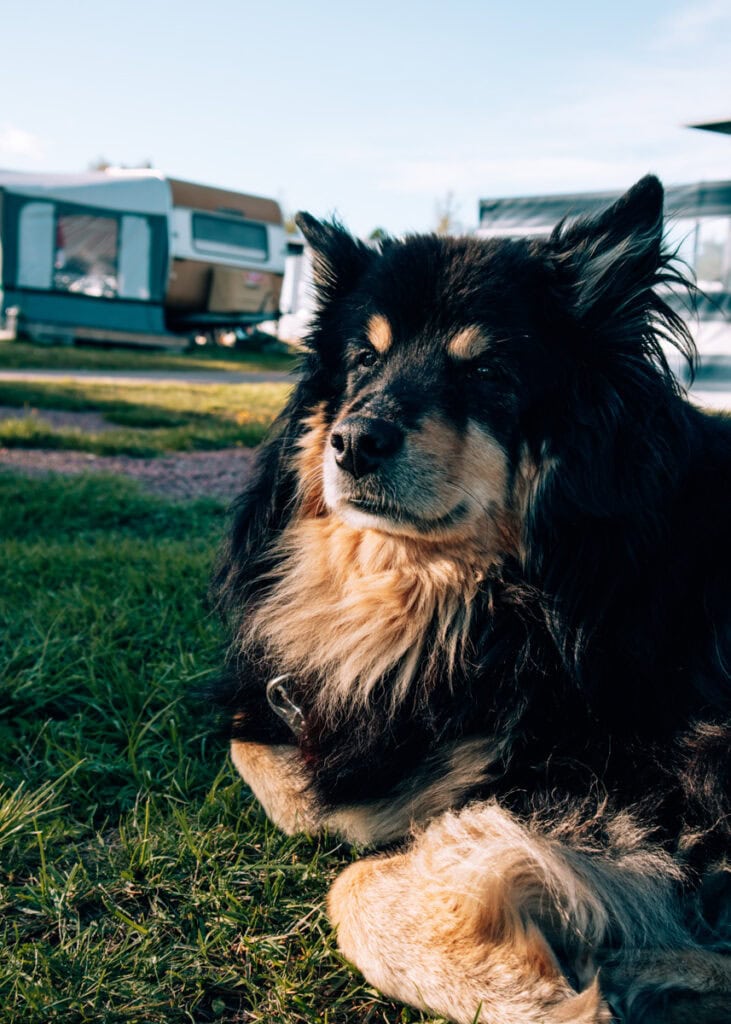
Your dog needs to have an official passport, a microchip and rabies vaccine. Also make sure to register the arrival of your pet prior to arriving in Sweden. Do that easily here.
Coming from Norway we neither had to register our dog nor give him rabies shots. But to be allowed back into Norway we had to give him a vaccine for the fox tapeworm within 5-1 days before crossing the border (wait at least 24h after the pills are given). So check what regulations are for your own country.
What are the costs of camping in Sweden?
The costs depend completely on what you make of it. The more you wild camp, the more budget friendly. In 2024, prices for a ställplats range from 100 to 400 SEK a night per car, the most expensive are inclusive electricity and located close to city centres like on the marina in Varberg. Campsites are normally between 300 – 400 SEK incl. electricity. Showers are usually free to use, but you may encounter places where you have to pay per minute.
In addition, you must calculate fuel costs, food and activities.
What are some must-see destinations for campers in Sweden?
What destinations you absolutely have to visit in Sweden do off course depend on your interests. Also, we didn’t go around the whole country – the east coast, Stockholm and the north will have to wait for another time. But here are 4 places I highly recommend to visit:
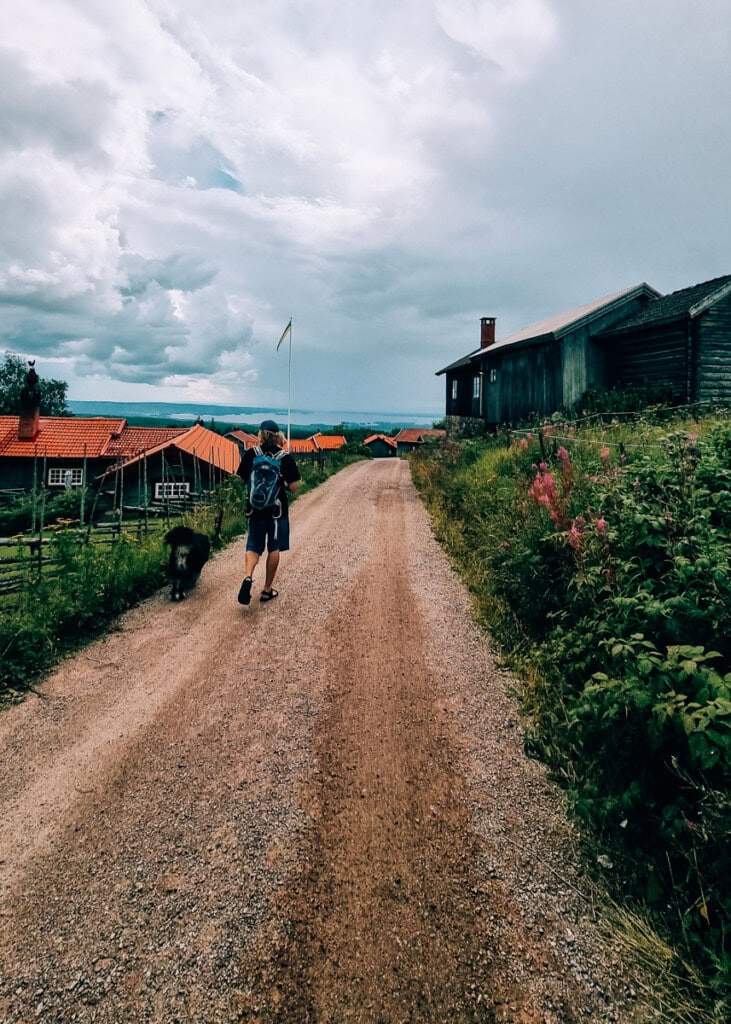

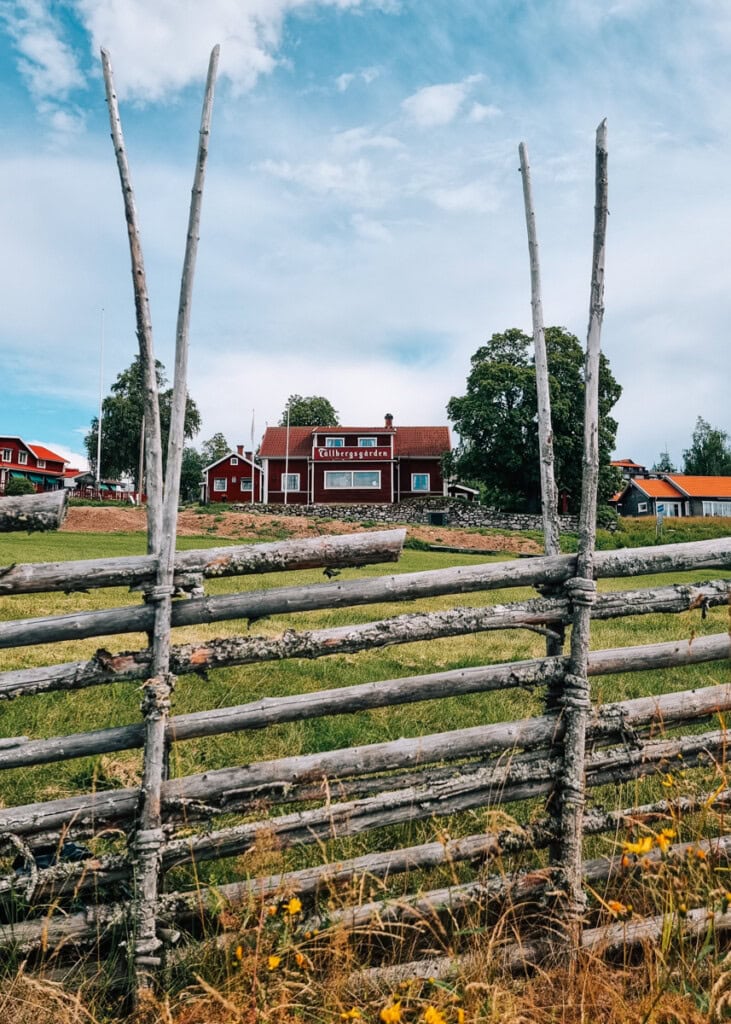

The Dalarna region
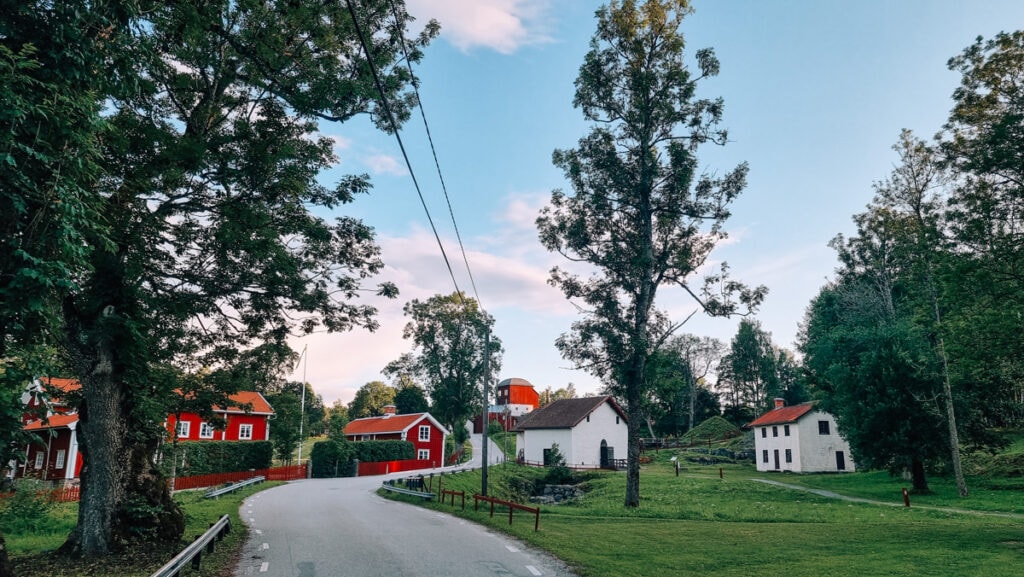
Think typical Swedish red houses, beautiful scenery, a huge lake, cosy towns, artist’s homes, and the prettiest sunsets you can imagine. Dalarna should be on everyone’s Sweden bucket list! This is the area where we stayed the longest, and looking back I just get a feeling of serenity. For campsite, I can recommend Sollerö Camping on Sollerön island a short drive from Mora. It’s large, but with great facilities and the location by Lake Siljan is just perfect.
For a ställplats, there is an idyllic one in Nusnäs, just across the lake from Sollarön. I witnessed one of the most spectacular sunsets of my life from here. It’s basic, but you can throw away your waste here and use the toilet and shower at the local sport club (mind, it’s old and not the freshest).
I also urge you to drive up to the old mountain village of Fryksås. Such a charming place! There is a café serving hot and cold dishes.
Dalarna is perfect for an active holiday, with lots of hiking and biking trails around and lake Siljan is optimal for both swimming, kayaking in SUP. But also culture lovers will have plenty to do in Dalarna, visit the factories where the famous Dala horse is made and drop by the various artist homes around.
Also take the opportunity to learn more about Sweden’s long and important history of mining while you are here. Drop by the copper mine town of Falun, a World Heritage site which is both interesting and fun for all ages.


Varberg
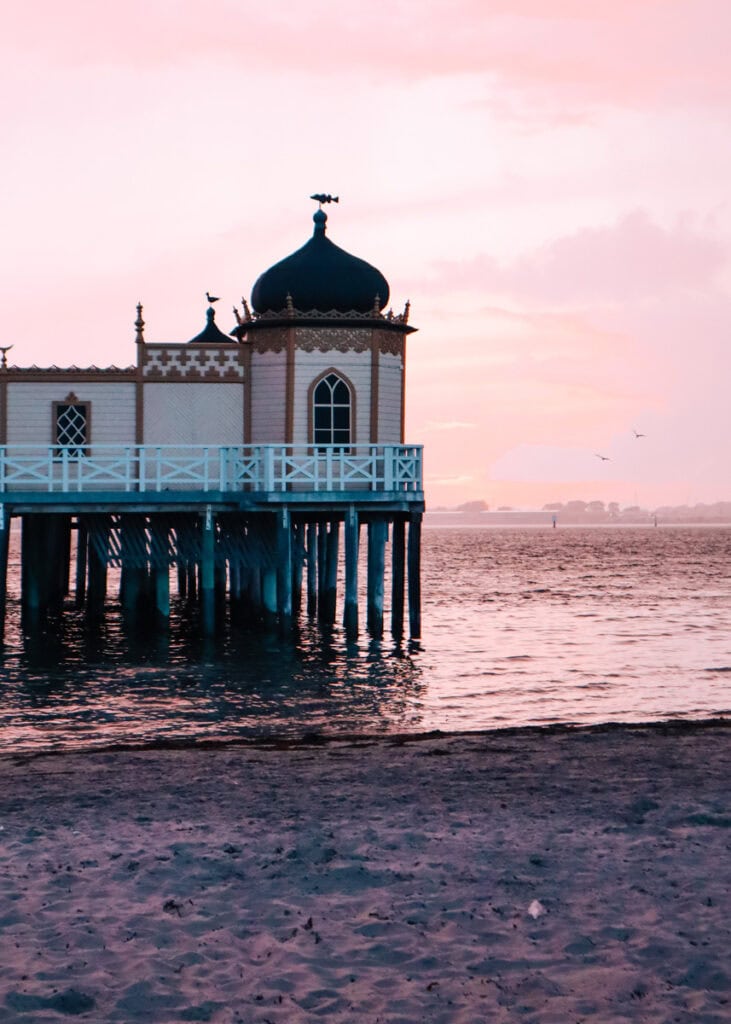
I knew Varberg had at least one really interesting building, but I didn’t expect to fall head over heels for this little coastal town just minutes after parking. This city got it all: long sandy beaches, a medieval fortress, good places to dine, shopping, a marina and the beautiful Varberg Kallbadhus.
Looking at the pictures above, I guess you’ve already guessed which building I meant was really interesting. Directly translated, kallbadhus means cold bathing house. It’s a place where you can come to enjoy the combination of steaming hot saunas inside with cold plunges in the sea outside. Varberg Kallbadhus was built in 1906 and is still in daily use.
For camping, there are several ställplats’ to park overnight for a fee. The one closest to the marina even offer electricity. We weren’t early enough to catch one of those places, but there were plenty of spots available just a couple of minutes’ walk away. For those wishing to stay closer to the beach, there are several campsites in the area.
A short drive from Varberg, you also find the UNESCO-listed Grimeton Radio Station. They also offer overnight parking for campers, and is well worth a visit.


Kullahalvön peninsula
This peninsula in the far south-west of Sweden is an area we would have loved spending more time in. Unfortunately, the weather wasn’t on our side and we decided to leave after 24 hours. Still, we drove around the whole peninsula and had time to make a few stops in some nice places. Here you find cosy villages, beaches forest trails where you can walk for days, and the coastline must be a haven for kayakers (in better weather than we got).
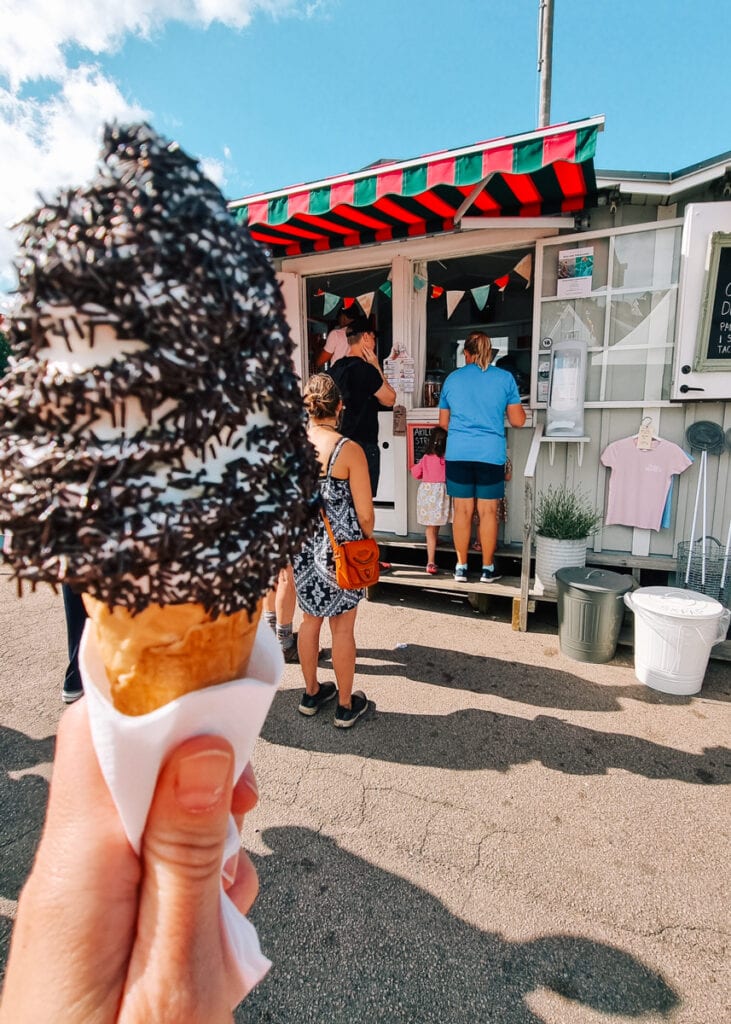
Fun fact: We discovered Kullahalvön by chance. When planning our route, we discovered there was a town called Arild there. Since my partner’s name is Arild, off course we had to drive by. And it certainly didn’t disappoint. Not only did Arild get to visit Arild, we also visited on the festive Arild’s Day. A festive day with lots of small stands selling ice cream, snacks, joint dinner for the local community and dance.
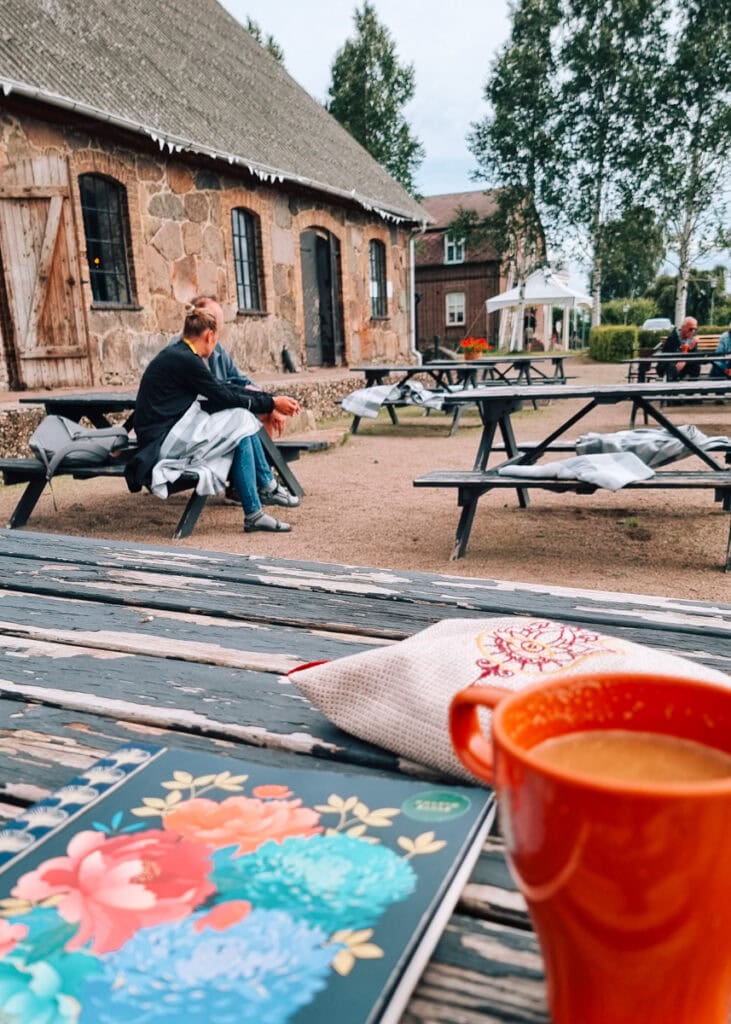
We had a hard time finding any good wild camp spots on the peninsula, but ended up at the most idyllic farm made into a campsite. Bläsinge Farm got many spots for campers, caravans and tents, with or without electricity. The facilities are quite basic, but clean. You can purchase breakfast and coffee in the old barn and there’s also a small shop with local produce.
On the western tip of the peninsula, you find a Kullaberg nature reserve with kilometres of signposted trails. Because of heavy rain we didn’t go hiking much. Instead, we drove as far into the reserve as possible and just walked over to the lighthouse. There, you’ll also find a small information centre and café.
Conclusion
I hope you find planning your camping trip to Sweden a bit easier now. And that you don’t feel intimidated by the chances of chilly weather or the responsibilities that comes with the Public Right of Access. Camping truly is a wonderful way of exploring Sweden and you get to see the country differently than if you travel in any other way.
Do you have more questions regarding camping in Sweden? Feel free to send me an e-mail or send me a message on Instagram – find my e-mail here.
