

Discover the Magic of Ait Ben Haddou on a two-day tour from Marrakech
Heads up: This article may contain affiliate links.
How fantastic Marrakech might be it doesn’t show you all of Morocco. The best option is, off course, to do a tour of the whole country. But sometimes you just don’t have two weeks available. An excellent alternative that lets you see more of the varied landscapes and learn about its fascinating history, is to book a two-days tour to Ait Ben Haddou from Marrakech.
Affiliate Disclosure:
This article may contain affiliate links. If you make a purchase through one of these links, I may earn a small commission at no extra cost to you. This helps support Heritage Wanderlust and allows me to keep creating free travel guides and helpful travel content.
How to plan a 2-day tour to Ait Ben Haddou from Marrakech?
But how do you do it? That was the question I asked myself when I planned the itinerary for my one-week Morocco trip. Google gave me a lot of options for either day trips to Ouarzazate and Ait Ben Haddou, or 3-day tours to Merzouga and the dessert via Ait Ben Haddou. Neither of them fit my wishes or itinerary for my 1-week visit to Morocco.
Luckily, most local operators offer tailor-made tours. After some thorough research and offers from three different companies, I landed on booking a private tour with Asara Morocco Tours. Since then, they have actually made an excursion with the same itinerary, so now you can book it here: Marrakech to Ait Ben Haddou (2 days).
It is possible to travel by public bus between Marrakech and Ouarzazate, but this won’t allow you to stop along the route nor take you through the Ounila Valley. You will also need a taxi between Ouarzazate and Ait Ben Haddou.

Renting a car and drive on your own is another option. As soon as you’re out of the bustle in Marrakech, it seemed like an ok road to drive. The road was mostly good, but quite winding in some parts and a bit bumpy and narrower in the Ounila Valley. However, no worse than what I drive on a daily basis in Norway. Mind, if going between December and February, you may expect snow in the mountains.
My two-day itinerary from Marrakech to Ait Ben Haddou:
Day 1:
- Pick-up in Marrakech after breakfast
- Drive across the High Atlas
- Detour through the Ounila Valley
- Visit to Kasbah Telouet
- Visit to Ksar Ait Ben Haddou
- Dinner and accommodation in Ait Ben Haddou
Day 2:
- Visit to the Atlas Studios in Ouarzazate
- Visit Kasbah Taourirt
- Drive back across the Atlas Mountains
- Visit to a Women’s Argan Oil Cooperative
- Return to Marrakech in time for dinner
In 2023, the price for this 2-day tour to Ait Ben Haddou from Marrakech for 2 people was €620. This is, in my opinion, good value for money, considering we had a private car with a driver/guide, two rooms, and dinner included.
Entrance fees to the kasbahs were also included, but we paid the local guides extra. Using guides are optional, but a must if you want to learn something as there are no other interpretation. And also, as our driver Abdoul said, using the local guides are the responsible thing to do as it is one of very few jobs available.

Tizi n’Tichka: Morocco’s highest mountain pass
Abdoul, our driver, met us at 09:30 in the morning and soon after we were enroute the mountains we had seen in the distance. Leaving Marrakech behind, the road started going uphill. Our first target of the day, Tizi n’Tichka, was a 2-hour drive away.
Tizi n’Tichka is the mountain pass that connects Marrakech to Ouarzazate, near Ait Ben Haddou, and the dessert. The January wind was freezing when we were there, but I can easily understand why this is said to be one of the most scenic routes in Morocco. Rising up to an elevation of 2,260 meters, it’s the highest pass in Morocco and you have stunning views of the road perching through the rugged Atlas Mountains and the surrounding valleys.
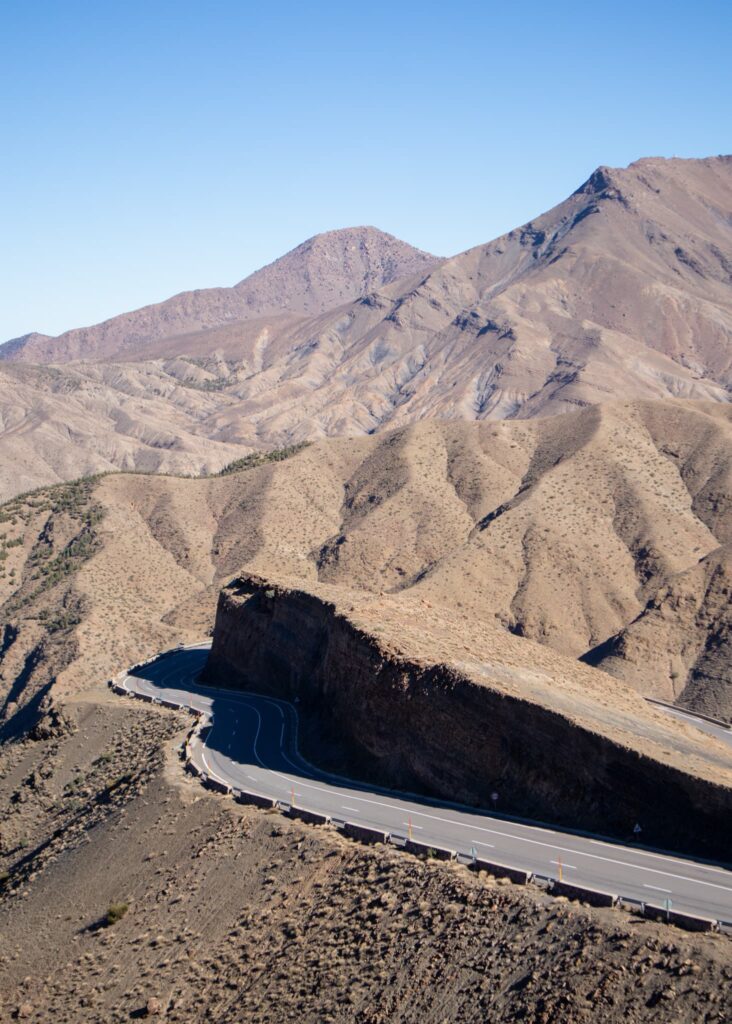
Normally at this time of year, there should be snow covering the mountains. In 2023, we could only spot a few small white patches.
A hidden gem: The beautiful Ounila Valley
A few kilometres after the mountain pass, we turned left off the main road. Driving through the Ounila Valley is a detour, but I highly recommend it on a 2-day tour to Ait Ben Haddou.
The valley follows the course of the Ounila River and is characterized by its red cliffs, Amazigh (Berber) villages nestled in the mountain side, palm groves along the river and the many, ancient Kasbahs perched on hilltops. The route was once part of the historically important caravan trail between Marrakech and the Sahara Desert.

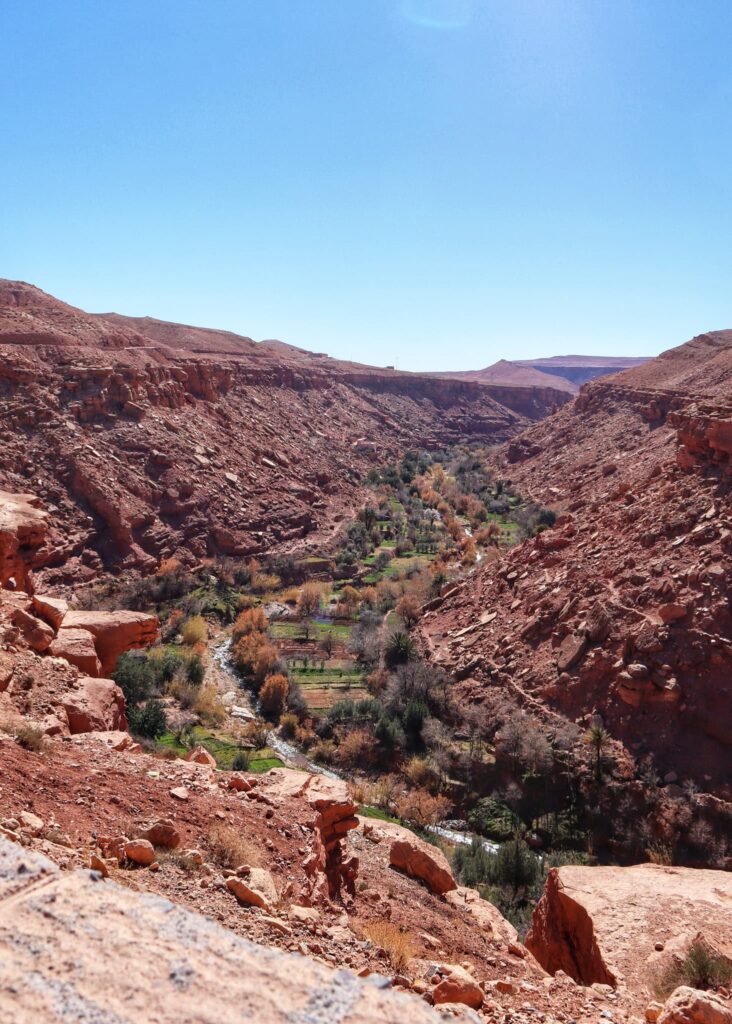
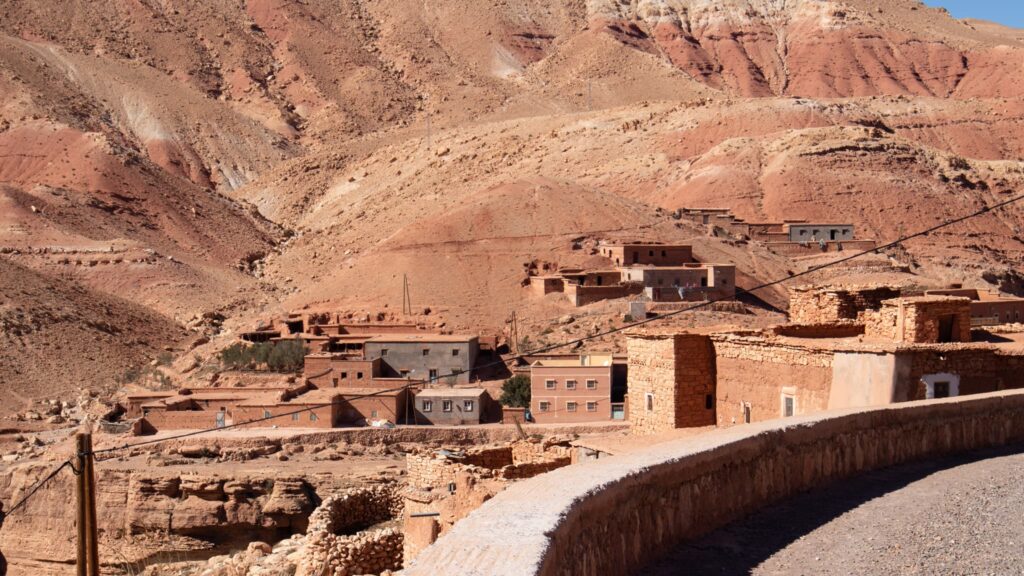
Nowadays, it’s a bumpy road mainly taken by the locals. By the amounts of donkeys we saw, they probably outnumber the cars. In addition to experiencing the pretty scenery, the main reason to take this detour is to explore the historic Kasbah Telouet.
Kasbah Telouet: Remnants of historic glory
After bumping and bouncing down a narrow side road for a few hundred metres, we saw what mostly looked like a massive ruin. Was it even possible to go inside? And if so, was it safe? There was no time to hesitate. Next to the entrance our local guide Mohammed waited to take us through the gates.
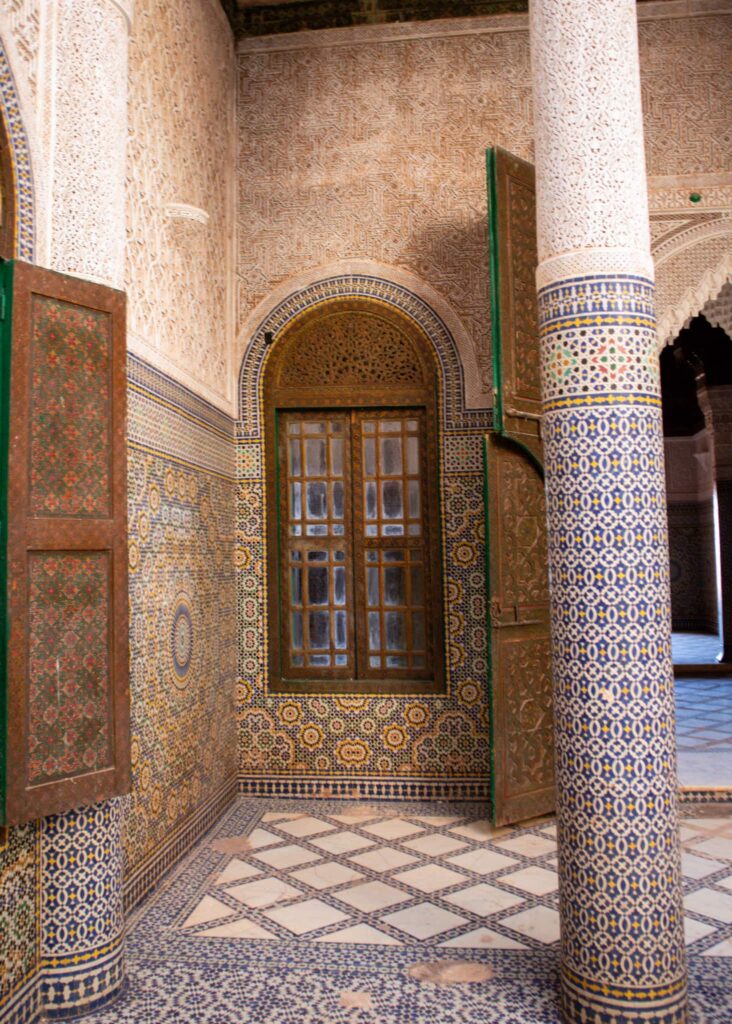
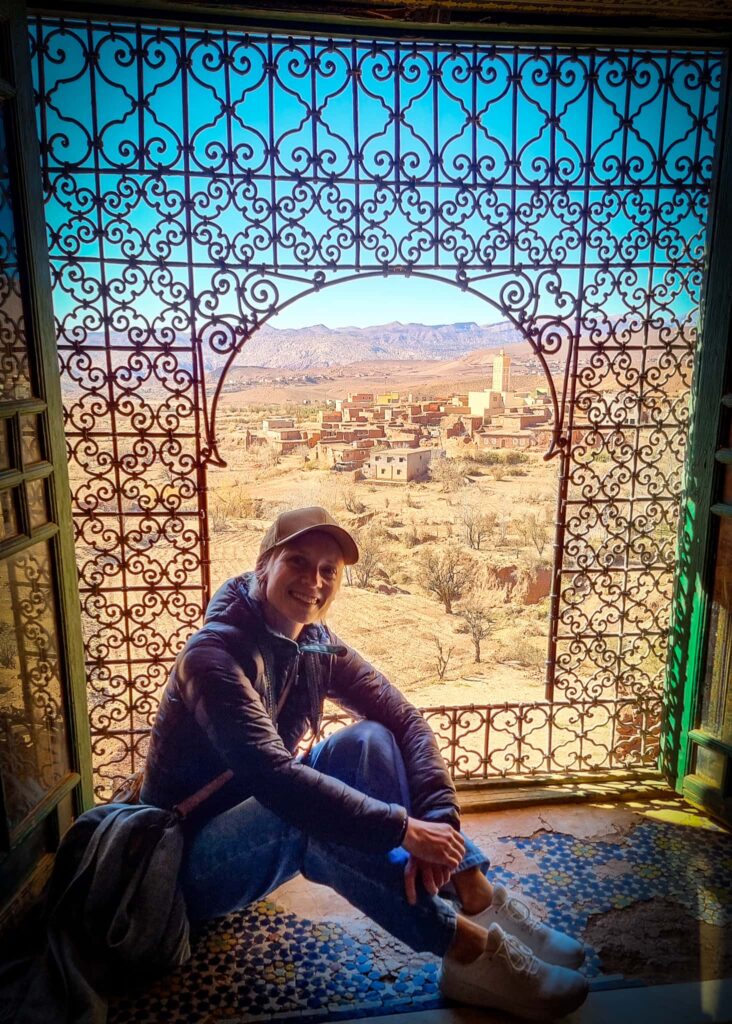
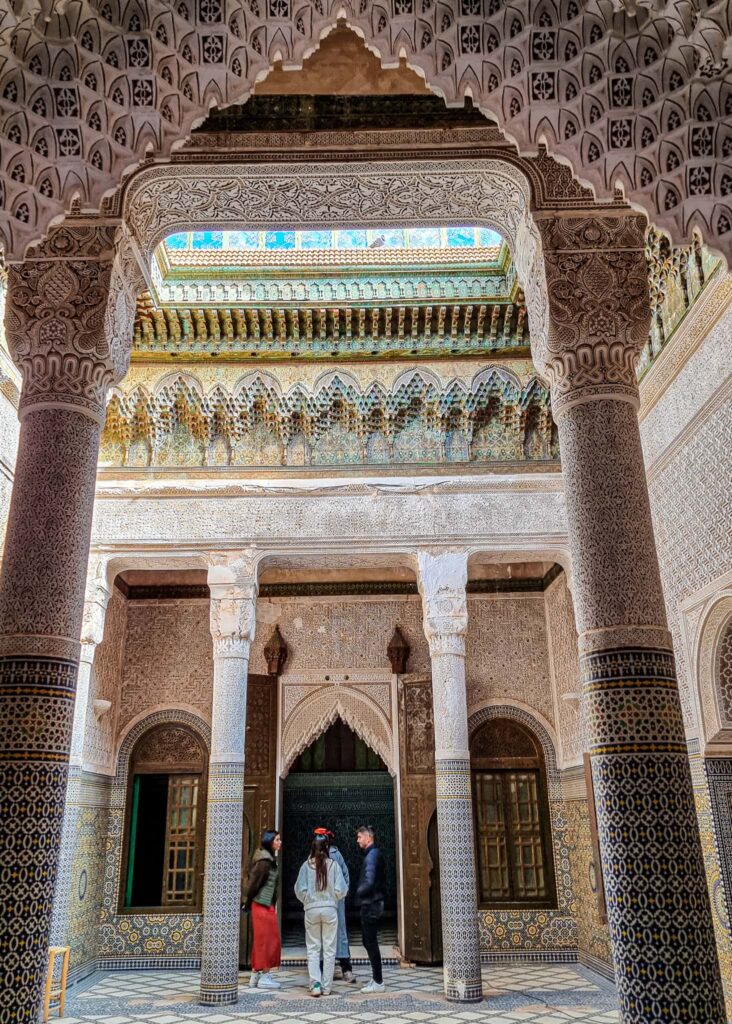
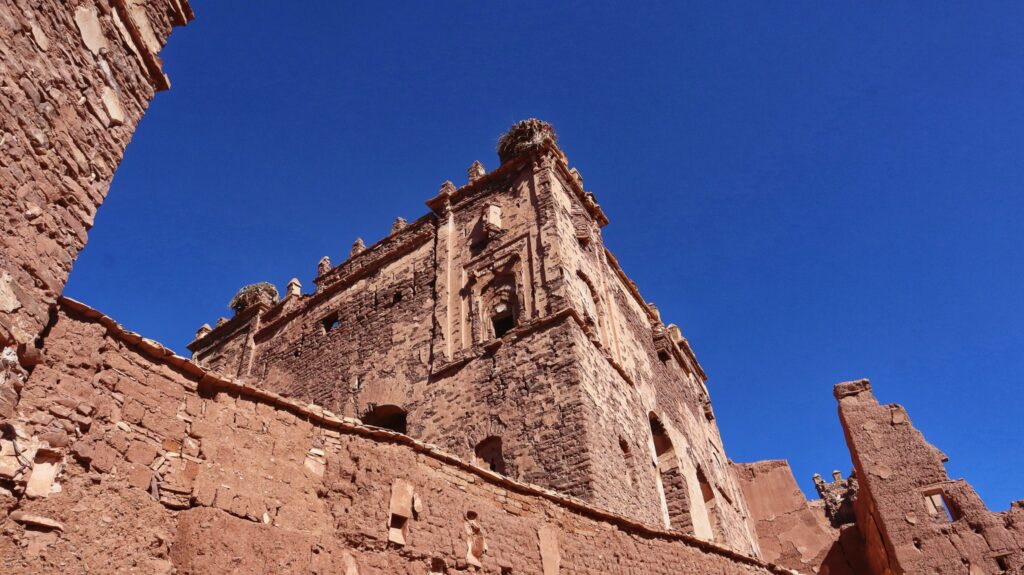
It was indeed possible to go inside, and what awaited us was nothing less than mind blowing. The fortified palace was built in the late 19th century by the Glaoui family, who ruled the area for decadess during the French protectorate. The Kasbah was expanded and renovated over the years, with luxurious rooms and courtyards, as well as defensive structures like walls and towers. The details and the décor here are definitely worthy of the richest man in the world!
Today, the Kasbah is a tourist attraction, offering visitors a glimpse into the grandeur and opulence of Morocco’s past. The guided tour took approx. 30 minutes and Muhammad did a great job walking us through the history.
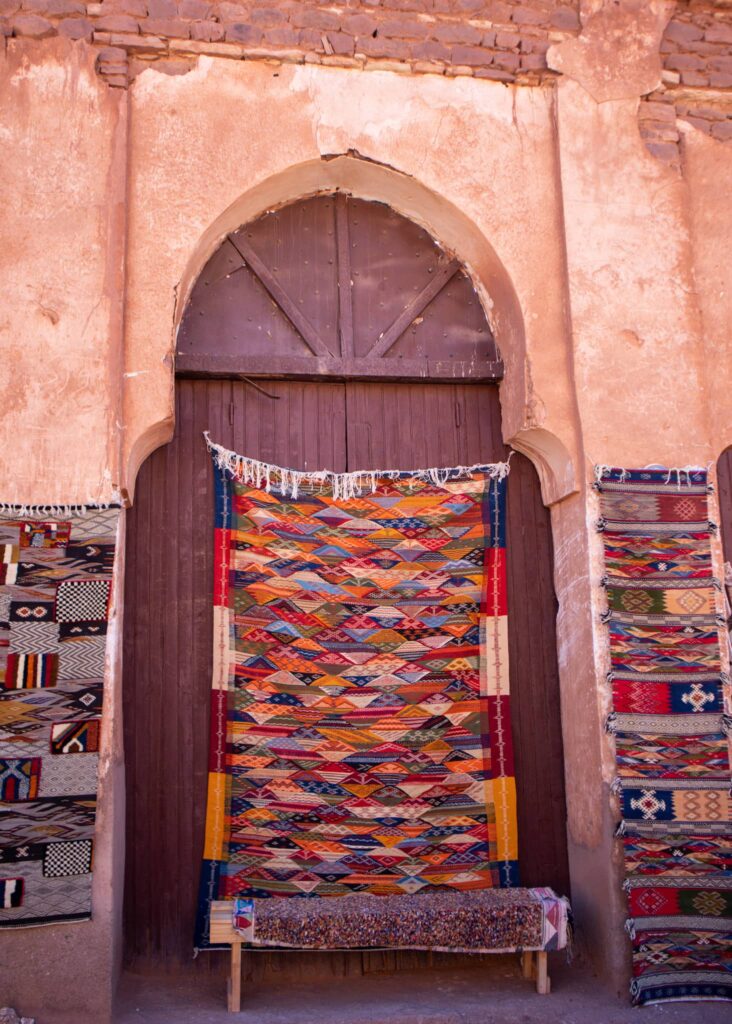
Tip: Interested in buying a Berber rug or carpet? Do it here. Next to the Kasbah entrance you find a carpet cooperative selling beautiful rugs with set prices. No haggling needed!
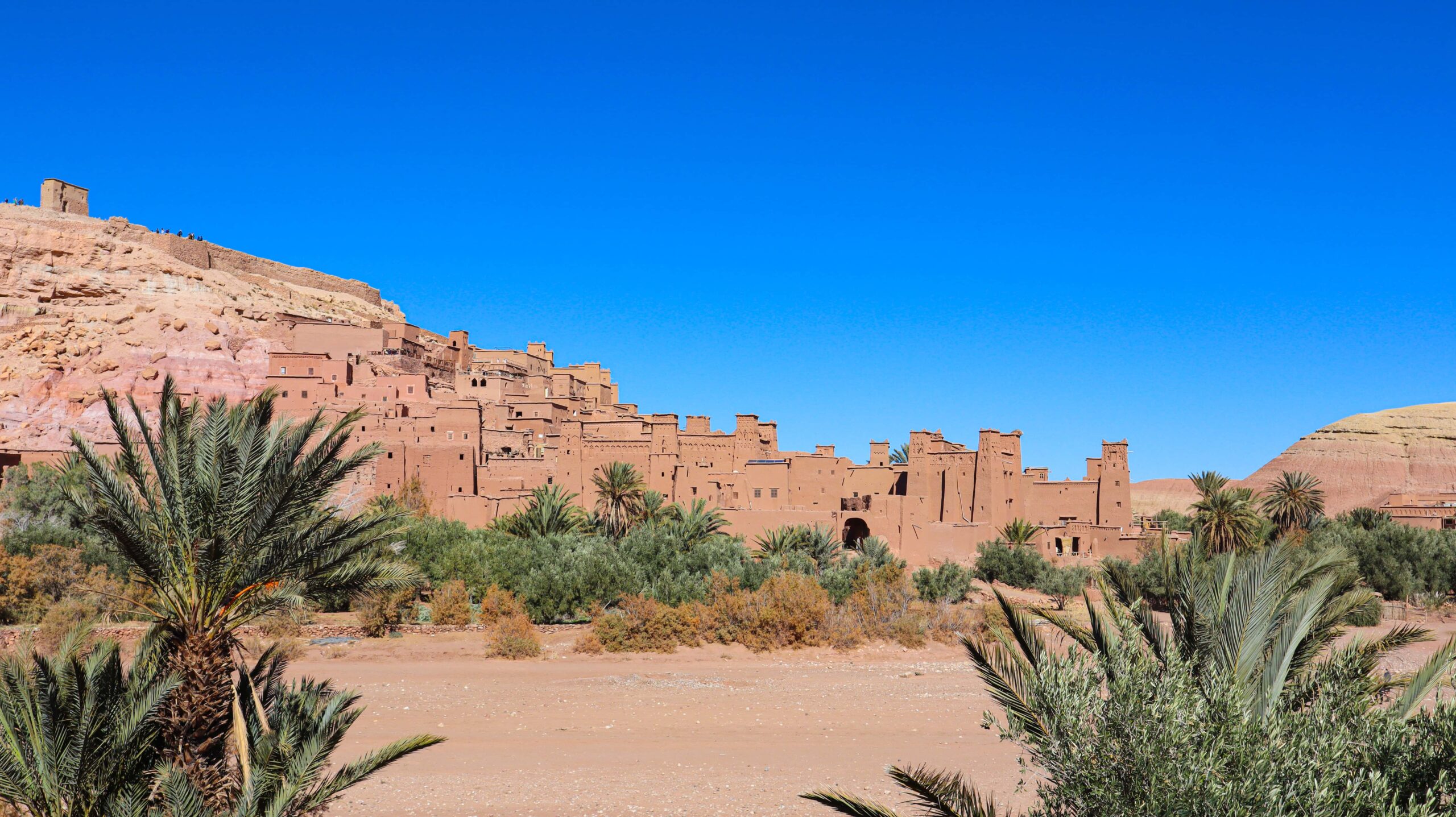
Ksar Ait Ben Haddou: A UNESCO World Heritage Site
At the end of the Ounila Valley, familiar scenes come in sight. If you have seen The Gladiator or Game of Thrones, you have definitely seen it before. And who hasn’t seen any of those two?!
Our visit to the ancient town started off with a much sought after lunch. Unfortunately, it didn’t turn into the lunch I had expected. If you want something else to eat than a buffet of unnamed stews and rice amongst large and loud tour groups, make sure to tell when booking the tour. We didn’t…
Anyhow. Food is food and soon we found ourselves walking down a slope marvelling at the views of a man leading two camels past the massive, red walls.

Our new guide, also called Mohammed, pointed towards the tower gates in front of the town. They are the only piece of architecture that isn’t authentic. The gates were built in the making of the movie Lawrence of Arabia in the early 1960’s. Due to Ait Ben Haddou’s UNESCO-status, which it got in 1987 primarily because of its authenticity, all movie and TV productions must now leave the place as they found it.
Guided tour of Ait Ben Haddou
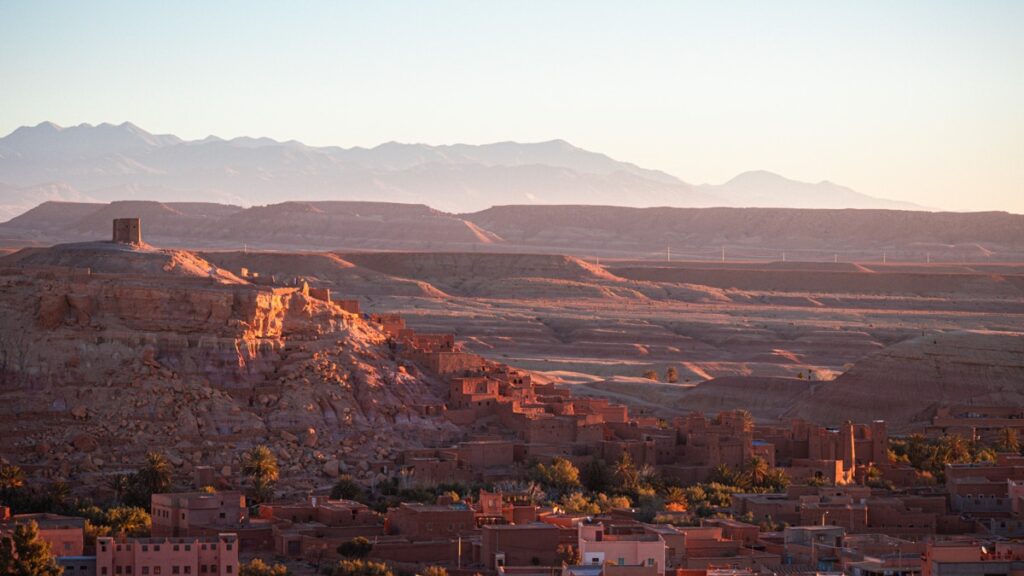
Entering the fortified village through the narrow tunnel is a big contrast to the wide and open dessert landscape outside. Ait Ben Haddou is a maze of narrow alleys, leading up and down the hillside. Today, there are only 5 families living here while the rest of the people live in the new town across the river valley. But Ait Ben Haddou once was a bustling town with significant political power due to the rich salt reserves in the surrounding area and the caravan trade routes.
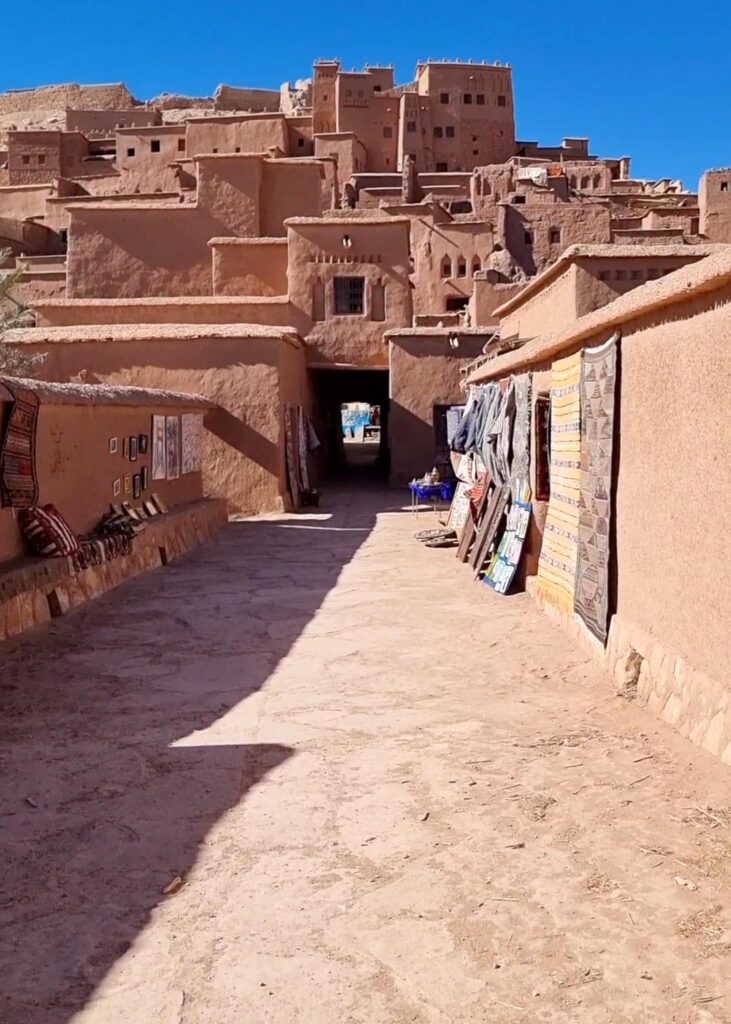
The traditional Moroccan Ksar dates back over 1000 years and has been ruled by different Berber tribes throughout the times. Being impressingly intact, it is easy to imagine how the town must have been like here back in its heyday. Especially when you have a local guide explaining everything you need to know in addition to answering all questions.
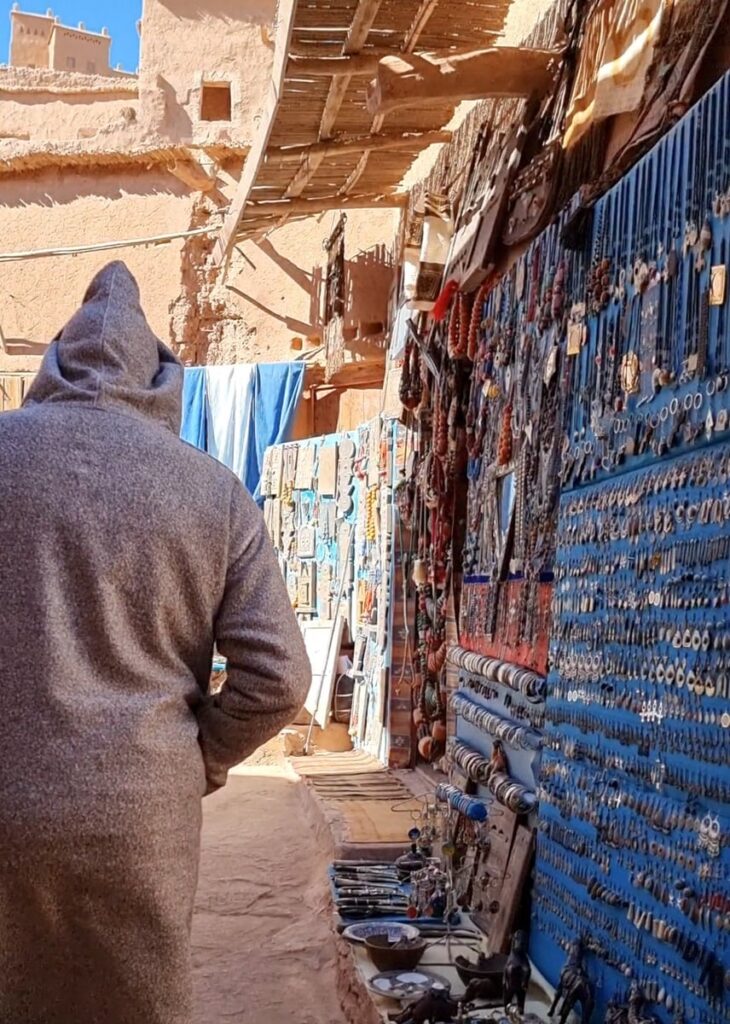
Many of the buildings are empty and closed, but others function as souvenir shops, antique shops and art galleries. There are also some cafés around that I wish we had time to stop by. The strong Berber culture is highly visible almost everywhere you look, with symbols carved into walls and doors. The importance of the symbol of freedom is clearly evident.
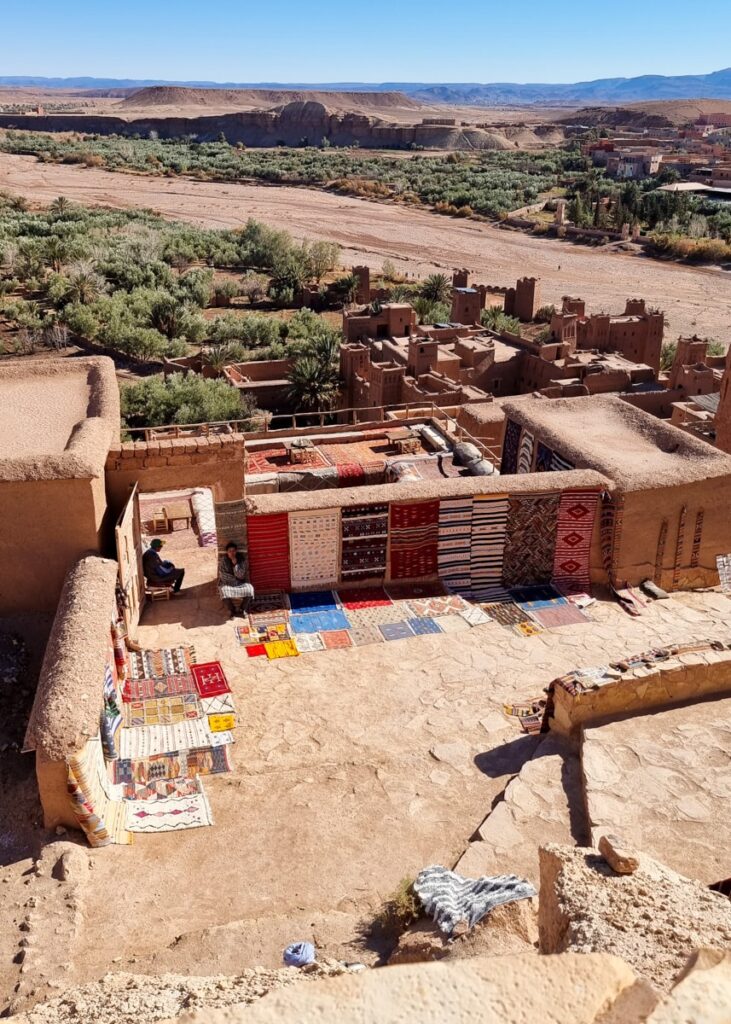
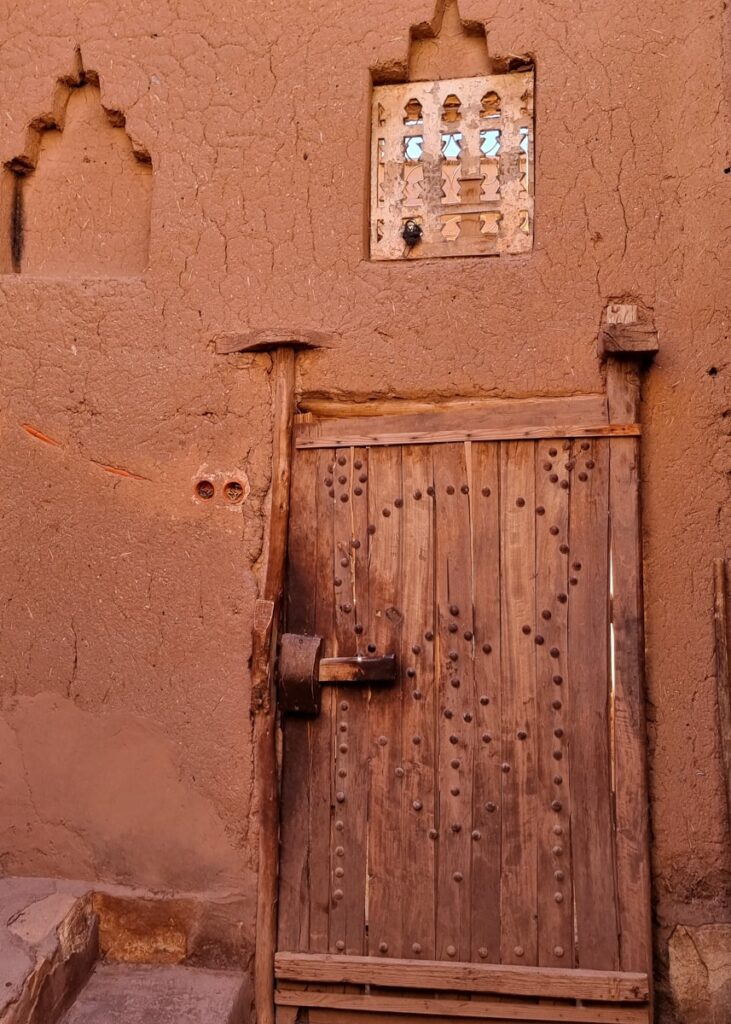
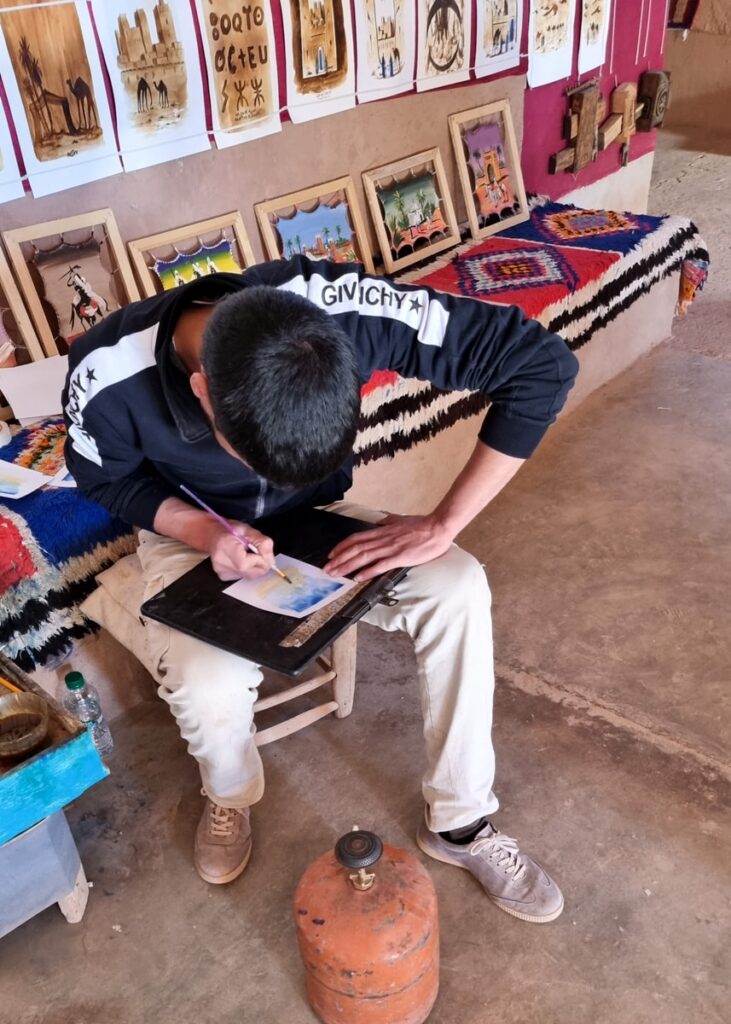
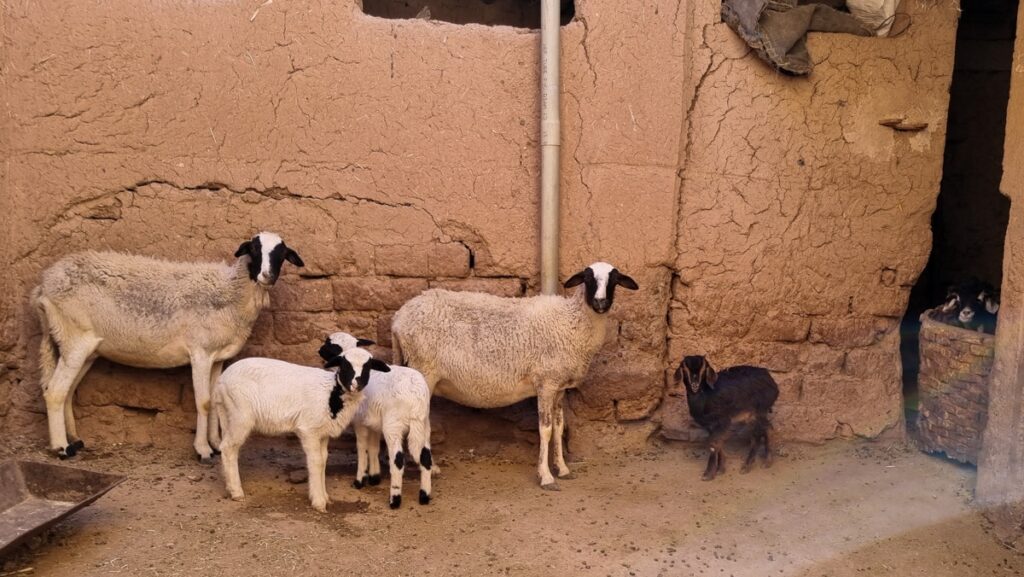
A guided tour of Ait Ben Haddou takes approx. one hour, although I wish I’d had some more time. Most of the time was spent going uphill towards the viewpoint above town, stopping here and there along the way. Since Mohammed’s family is one of the few who still lives inside the walls, we got the unique opportunity to visit them and see what the traditional houses looks like inside. To our surprise, they even had sheep on the first floor!
Where to stay in Ait Ben Haddou?
Most tours suggest staying overnight in the nearby, larger town Ouarzazate rather than in Ait Ben Haddou itself. Ouarzazate is where you find the larger hotels, but that wasn’t what I was looking for. I wanted a relaxing night on the countryside and the opportunity to see the sun set and rise over the old ksar. I also requested individual, ensuite rooms with heating for my father and I. Travelling to Ait Ben Haddou in January can get pretty cold as soon as the sun sets.
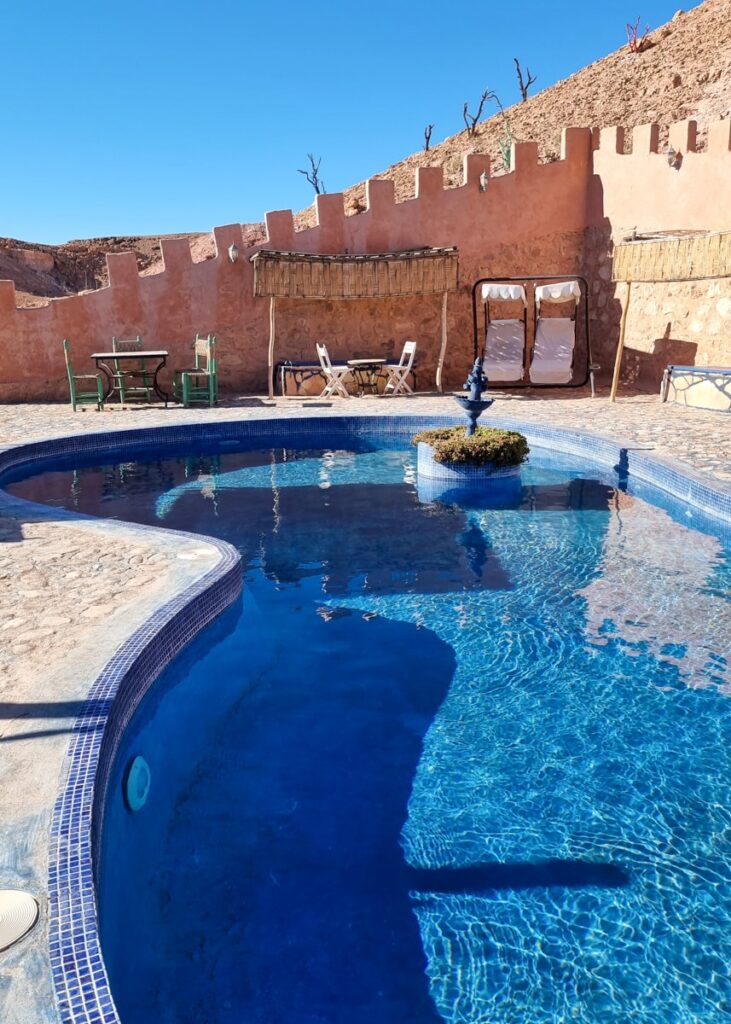
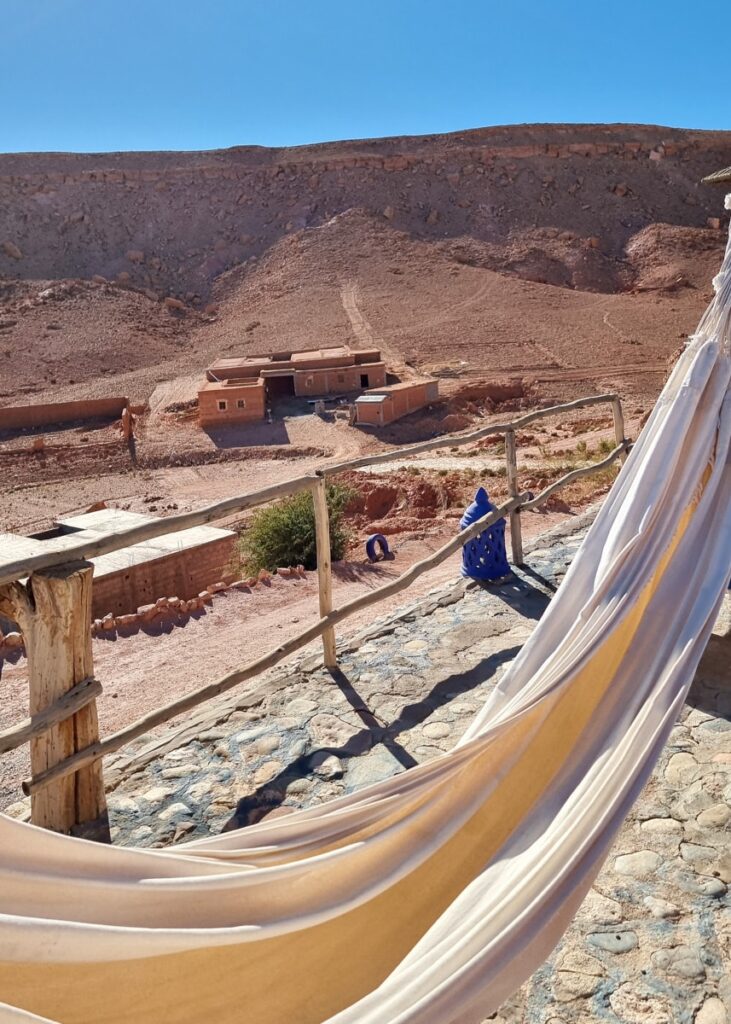

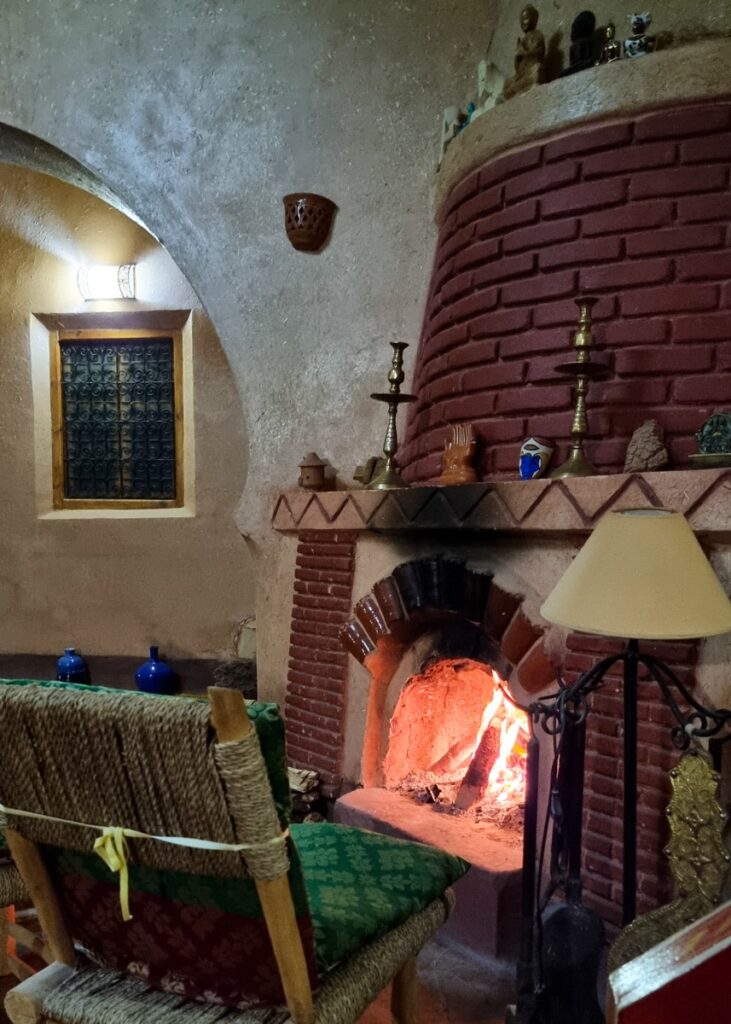
Asara Morocco Tours managed to find a place that met all my expectations. Riad Paradise of Silence sits is in the outskirts of the new town, more or less surrounded by mountains. Upon arrival we were welcomed with mint tea by the lovely pool outside and we spent the afternoon chilling on the hotel premises. Just like in the riads in Marrakech, all rooms in Paradise of Silence are unique. I got a large room with AC, bathroom with hot water (without pressure, but still), lots of quirky details and when I opened my window, I could spot the old town in the distance.
For dinner, we got a wholesome 3-course meal with a delicious chicken tanjine for main. Including us, we were five guests staying at the riad that night, and the meals were a social setting at set times. Sharing a bottle of local wine with a complete stranger over a good dinner is something everyone should do at least once!
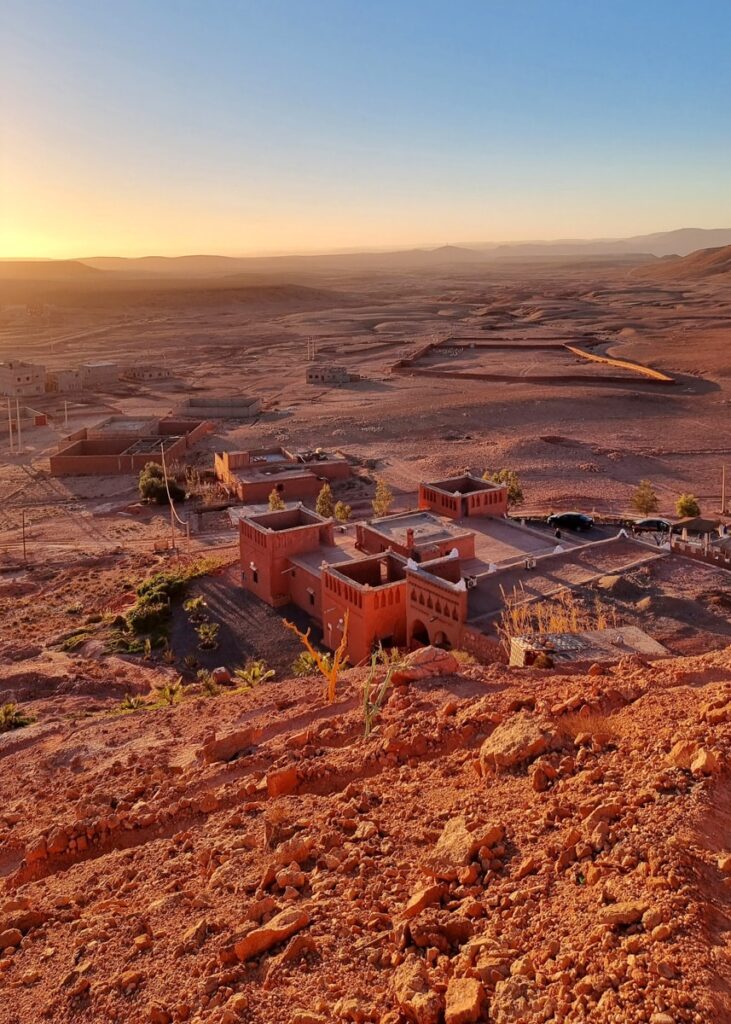
Seeing the sunrise from Riad Paradise of Silence
Riad Paradise of Silence was just as quiet as the name implies and my plan about going out for star gazing was forgotten in favour of my bed. I couldn’t have wished for a better break from noisy Marrakech on my two-day tour to Ait Ben Haddou!
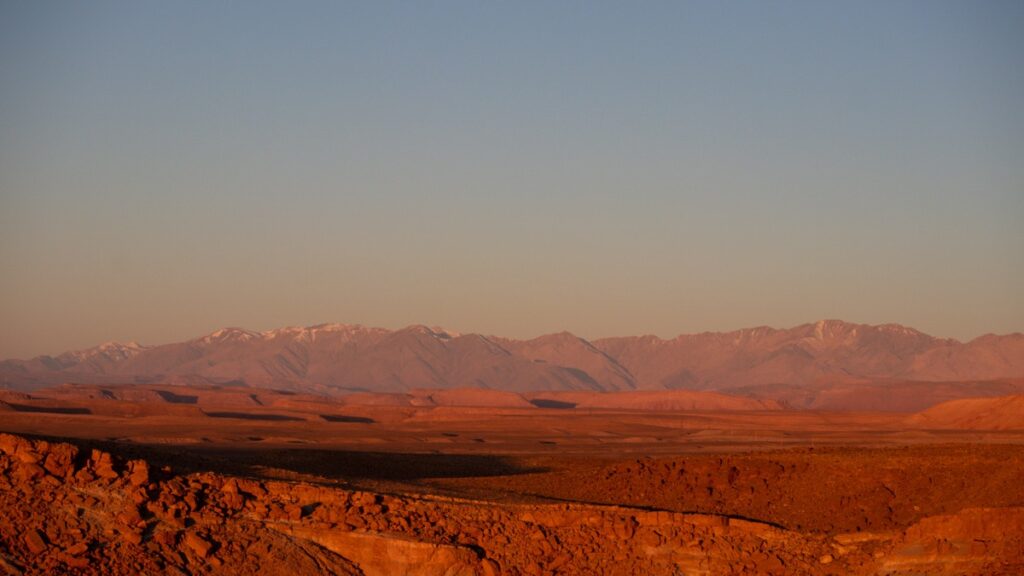
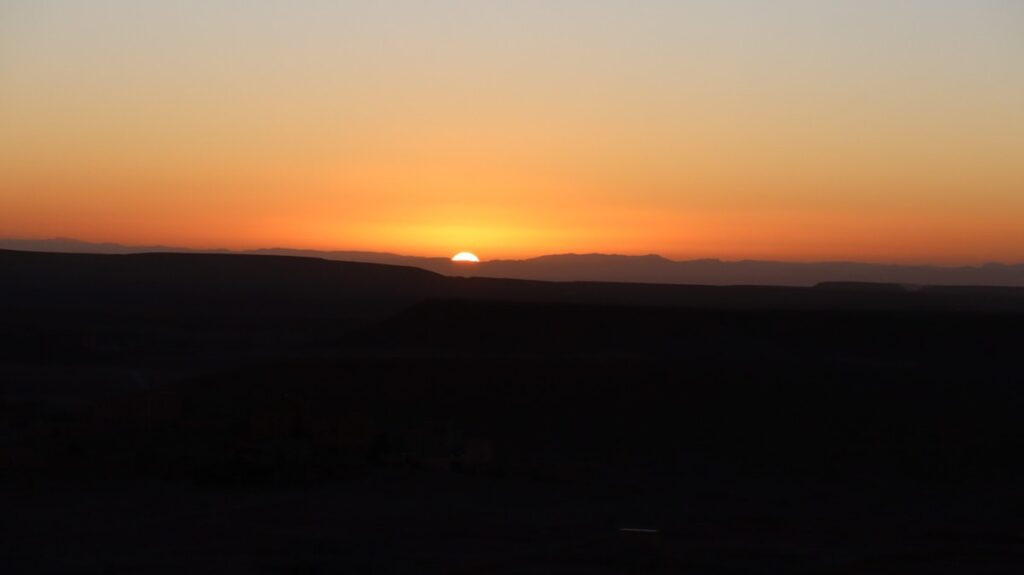
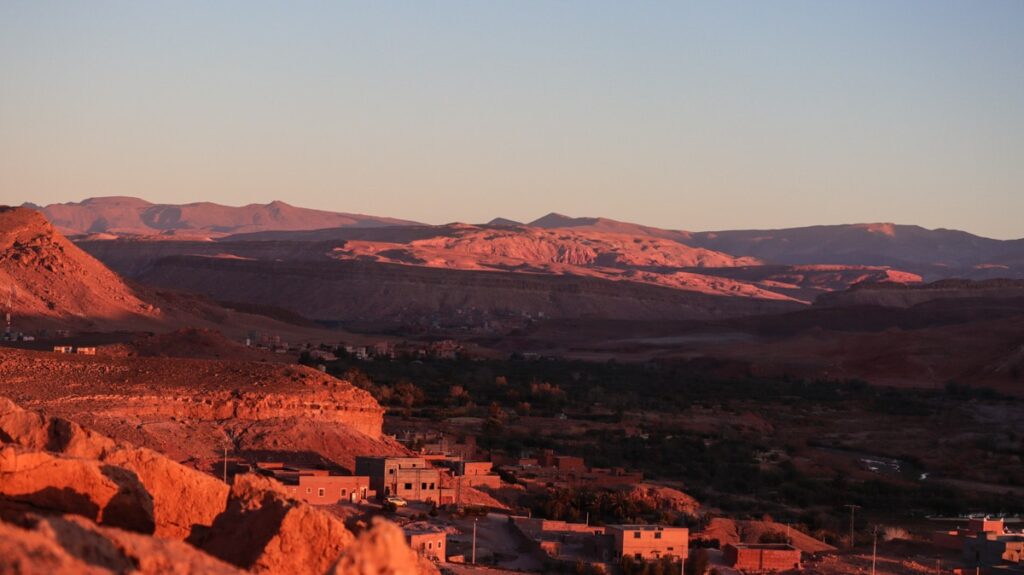
I might have missed the starry sky the night before, but I certainly didn’t miss the sunrise! There is a path going up on a small hilltop just behind the hotel, perfect for admiring the sun rising in the horizon. Seeing the sun rise behind the mountains and the landscape and the old ksar turn into all shades of red was simply stunning! When I got back down to the hotel, a traditional breakfast was served before our driver Abdoul came to pick us up for the last of our two days on tour from Marrakech to Ait Ben Haddou.
Atlas studios: Africa’s Hollywood
The main city of the region, Ouarzazate, is only a 30 minutes’ drive from Ait Ben Haddou and has two attractions worth visiting. First up was a welcoming break from ancient history and old walled buildings.
The Atlas Studios in Ouarzazate is the largest film studio on the African continent, hence the nickname Hollywood of Africa. It opened in 1983 and has since hosted numerous of large movie and tv productions. The Jewel of the Nile, The Mummy, Gladiator, Kingdom of Heaven, Babel, Prison Break, 7 years in Tibet and Asterix and Obelix are just some well-known examples. The studio is definitely worth a visit, and if you are really lucky you bump into international movie stars on set.

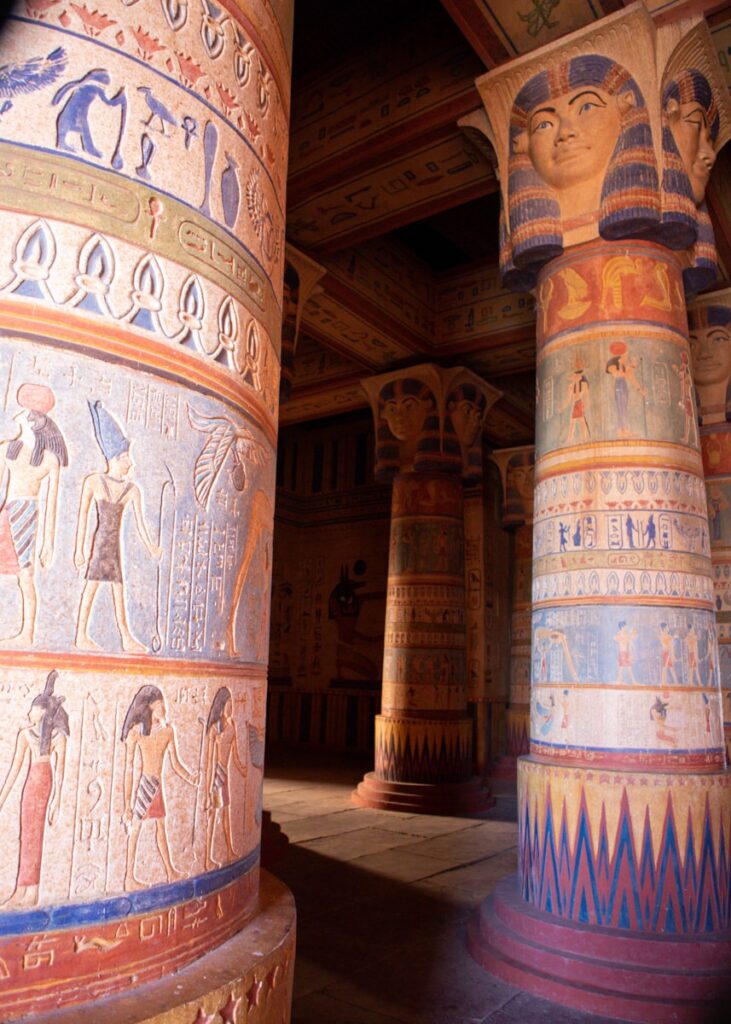
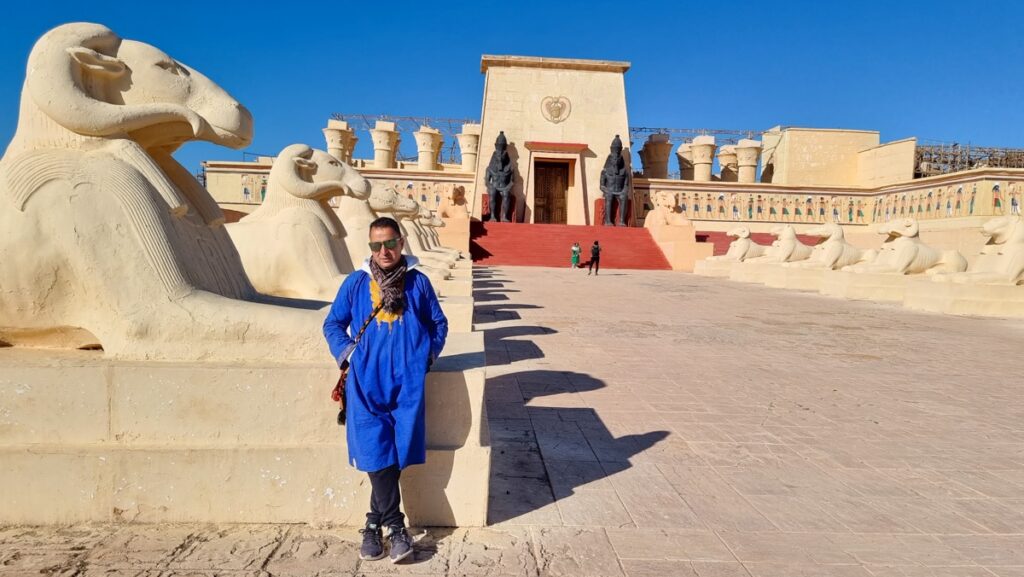
Yet again we got an excellent guided who showed us around the premises and told us everything there is to know about the movie sets on the premises. He also told us about the film school that opened in Ouarzazate because of the studios. The guide himself was a lighting technician by education, and work extra as a guide when there are no productions going on.
Kasbah Taourirt: More historic grandeur
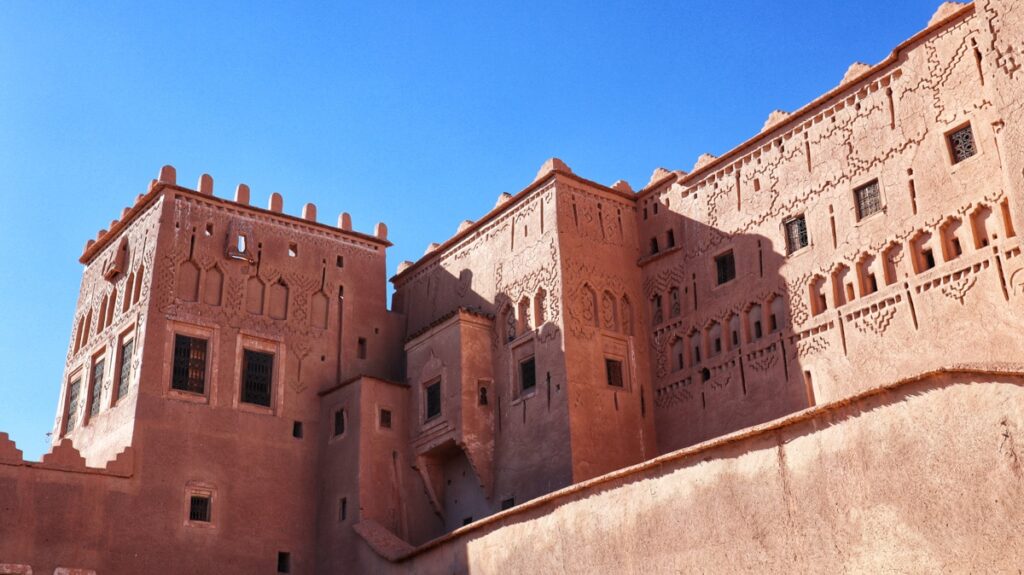
Ouarzazate’s other major attraction is Kasbah Taourirt. Another of the Glaoui family’s residences, and even larger than Telouet Kasbah. As I’ve written earlier, the Glaoui’s were one of the rickest families in the world and their influence stretched further south than just Morocco. Due to their huge “army”, they controlled large parts of the Trans-Saharan trade. This “army” kept the caravans safe from various local bandits and villain groups.
Similar to Telouet Kasbah it was left empty after Glaoui’s fall when the French left Morocco in the 1950’s. But the local ministry of culture is now renovating it and putting it back to its former glory. Parts of the old palace was closed for renovation at the time of our visit, but we saw enough to understand what it must have been like back in the days. Unlike at Telouet, it didn’t have rich decorations and tile Zellij. On the other hand, all walls were covered in beautiful, traditional tadelakt plaster.


Kasbah or Ksar, what is the difference?
A Kasbah is a type of fortress used to protect towns and cities from external threats. Typically with high walls and towers and designated areas for soldiers and also other local people. Not all Kasbahs were as large as Telouet and Taourirt. They could be as small as just housing one family, and driving through the Ounila Valley you can see several smaller houses built in this way. Riad Paradise of Silence is a good example of a small kasbah.
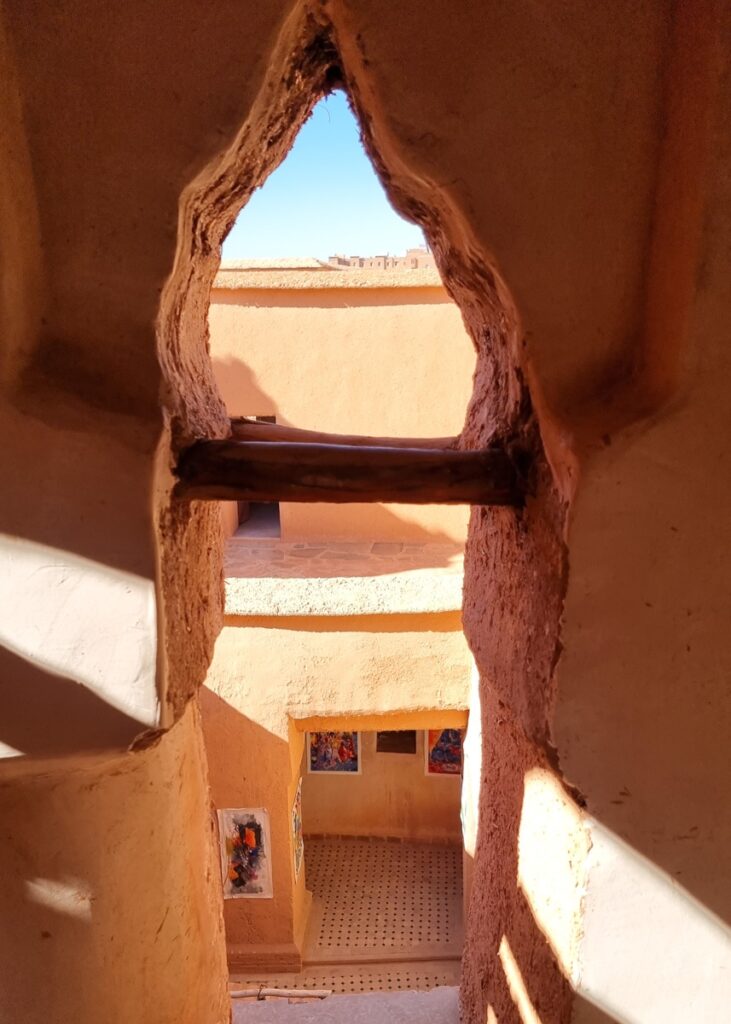
A Ksar, on the other hand, is more of a fortified village. It was also built for defence but could house several smaller kasbahs withing the ksar walls, like in Ait Ben Haddou.
Argan Oil Cooperative in the Atlas
Leaving Ouarzazate behind, we headed for the mountains again. This time we took the main road, not the detour through the Ounilla Valley. Estimated driving time from Ouarzazate to Marrakech is 3 hours and 30 minutes but expect it to take a bit longer. The roads are good, but when winding up into the high mountains, chances are high you will get stuck behind a slow lorry more than once.
To break up the journey, Asara Morocco Tours had planned a couple of stops on the way back too. After lunch, we stopped at something I’d read about but had not expected in the High Atlas. The argan nuts grows only on the southern Moroccan coast near Essaouira. The oil extracted from the nuts is a popular ingredient in health and beauty products worldwide. Women’s Argan Oil Cooperatives are community-based organisations that follow sustainable and fair-trade practices. Ensuring both social and economic welfare among women and play an important role in preserving the traditional methods.
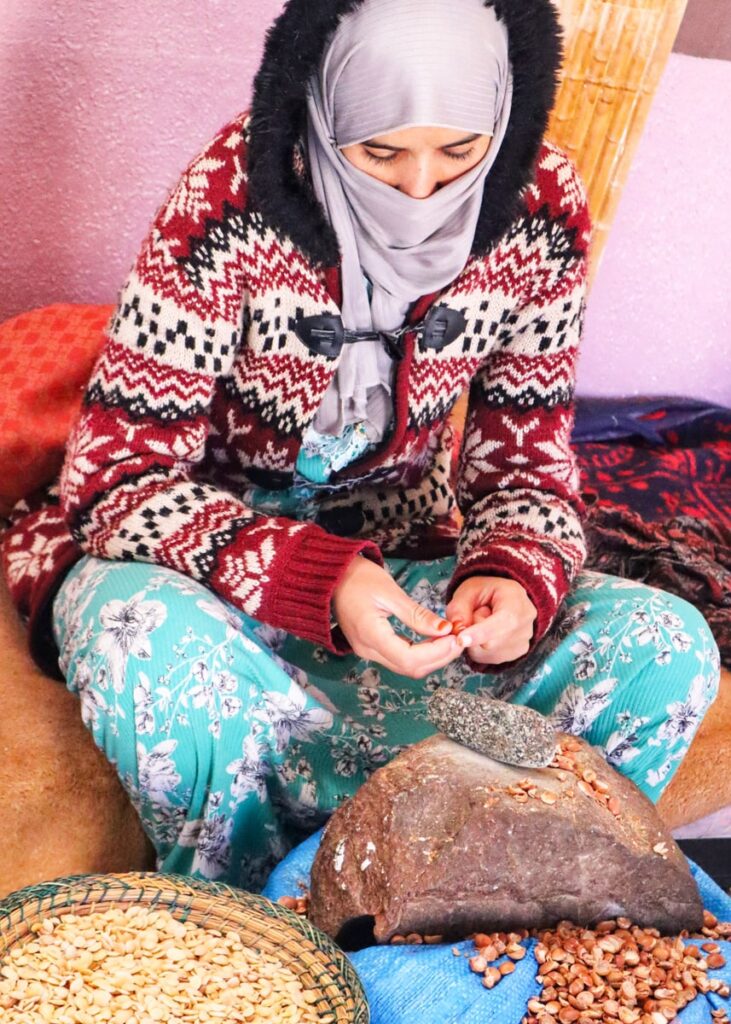
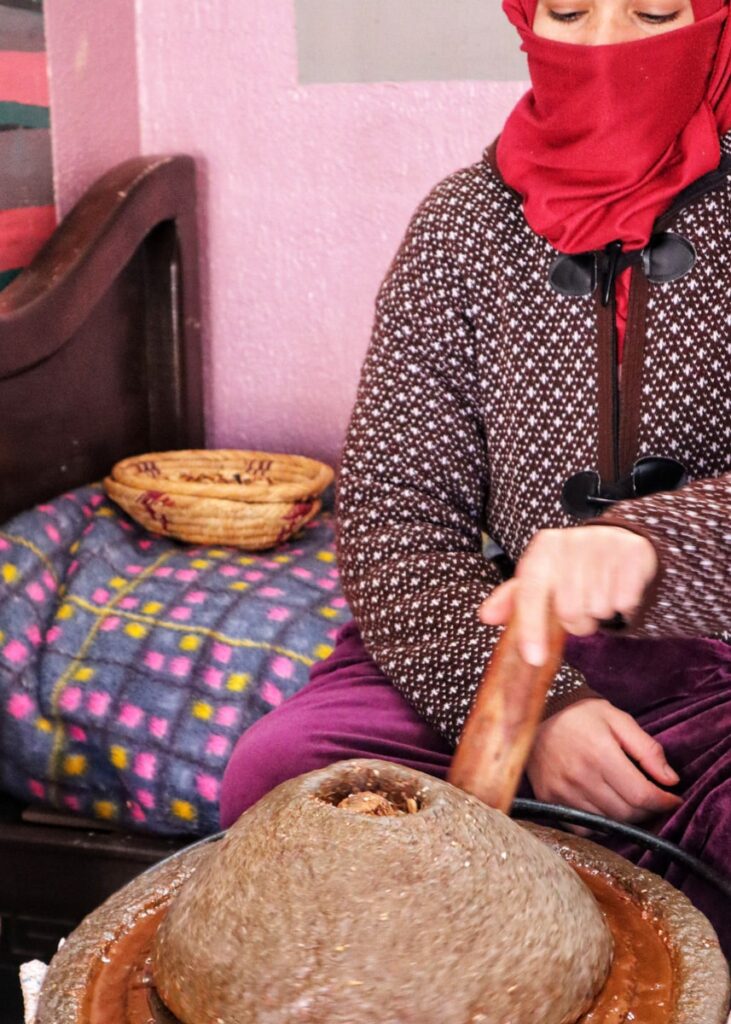

A lovely, young woman with impeccable English gave me an introduction to the cooperative. While three other women showed me the traditional process of extracting the oil from the nuts. Are you thinking of buying argan products to bring back home? Then the women cooperatives are the places to do it. Here you know that you get a 100% pure product. I could, off course, not leave without a bottle. And it truly was the best thing I could have given my dry winter skin!
Another couple of hours in the car, and we arrived back at Riad Coq Berber Fou in Marrakech – just in time to head out for our last meal in the pink city.
Final thoughts on my two-day trip to Ait Ben Haddou from Marrakech
I honestly couldn’t have been happier about how this tor turned out. From picking Asara Morocco Tours to tailor make our itinerary, to spending the night at Paradise of Silence instead of a large hotel in Ouarzazate to taking detours to explore more of the region while we were there.

And the best thing? My 78-year-old father feels exactly the same!
It might sound harsh, but I wouldn’t bother visiting Ait Ben Haddou on a daytrip from Marrakech. Too much time would have been wasted in the car driving the same route back and forth. The same partially goes for a 2 nights tour to the desert via Ait Ben Haddou. I’d love to see the dunes, but I’d definitely prefer having 3 nights to break the long drives up. And by deciding not to go south to the desert, we managed to squeeze in two days in Essaouira without it feeling stressful. The only thing I would have liked to change, was the two places we had lunch…


