


Riga’s main sights in one day
A city of art nouveau, beer, food and culture. Riga is the perfect weekend getaway year round.
In February 2018 I spent three days in Riga on my own, and despite the freezing cold I managed to experience a lot of what the city has to offer. Read further to find my guide on how to explore Riga in one day.


Walking around Riga in one day
In order to see all of Riga’s main sights in one day, I recommend you to book a hotel in, or close, to the old town. The compact city centre is perfect for walking, even on cold winter days. I chose to stay at St. Peter’s Boutique Hotel, which turned out to be a great base for exploring the Latvian capital.
Sitting just around the corner from my hotel, St. Peter’s Church was an obvious choice to start my walking tour. And what is is better than getting the eagle’s eye perspective first thing? Entering the church, take the lift 72 meters up to the second gallery, step outside and enjoy the 360 degree view of Riga. The church is easy to find with it’s 123 meter tall tower. And is open Tuesday through Sunday between 10:00 – 18:00 (from 12:00 on Sundays).

Bremen’s town musicans
Back on the street, walk around the church to see the bronze sculpture of the four town musicians from the Grimm brothers’ fairytale. Bremen is Riga’s sister city, and the monument was given as a gift to Riga in 1990 with a political subtext. It is a humorous approach to earlier political stereotypes and Mikhail Gorbachev’s perestroika.
And you? Rubbing the animal’s noses won’t give you luck. It only ruins the sculpture. The “rubbing for luck”-myth is made by and for tourists and have no local roots…
The House of Blackheads
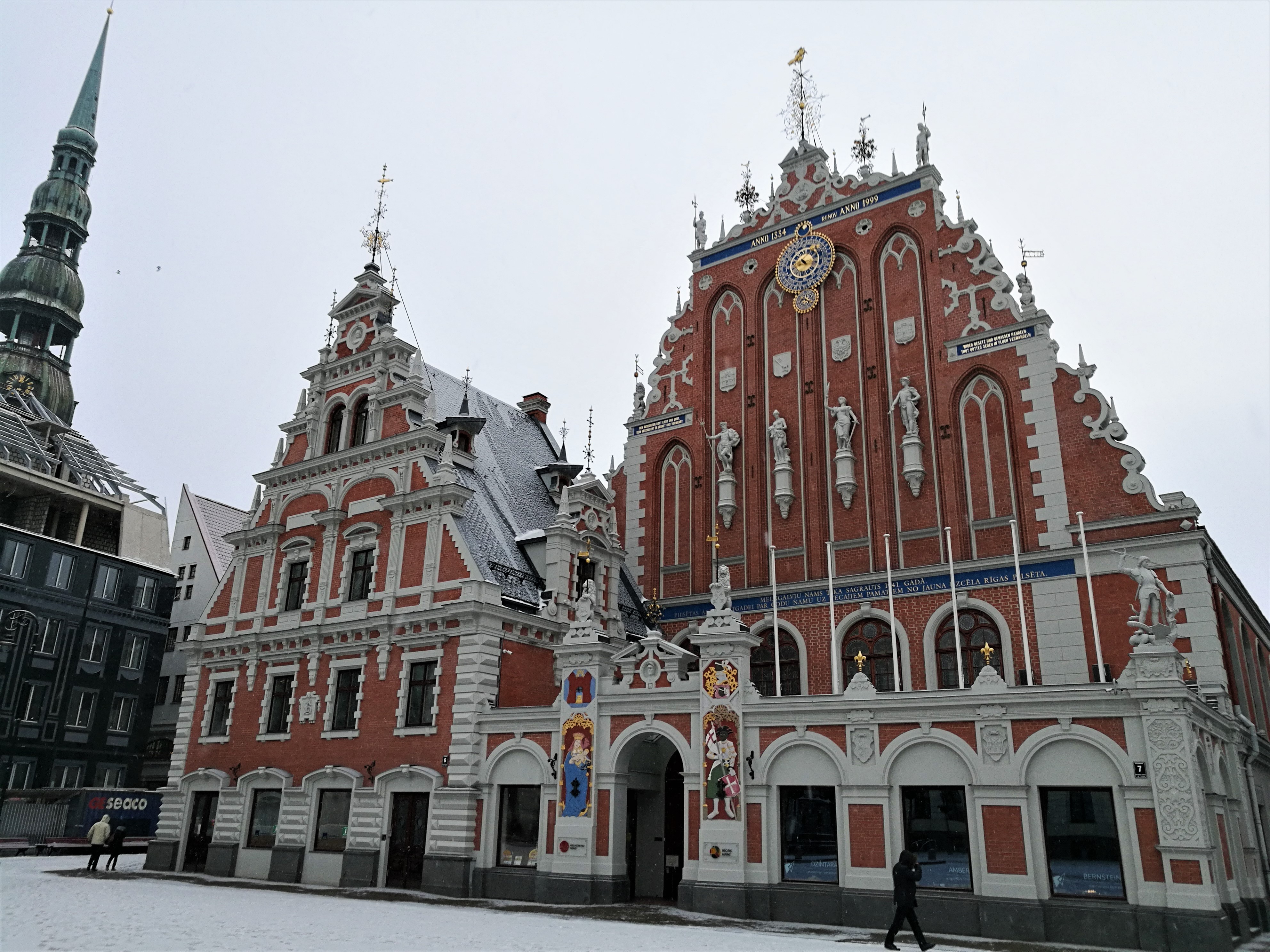
Next up on the agenda is the the House of Blackheads, the city’s main symbol. The original building was erected in 1334 for the Brotherhood of Blackheads, an organisation for unmarried tradesmen. Most of the ornaments were added later on in the 16th and 19th centuries. The building was ruined during the second world war, but luckily reconstructed to its original state in the 1990’s.
The Museum of the occupation of Latvia is next door. It is well worth a visit to learn more about the country’s recent history.

Riga Cathedral and nearby square
Continue on and you will soon see a huge cathedral. Actually the largest cathedral in the baltics, built in the 13th century. It is open for visitors most days and with weekly concerts year round you can also get to experience the 6768 pipe organ. The nearby square looked nice in winter, and must be the perfect place for a coffee break outdoors in summer.
Walk around Riga Castle
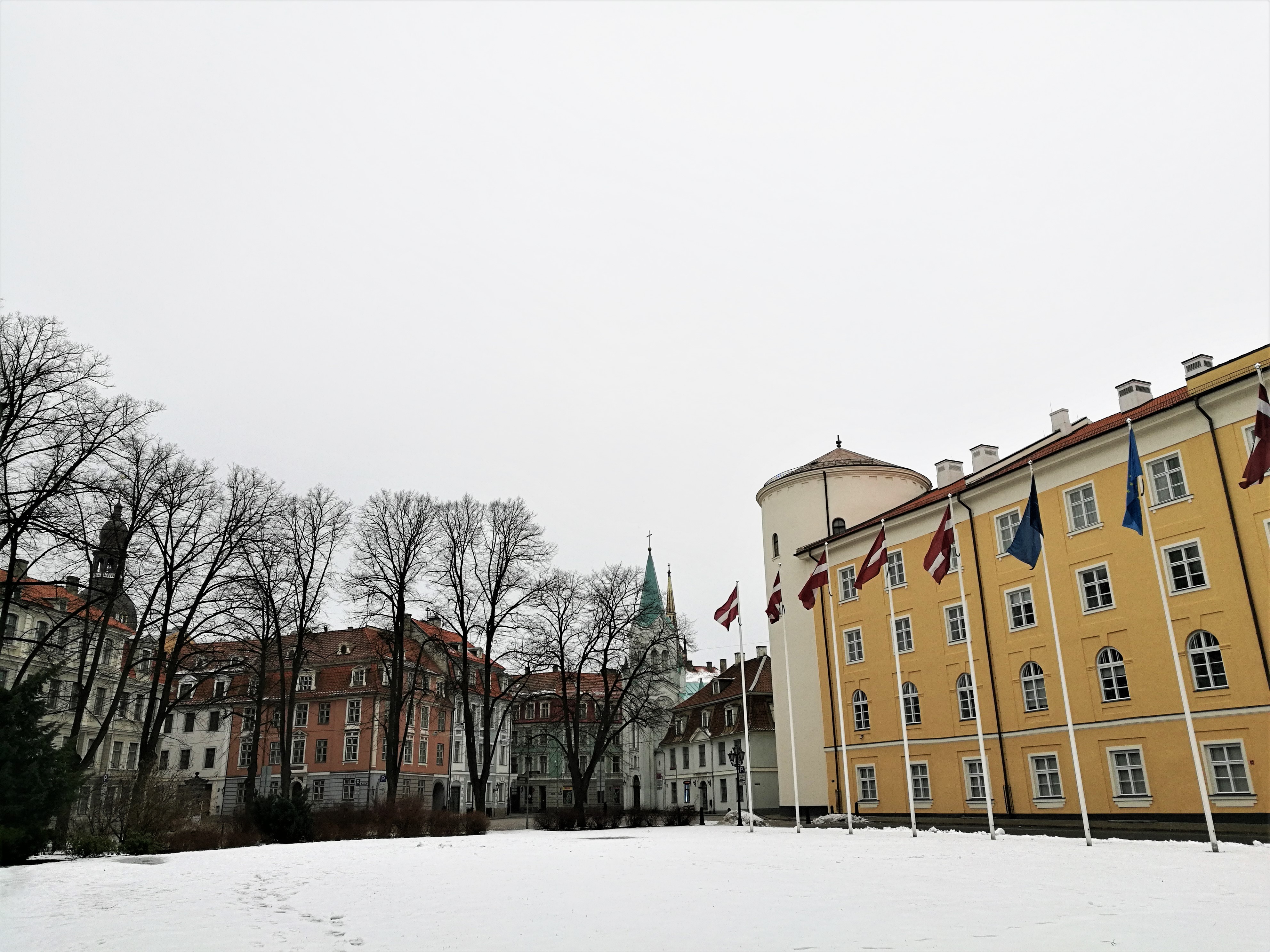
Further up along the river Daugava you will soon see Riga Castle dating back to 1652. Unfortunately it is not open to puvbic, but you can see it’s art collections at the Riga Bourse art museum.

Three Brothers: a must for one day in Riga
Take the narrow streets from the castle and soon you will bump into the oldest complex of dwelling houses in the city, the three brothers. The oldest is from the 15th century and the newest from the 17th century.
The Swedish gate
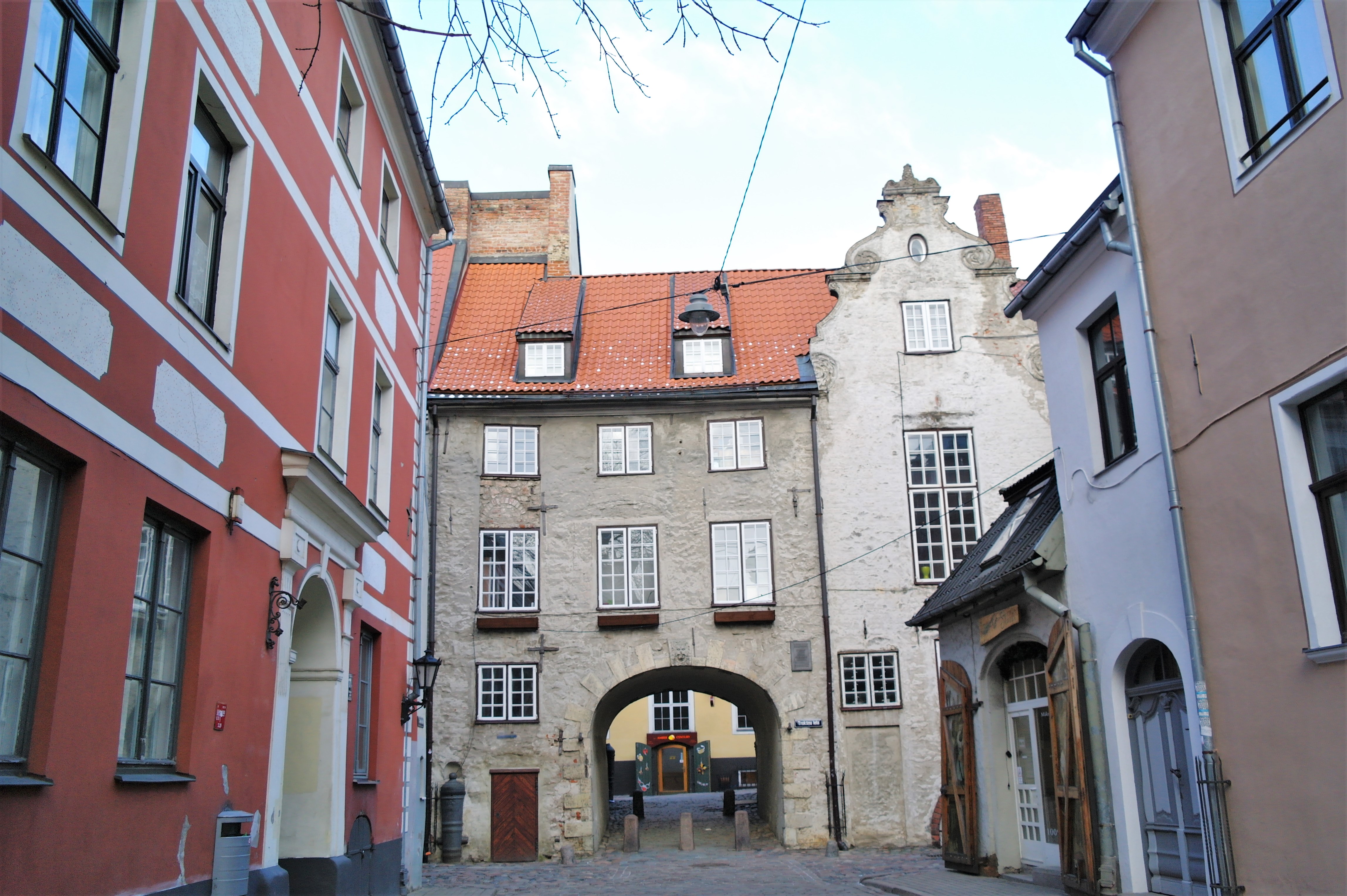
Originally Riga old town was surrounded by a wall with only a few entry gates. The Swedish gate is the only remaining gate today. It was built by the Swedes in 1698 when the Polish-Swedish war was over and Sweden took rule of the city. The gate gives direct entrance to the town centre from the barracks outside the wall.


The Powder Tower and Jacob’s Barracks
Walk through the Swedish gate to find a row of yellow houses known as Jacob’s Barracks. The barracks were erected in the 18th century, and was used by various armies up until the 1990’s. Today they house bars, restaurants and souvenir shops and are an important feature to the town centre. I believe it is much livelier here in spring and summer than on a cold Sunday in February…
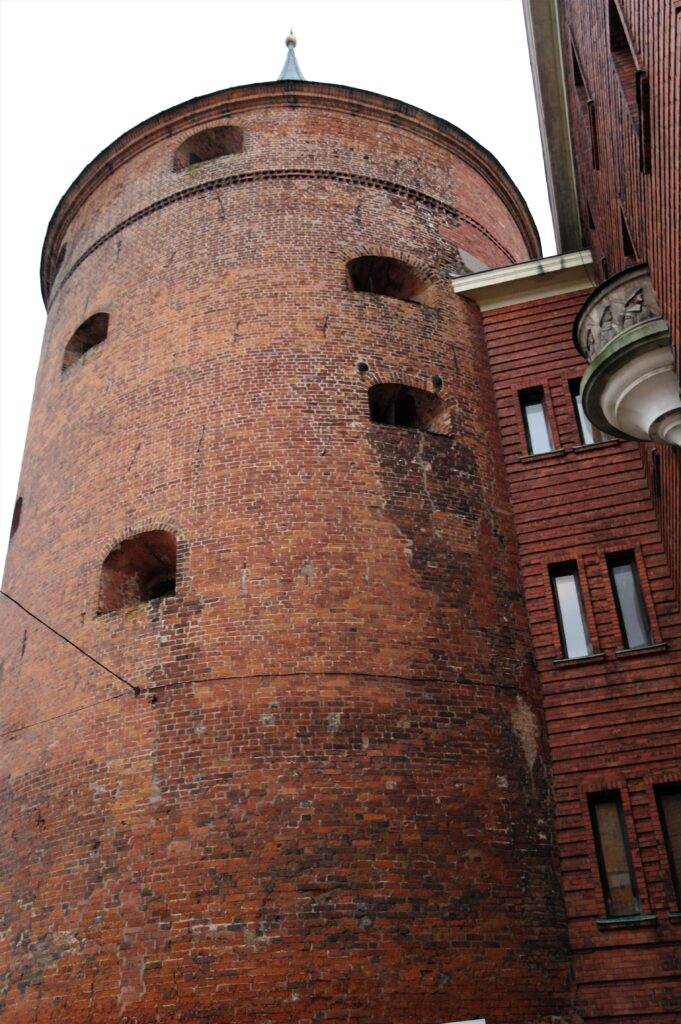
At the end of the street you find the last remaining powder tower from the city wall. Originally a part of the city’s defence system with 18 towers back in the 14th century. The tower was restructured before it was included in the Latvian War Museum in 1940.

The cat house
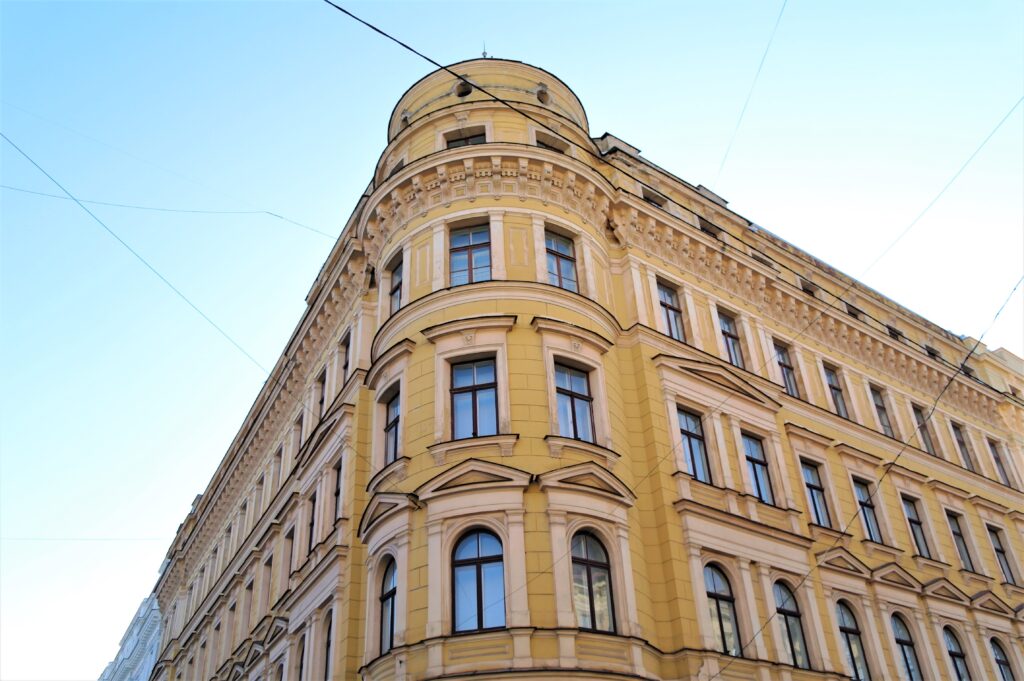
Remember to look up when walking around Riga in one day. There is something to see on every second building, and one that stands out is the one known as the Cat house. It was built in 1909 and has two black cats with curved backs and straight tails on its two towers. The legend has it that the wealthy tradesman who built it were denied membership to the Tradesmen’s Guild, and thus erected the two angry looking cats with their buts directed towards the house of the Great Guild. True or not, it is still a funny element!


Beer tasting at Colonel
After admiring the colourful facades, head into Colonel Brew Pub & Restaurant for something to eat and drink. If you, like me, cannot decide which of the Colone’s self made beers to try, go for a round of beer tasting. You then get three glasses of different beers to try. It was too much for me to finish on a lunch on my own, but I am so glad I didn’t just go for a glass of the easy light one! I definitely liked the red and the dark better.


Continue your one day in Riga through the park
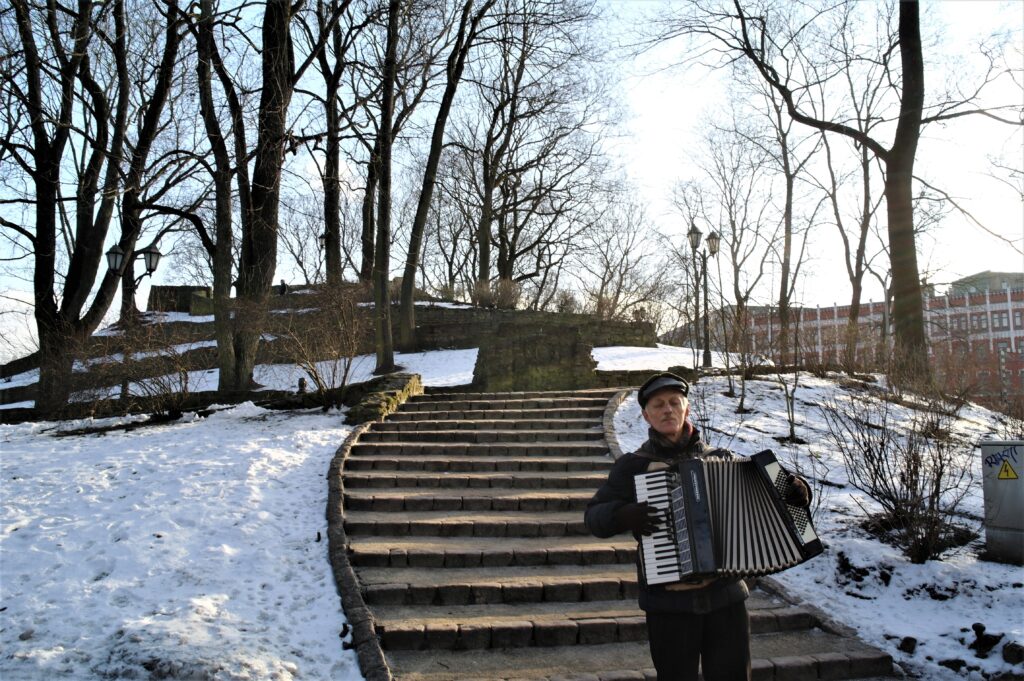
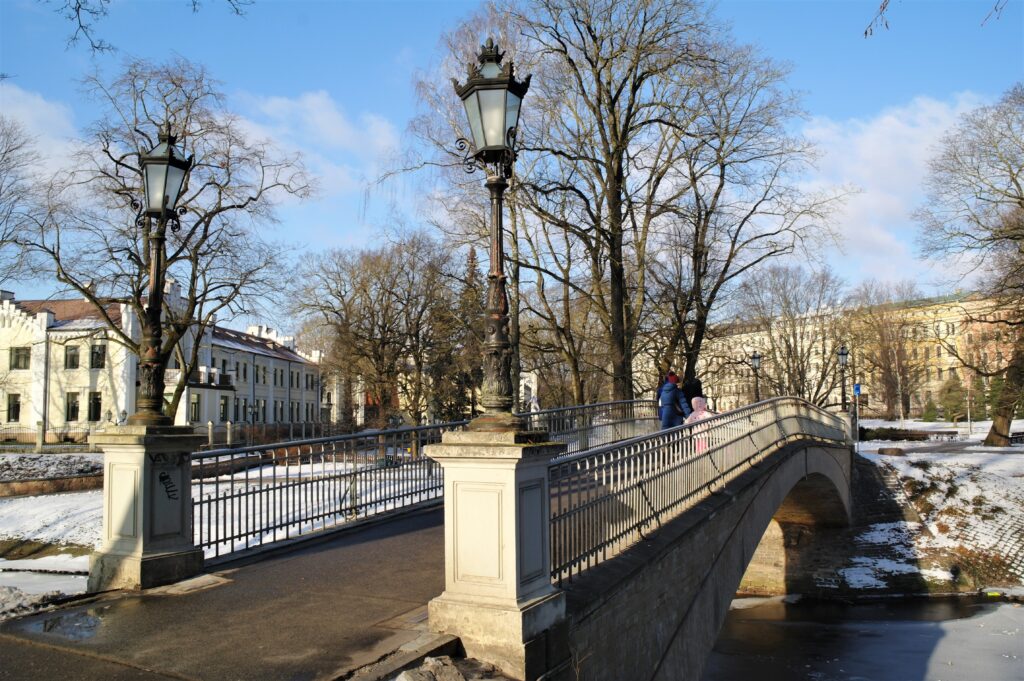
With new energy after lunch you are set for a longer walk. Start by strolling through the Bastejkalns park and up onto the bastion hill. Such a lovely, quiet place I wish to go back to in Spring sometime. Continue past the canal, which also were a part of the city’s defence system back in the days, and turn left.


Riga’s Art Noveau district
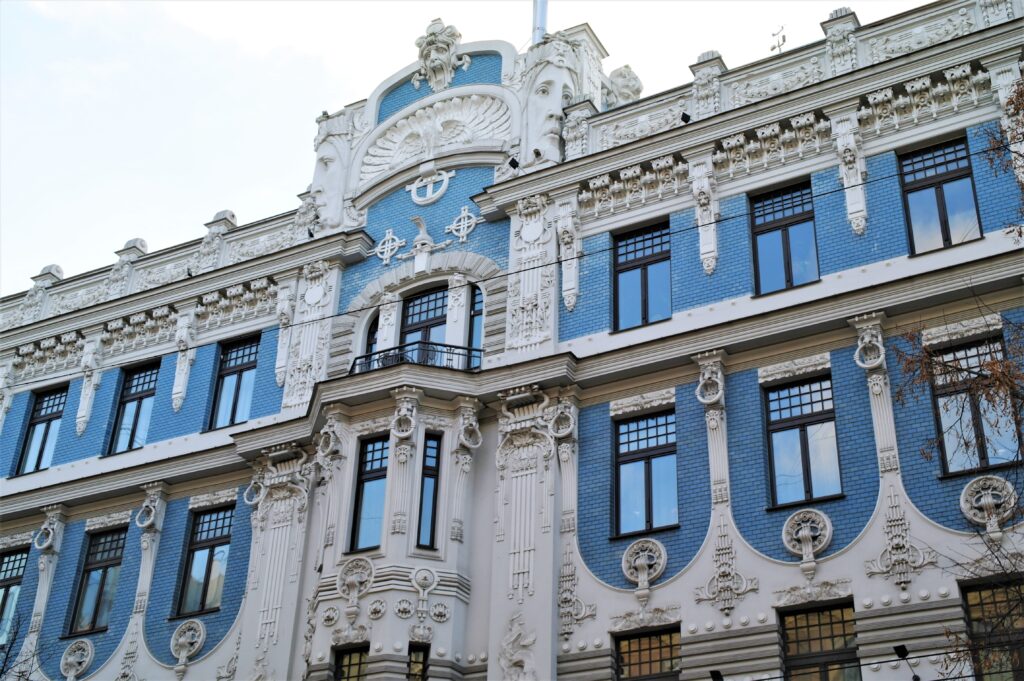
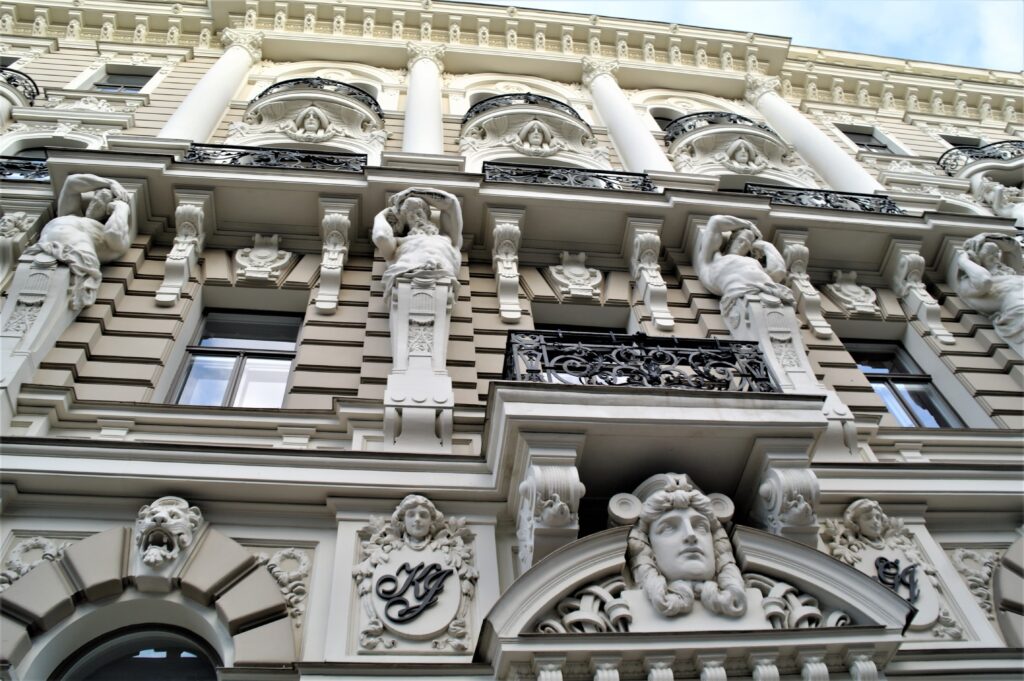
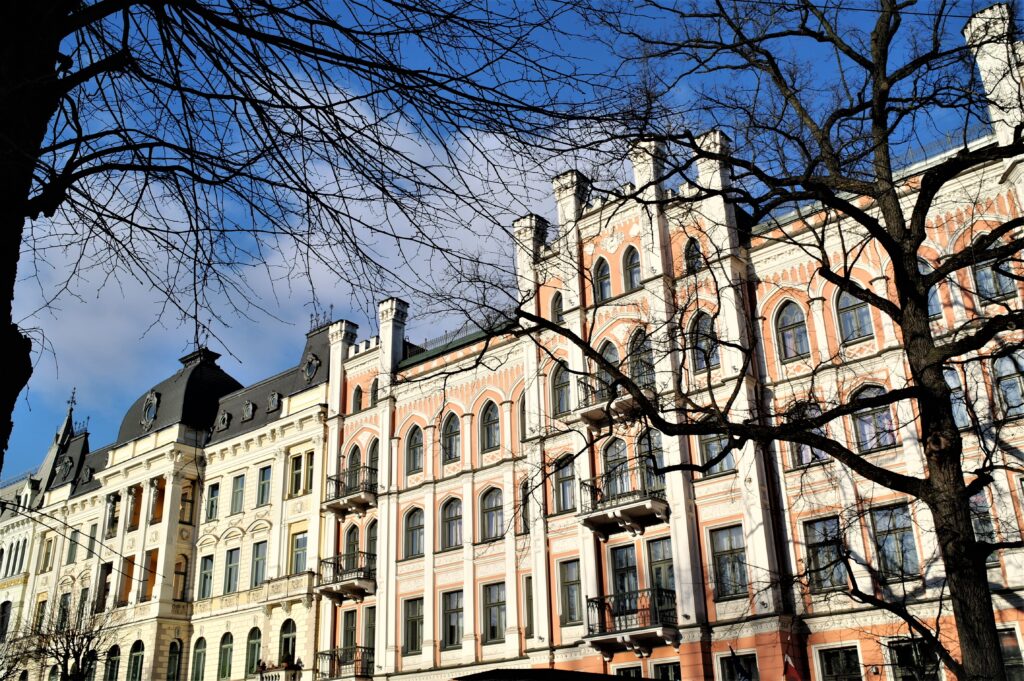
You are now entering Europe’s larges art noveau collection. A must see when exploring Riga in one day.
Art Noveau (Jugendstil) gained popularity around 1890. The style was inspired by natural forms and elements, especially flowers and plants, and was a reaction to the academic art and eclectisism of the 19th century. It was a time of economic growth in Riga, which at the time was an important city in the Russian empire. The city grew fast and the ban on erecting masonry buildings outside the town wall had just been lifted (read more about the ban here). From 1910 to 1913 between 300 and 500 buildings were built each year. Art noveau’s popularity decreased fast after 1914.
Walk along Elizabeth street to find the grandest examples, and enjoy all the different details on the buildings; flowers, faces, lions, balconies and towers. If (when!) going back to Riga, I want to take a guided walk in this district to get even more information.

The Nativity Church
On your way back to the old town, stop by the Nativity church. It is the largest ortodox church in Riga, famous for its collections of icons. It was built in neo-byzantine style between 1876 and 1883 and stayed through both world wars before the Soviets turned it into a planetarium. Even though it was restored after the independence in 1991, people still say they are going to the planetarium when going to the church today.
Freedom monument
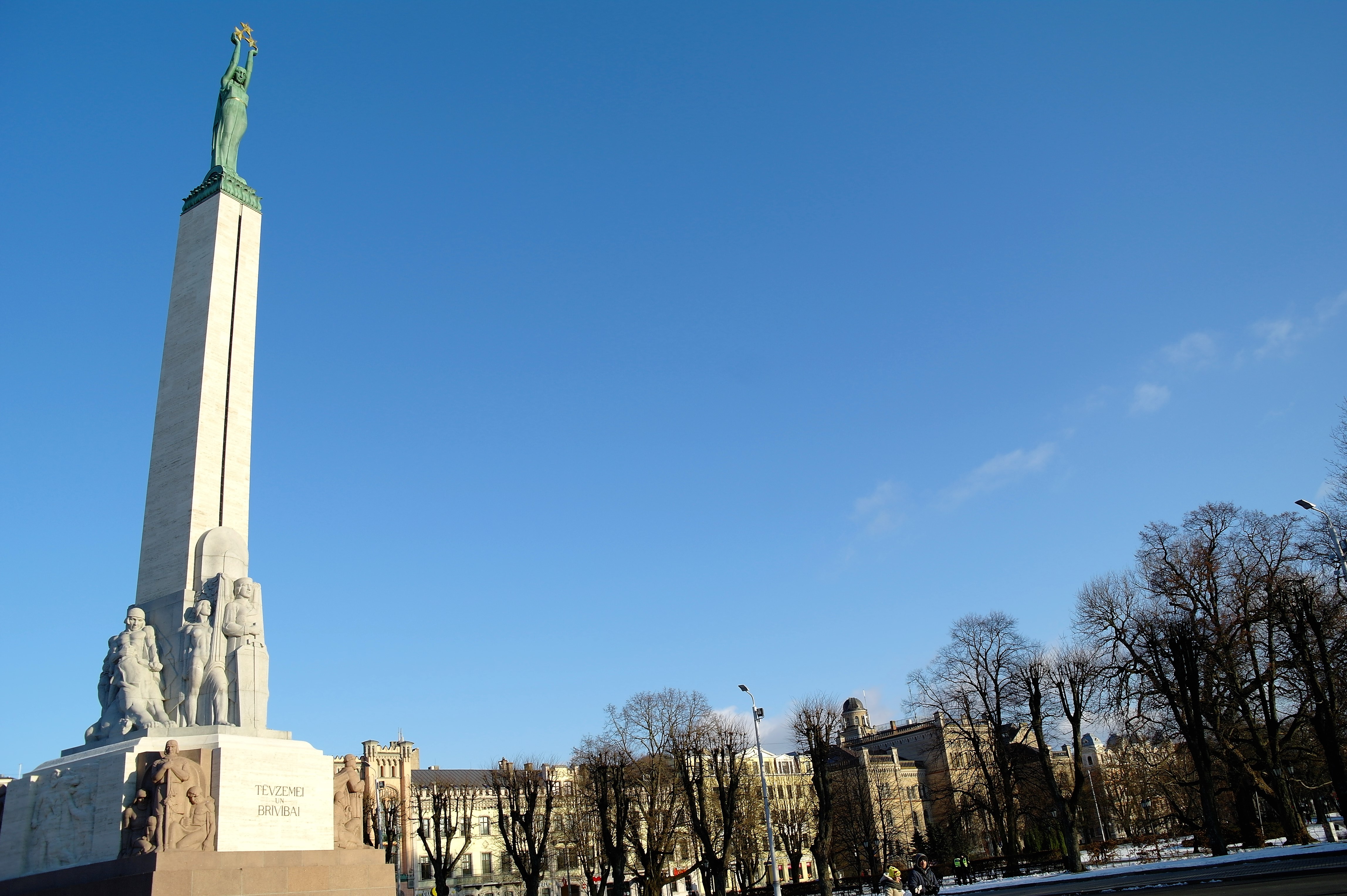
From the Nativity church, cross the canal on the Freedom boulevard and you will see a 42-meters tall monument. It shows a liberty statue holding three golden stars unveiled in 1935. One star for each of the three Latvian regions, honouring the soldiers killed during the Latvian war of independence (1918-1920).
Following the Soviet occupation from 1940 it was debated whether they should tear down the monument or keep it. They decided to keep it to avoid a mass conflict, but daring to put flowers in front of it during the next 70 years was widely known to be a “free ticket to Gulag”. KGB’s main office in Riga had panorama views to the monument and would arrest everyone trying. Today it is just as much a monument for the freedom movement in the 1980’s as for the war of independence.

The Laima clock
On the old town side of the Freedom boulevard you find the Laima clock. Erected in 1924 so that people had no excuse to be late for work, and a popular meeting place for the Rigans ever since. For the record; Laima is a Latvian chocolate brand.

The Latvian National Opera
Standing in front of the Laima, turn your head and you see the majestic opera in Riga. The opera was first opened in 1883 but has been renovated and adjusted several times since. The main hall can seat almost a 1000 people. It got a wide repetoire with operas and ballets shown several times a week from September to May.


End your Riga in one day-tour in style
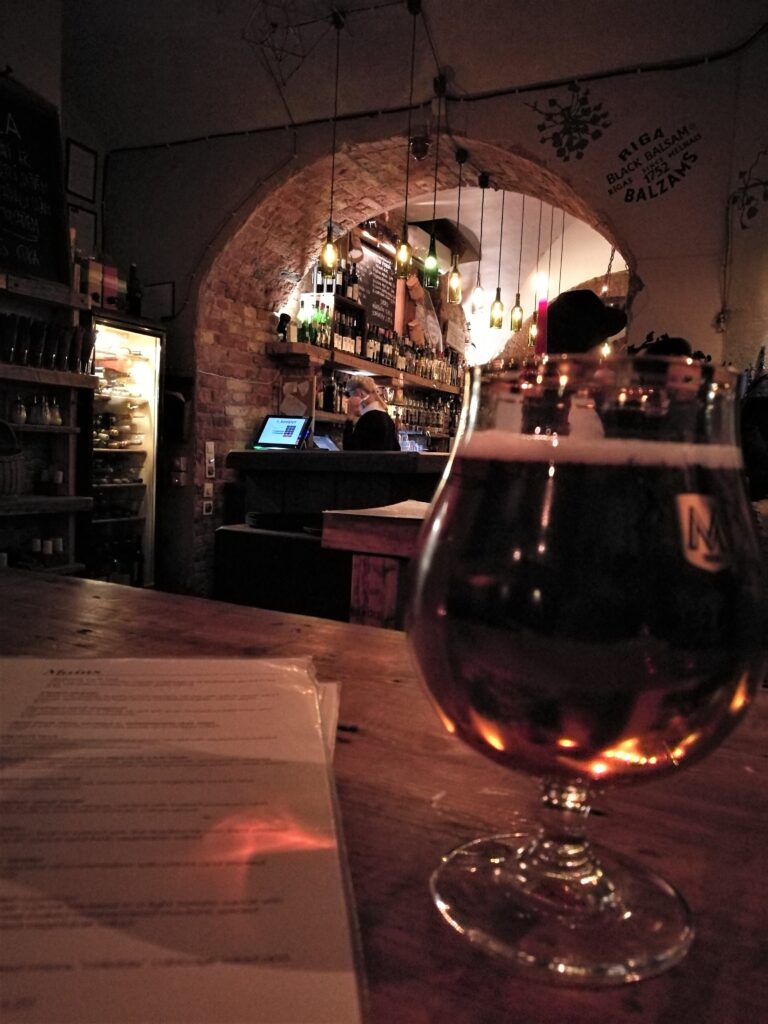
After a full day of walking, what’s better than grabbing a beer and a hearthy meal with the tunes of folk music? Folkklubs Ala Pagrabs is popular by both locals and tourists alike, based in a former wine cellar dating all the way back to the 13th century. They offer as many as 27 different types of Latvian beer and a menu combining modern and traditional cuisine. Live music is played several nights a week.
Is one day in Riga enough?
No. Even though it is possible to see all main attractions in just one day, like in Dublin, it is never enough to really get a feeling of any city. Riga has enough to offer for a weekend getaway. If you include all its interesting museums, the areas outside the town centre, and a visit to Jurmala, Riga will keep you busy for at least a week!
Need more inspiration? Read about the free tour Riga’s Moscow district here.


In Riga following your trip …big thanks …added the markets and a trip up the Science building for great views …thanks again Danny and Jeanette
Great site big thanks