

10 UNESCO World Heritage Experiences I Still Think About
The world is full of incredible places that you should hardly believe to be true. The variety of landscape, wildlife, culture, art and architecture around the globe is almost endless. Many of the most distinctive and unique of these can be found on UNESCO’s World Heritage List.
But what makes a place really stand out? After having travelled frequently for longer and shorter periods over more than two decades, and visited quite a few World Heritage Sites, I have given this question some thought.
Is it the natural and cultural beauty or the interesting facts, or is it something more? I don’t think so.

Making this list of my top 10 UNESCO World Heritage experiences, I realised that there are so many factors involved in how I have experienced different places:
- The people I met
- Who I travelled with (or if I went solo)
- My expectations
- How safe I felt
- My health and state of mind at the time
- The weather
Which also means, that even if these are my top UNESCO memories, you may not have the same great experience as I had. And if I decide to return to any, I may find it completely different.
My top 10 UNESCO World Heritage experiences
Anyhow, after having collected World Heritage sites for more 25-ish years, these are the experiences that made it to top 10 (per June 2026).
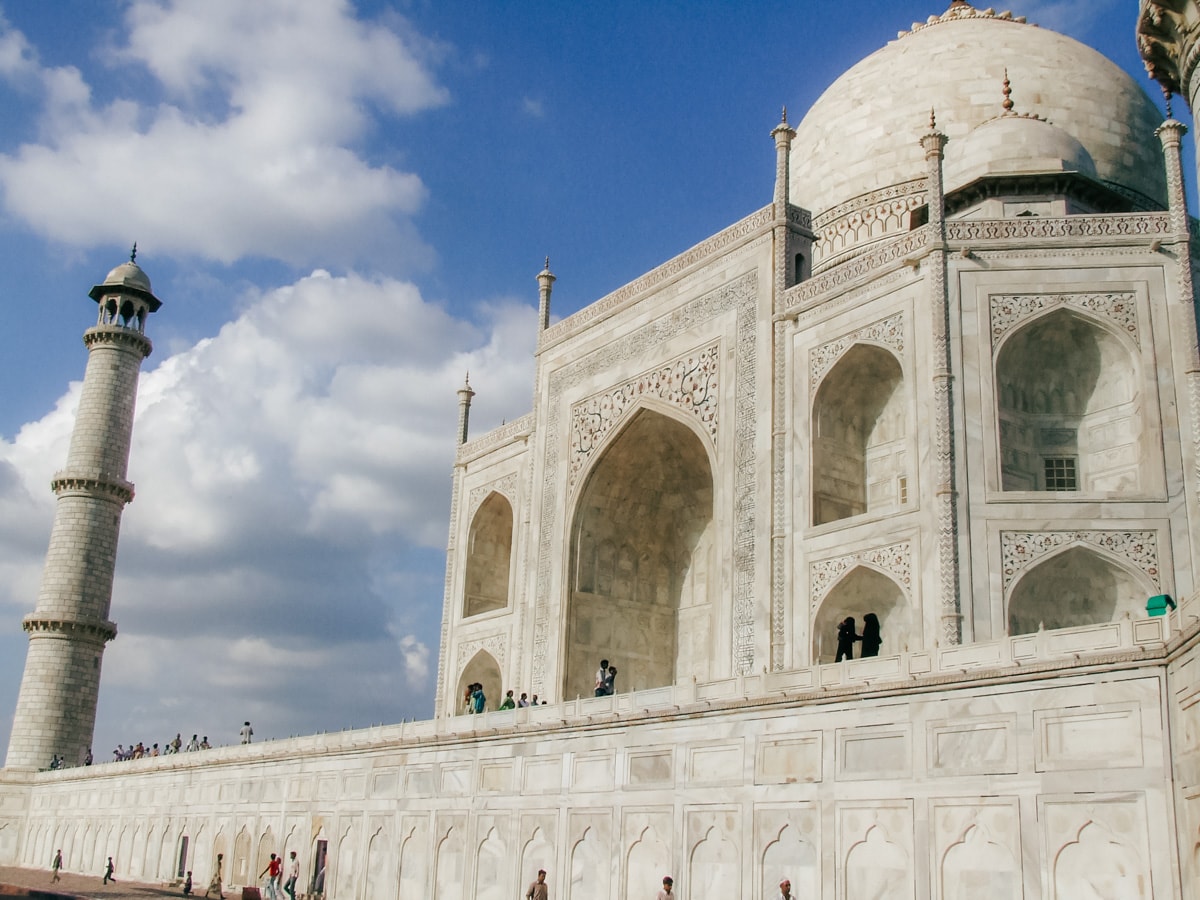
1. Taj Mahal, India
Visiting the stunning Taj Mahal in Agra in India was my first true bucket list experience. I still remember when the dream about seeing Shah Jahan’s memorial to his wife in real life first occurred. I was in my last year in elementary school when I and the two other girls in my class conducted a project about India. Yes, we were only three girls (no boys) in my class. My tiny, rural Norwegian school had no more than 30 – 40 pupils spread across 7 levels in total. And believe me, no one had ever been anywhere near India at the time. Neither the parents nor grandparents.
Nonetheless, a seed was sown in a young girl, who, even though she had only been around a few places in Europe at the time, already longed to explore the world.

Fast forward 8 years (which is a rather long time at that age), I found myself at the gates of the incredible masterpiece. Almost 20 years’ later (yes, I am feeling old writing that), I can vividly remember the sensation I had, walking through the gates and a few moments later saw the silhouette of the architectural masterpiece come through the dim morning light. The world’s largest and most expensive (possibly also the most brutal) love gift was everything I had dreamt about.
The peaceful atmosphere, the shiny bright marble, the incredibly detailed décor. The morning hours of that August day in 2006 will stay with me forever.
Why is Taj Mahal on the World Heritage List?
Taj Mahal is a masterpiece of Indo-islamic architecture and shows unique craftmanship and aesthetics in symmetry and use of various elements and colors.
2. Saint Catherine area, Egypt
At 19, a year and a half before my big Taj Mahal moment, a school trip took me on my first travel outside of Europe. It took me all the way to one of the world’s most fascinating ancient cultures. Like India and Taj Mahal, Egypt and its Pyramids was stuck on my mind my whole youth was Egypt. Because, who has not at some point been intrigued by this ancient culture?
It is safe to assume that visiting the great Pyramids of Giza should have made it on this list of my top 10 UNESCO World Heritage Sites. But it didn’t. My memory of being stuck on top of a camel while the man leading the towering animal has my camera and instead of taking my picture and letting me off, he moved us away from the rest of the group. Only after emptying my wallet, I got back on the ground with my camera safe in hand…

What I do remember as it was just last year, was my night in Saint Catherine’s area in Giza a couple of days later: After spending the afternoon walking around the tiny village so unlike any place I had ever been before, playing with the local children, I remember trying to get some rest before my 2am wake-up call. We were climbing Jebel Musa, better known as Mount Sinai. I remember hiking up and up in the pitch-black dessert night, boys yelling “yallah, yallah” around us and tea breaks in small huts along the way.
What I cannot recall is how strenuous the climb was. It is overshadowed by the memory of reaching the top just in time for streams of light breaking through blackness. Of seeing the horizon turn orange and pink as the sun rose over the mountains. The only sound was a group of Korean pilgrims singing psalms. Standing there on Mount Sinai, where myth has it that Moses was handed the 10 commandments from God, sure was an out-of-the-world experience.
Why is the Saint Catherine Area on the World Heritage List?
The area is sacred in Christianity, Islam and Judaism, and is where Moses supposedly was handed the Tablets of law by God. St. Catherines monastery is the oldest monastery still in use, dating back to the 6th century.
3. Old Bridge Area of the Old City of Mostar, Bosnia and Herzegovina
Walking over the old cobble stones surrounded by 16th century Ottoman architecture and lined with craft shop selling the most colorful rugs on one side and the glittering, green river Most on the other is another one of those memories that has stuck. At the end of the street was one of the world’s most historically interesting bridges. Stari Most. A bridge so important that it has given name to the whole town. Mostari means the bridge keepers and on each side of the famous bridge you can see, and visit, the old watch towers.
Walking around the Mostar, I could feel the bridge’s importance to the people. Mostar bridge is more than just a bridge, it is a symbol of coexistence between ethnic groups and religions through centuries. To the east of the river lived Bosnian Muslims, to the west Christian Croats and Serbs. It was destroyed during the war in 1993, but due to UNESCO, the World Bank and several European countries it was rebuilt in 2004.

But more than the history of the bridge, it was the hospitality and kindness of the locals, amidst the still visual evidences of a war that took place in my lifetime, that struck me. I remember how I was welcomed at the small chevapi place the first night. How shop owners asked me to sit for a chat even when not buying anything. How my guesthouse owner invited me for a coffee when I bumped into him on the street one morning. How I was asked to join a small group at a waterpipe bar, and we ended up talking about religion and politics and differences in culture for hours. How safe I felt as a solo female traveler.
Why is the Old Bridge Area of the Old City of Mostar on the World Heritage List?
The reconstruction of the bridge after the war in the 1990’s is a testament to the power of human cooperation and the ability of people to overcome their differences and reside in peace.
4. Bwindi Impenetrable Forest, Uganda
On the Ugandan side of the border between Rwanda, the Democratic Republic of Congo and Uganda, there is a forest so dense that it has been named impenetrable. At an altitude of 2000 meters above sea level, the forest is now a haven for all sorts of living creatures. And best known for being the home of the largest population of the endangered Mountain Gorillas in the world (you only find them in these three border countries). The local human tribes had to move when the forest was turned into a national park in 1991.
The day I spent gorilla tracking in Bwindi Impenetrable Forest is another one of those major bucket list experiences. In my humble opinion, an experience everyone should have on their bucket list. Even more so than seeing the grand Taj Mahal.

The one hour we got to spend the gorilla family was an out-of-this-world experience, but the rest of the tour is also something to remember. Our excellent guide, Omax, shared his knowledge about everything we saw and encountered on the 2-hour hike up. My kind porter, Apollon, made me understand what it was like living in this lush, but though, mountainous region. Our guards, Bella and kept us safe in case of angry forest elephants. The ladies singing and dancing to wish us luck (plus, off course, earning some much-needed money) before we left the tracking station. The young girl selling locally made souvenirs in the tiny village outside the gate.
They all participated in making this a day for the memory books. Bwindi and its gorillas are back on my bucket list. One day was not enough!
Why is Bwindi Impenetrable National Park on the World Heritage List?
Bwindi is one of the regions with the highest biodiversity on the African continent. Including tree types, butterflies, birds and mammals such as forest elephant, chimpanzees and mountain gorillas. Many of them globally endangered.
5. Ha Long Bay – Cat Ba Archipelago, Vietnam
I can’t remember the first time I saw images of the karsts popping up from azure water in Halong Bay. But I know I’ve wanted to see it ever since. However, over the years, Halong Bay has become super popular. Thousands of people flock to cruise around on the bay everyday year-round.
When my time to visit finally came in 2025, I wasn’t sure what to expect. Was it too crowded and polluted to enjoy anymore? Still, I couldn’t leave Vietnam without at least having been there.
In recent years, the Cat Ba Archipelago, incl. Lan Ha Bay, was added to the area protected by UNESCO, and I’d read that there were fewer boats going there.
So, I booked an overnight cruise on Lan Ha Bay with a mid-budget company. The only problem was, there was a lot of cruising time involved in the itinerary. It’s safe to say, that even though I’d dreamt of going there for years, my expectations were low.

Chances had it, my Lan Ha Bay cruise was cancelled last minute due to engine trouble, and I was rebooked onto a 5-star Ha Long Bay Cruise instead.
And wow! I couldn’t have asked for a better experience. The boat, the people on it and the itinerary were outstanding.
The boat was beautiful and the only downside was that I didn’t have much time to spend in my room with a king-size bed and balcony looked like a dream. It was quite small, which made it easier to connect with the other passengers. And that was exactly what I did. Only minutes after boarding, we were a group of like-minded people feeling like we’d known each other for ages.
The itinerary included all the top attractions in Halong Bay, but outside the busy hours. Which meant that we had several of the sites more or less to ourselves.
Why is Halong Bay on the World Heritage List?
The reasoning behind enlisting Venice falls under no less than 6 of UNESCO’s 10 criterions. The city is an architectural masterpiece that has had artistic and political influence far outside the Adriatic region. The city, built on 118 islands, also shows man’s struggle (and victory) against the elements.
6. Kunta Kinteh Island and Related Sites, The Gambia
A country and a place that was not on neither my bucket list nor my mind at all before I started my degree in Responsible Tourism Management in 2009. This tiny, West African country has made huge efforts in dealing with tourism over the last few decades – to the better of the local population. When I got the opportunity to go there and witness the changes first-hand, I was quick to book my flights.
First then was it that I learned of Kunta Kinteh. I was too young to have red Roots, Alex Haley’s book from the 1970’s or seen the tv-series based on it. But don’t you think my father managed to pull it out of his bookshelf when I visited only weeks before my departure to Gambia? In short, it follows his roots from his Gambian ancestor Kunta Kinteh to his modern-day American family.
What I was especially looking into on my trip, was how the Gambian tourism authorities had made changes to the popular excursion to Kunta Kinteh Island and nearby village Juffureh where Haley’s (and Kinteh’s) distant relatives still live. And I got to visit it twice. First by car together with Fatou Beyai from the tourism authorities and later on the actual excursion by boat up the river.

The first time, Fatou and I were the only visitors and we mainly walked around chatting with people who just went on with their daily lives. On the day of the tour, it was different. A small market where locals offered their crafts was set up, and if I remember correctly, every single tourist bought something. A local guide took us on a tour to the small museum highlighting the horrid actions of the human trade that found place here. And at last, we got to meet Kunta Kinteh’s descendants.
The actual James Island was last on our program. The small island in the middle of the river where the slaves were kept until they were shipped out west across the Atlantic.
The tour was touristy, but it all happened with respect. Slave trade is a topic that evokes feelings in all of us. Some of the other participants had come to learn about their history, and as one can expect being there, hearing the stories and seeing the places was emotional. Also for me. How fitting wasn’t it that a pod of dolphins caught up with our boat on our way back down the river? They certainly brought the smiles back out!
Why is Kunta Kinteh Island and related sites on the World Heritage List?
The area is a testament to the long history of interaction between Africa and Europe along the River Gambia. It is also significant for its role in the beginning of the slave trade, its abolition, and early access to the interior of Africa.
7. Hebron & Betlehem, Palestine
Not all UNESCO-sites make an impact due to their beauty or ancient, historic value. Some shake you to the bone because of the brutality of modern history. And the realization that while some places are sites of pilgrimage, they are also homes to people who struggle to meet humanitarian needs. The UNESCO World Heritage sites of Birthplace of Jesus: Church of the Nativity in Bethlehem and Hebron/Al-Khalil Old Town are places that had that reaction on me.

To get to the tombs of Abraham and his family, a site of pilgrimage for Muslims, Jews and Christians alike, we had to go through several check points. And we were guided through the old town center where nets hung above the streets in order to stop garbage and other items being thrown at people walking and shopping.
In Betlehem, Armenian Christians celebrated Christmas inside the nativity church. A place well known to most Christians, as, according to myth, the location of the stable where Jesus was born. But just around the corner, you see the tall wall separating the Palestinian territories with Israel.

I stopped for a bit with a sculptor who made and sold nativity scene figures of olive tree outside the church. He used to be an olive farmer, but since the wall separated his home on the West Bank with his land on Israeli side, it became too difficult getting back and forth through the check points every day.
The figures I bought from him still get the best Christmas decoration spots in my apartment. To me they symbolize the resilience of the Palestinian people.
Why are Church of the Nativity and the Pilgrimage Route in Bethlehem and Hebron old town on the World Heritage List?
The Nativity Church is on the list for two criteria. Not only is it a unique example of an early church in a time when the Roman Emoire converted into Christianity, but the place has also been assosiated with the actual birthplace of Jesus. Holy also to Muslims.
Similarly, Hebron is a holy site in Judaism, Islam and Christianity because of the Tomb of patriarch Abraham and his family. The town was also a crossroad of ancient caravan trading routes through the Middle East.
8. Petra, Jordan
My anticipation rose steadily during the 2-kilometre-long walk between vertical mountain sides. I have never been good at estimating any type of length or distances and had not walked for long before my heart started beating faster before a new turn. Could this be it? Numerous times it was not, until suddenly there it was! The Treasury. The impressive façade of the ancient tomb got larger and larger the closer I got until I finally stood in front of it.
This is how I recall walking into Petra was like. It was a glorious contrast to the experiences I had made in Palestine just days before. Not the temperature, though. In early January, both Israel, the West Bank and Jordan was freezing cold the minute you were out of the sun.

After reaching the Treasury, the valley of Petra opens up. A wide valley of pink rocky hills filled with smaller and larger holes. More tombs, but also living quarters. There is no wonder why Petra is recognized as one of the world’s new wonders.
Once a bustling and important trade center along the Silk Road, before it for centuries was forgotten by most of the world. Now, it is mainly a tourist site. A rather popular one as well. Traveling outside of high season has its perks. We were not the only visitors that day, but it certainly wasn’t crowded.
And as soon as I got out of the narrow, shadowy entrance, the temperature was quite pleasant as well.
Why is Petra on the World Heritage List?
Petra was an important trading center in prehistoric times, partly carved and partly built into the rocks mixing Hellenistic architecture with Assyrian influences.
9. Cinque Terre, Italy
I couldn’t make a top 10 UNESCO World Heritage site list without adding on from Italy. The country with the most listed sites in the world. With 61 UNESCO World Heritage Sites, Italy has one more than China. It was even here that my whole UNESCO project started way back when.
While I visited 4 sites during a week in Cinque Terre and Tuscany in 2025, and have visited several times throughout the years, Cinque Terre stands out.
Why? Because it’s another place I’d dreamt about for years. First, as a student, I found the Italian Riviera too pricey. Later, I never really found the time. As the years went on and social media took over travel planning, it became so popular I didn’t want to visit in high season.

So, when I looked at places to go away for my 40th birthday in mid-October, Cinque Terre popped up. And it was the perfect match.
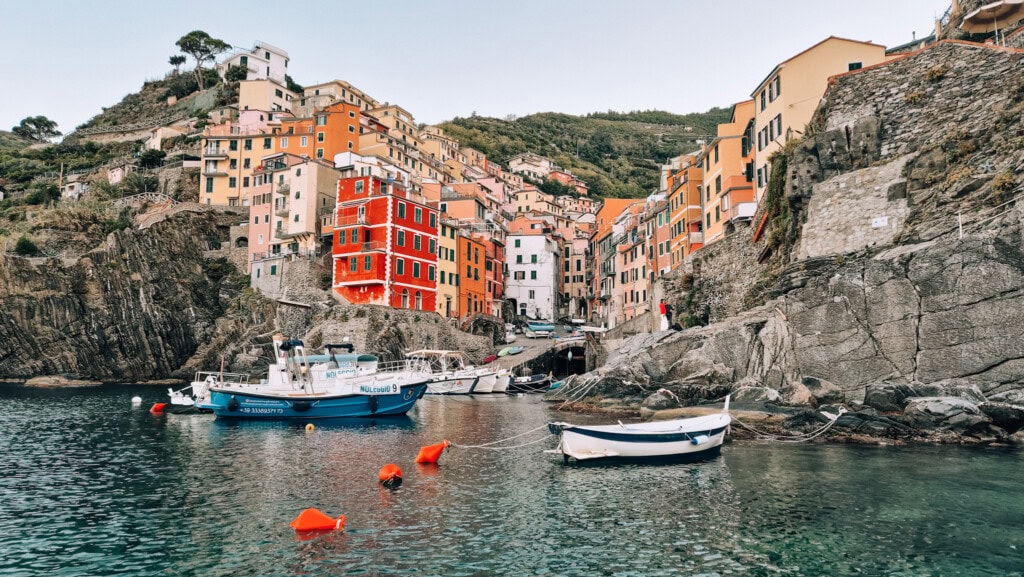
I spent the last days of my 30s walking up and down the hills between the five colourful villages. Sipping sweet wine and orange juices at small bars in the middle of the winyards. Saw the most beautiiful sunsets together with all the people in Riomaggiore. Indulged in gelato and Italian coffees (including affogato).
And my big day started with a swim in the Ligurian sea at sunrise. Cinque Terre was a dream and I already want to go back.
Why is Cinque Terre on the World Heritage List?
Portovenere, Cinque Terre, and the Islands are listed for its unique cultural landscape, where generations have shaped steep coastal cliffs into terraces, vineyards and colourful villages connected by old footpaths. It is considered an outstanding example of how people have adapted to a difficult natural environment over centuries.
10. The Medina of Marrakech, Morocco
The last of my 10 most memorable UNESCO World Heritage experiences is also my most recent on this list.
Stepping into the Medina of Marrakech is like stepping back in time. Except for the many motorbikes and the number of tourists, I am sure it has not changed much the last 100 years. Bustling with people, cats, donkeys, mesmerizing architecture, colorful spices and handicrafts, calls for prayers from the minarets and remnants from the prosperous trade across the Sahara, Marrakech was high on my bucket list for years. And I finally got around to visit on my week traveling in Morocco in January 2023.
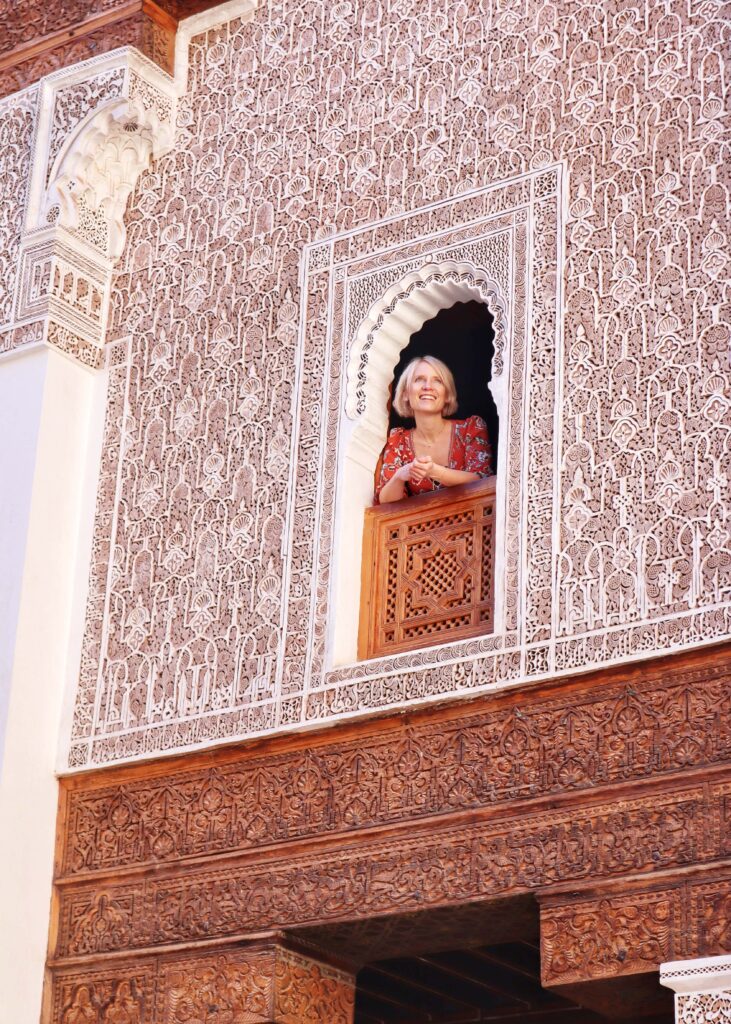
With me, I had my 78-year-old father. An architect by profession (will he ever retire?) and somewhat of an explorer by heart (even though this was his first time on the African continent), Marrakech had also been a dream of his. It was so lovely walking around the crazy maze of the medina with him.
Together, we admired the stunning architecture and décor of Ben Youssef Madrasa, got overwhelmed at huge square Jemaa el-Fnaa and amazed by the grandiosity of the El Badi Palace. An in general, just fascinated by all the quirky details of Marrakech.
After exploring the city for three days we ventured on to UNESCO-listed Ait Ben Haddou across the Atlas Mountains and at last ending up in Essaouira World Heritage site on the coast.
A trip I will surely remember for life. Not only because I got to share it with my father, but definitely also because of Morrocco’s fabulous history, architecture and people!
Why is the Medina of Marrakech on the World Heritage List?
Marrakech Medina is a well-preserved example of a medieval Islamic city. It is a unique and authentic place that reflects the rich history and culture of Morocco.
Extra: Bryggen in Bergen, Norway
This one didn’t make it on my top 10 list, but not because it does not deserve a spot there. The old wharf, Bryggen, in Bergen is probably the dearest of all the World Heritage sites to me.
I have visited Bryggen countless times – I even worked there as a guide one summer. Even so, the interesting story and the mystic of the colorful, Hanseatic facades and the narrow, wooden-floored lanes between the long rows of buildings still strikes me. A visit to Bergen is never complete without a stroll around the wharf.

Walking around here, it is almost like you can hear German voices talking and smell the stockfish ready to be shipped out to Europe. Today, Bryggen is a lively part of Bergen town center, with small shops, galleries, cafés and a few good restaurants.
Why is Bryggen in Bergen on the World Heritage List?
The old wharf in Bergen is a testimony of the Hanseatic social organization and is a well-preserved example of a medieval trading port – one of the largest in Northern Europe at its hight.
Why are these my top 10 UNESCO World Heritage sites?
Have you read this far; you have probably realized that experiences are not made up entirely of the world heritage sites alone. They are a mix of the interesting places and the circumstances of my visits. I believe it reflects how most people experiences a place or an event.
On top of these 10 (11), I have visited plenty both interesting, beautiful and brutal places on UNESCO’s list that could have made into this blog post. Such as my visit to Auschwitz Birkenau on my solo train travel around Poland. It was a place I had wanted to visit for ages and should definitely have been a place that stuck to my skin. I mean, it is one of the most important symbols of how gruesome man can be. Nevertheless, it did not.
All thanks to the guide and how our tour was handled. He might just have had a bad day, but I left with the feeling of just being another tourist on an assembly line. And that the most important thing was to get through the manuscript in time. Some of my co-visitors did not help either, being more interested in having their lunch break than remembering time…
Walking around the Kazimierz neighborhood of Krakow on my own, left me more emotional than the guided tour to one of the cruelest places on earth.


