


13 Things to See and Experience in Ho Chi Minh City
Heads up: This article may contain affiliate links.
The gateway to the Mekong Delta is a bustling city that never seems to sleep. Among the never-ending stream of motorbikes, modern skyscrapers rise next to historic colonial buildings, street food carts sit outside stylish restaurants, and traditional markets compete with shiny shopping malls.
Ho Chi Minh City was the final stop on my journey through Vietnam, and after weeks of smaller cities, ancient towns and rural landscapes, arriving here felt like stepping into a completely different side of the country.
While it may not have as many historic sights as Hanoi, there is plenty to see and experience, and I definitely think it deserves a couple of days on your Vietnam itinerary.
In this guide, I share 13 of the best things to do in Ho Chi Minh City based on my own visit and research, along with practical tips to help you plan your stay.
Affiliate Disclosure:
This article may contain affiliate links. If you make a purchase through one of these links, I may earn a small commission at no extra cost to you. This helps support Heritage Wanderlust and allows me to keep creating free travel guides and helpful travel content.
Introduction to HCMC
Ho Chi Minh City is Vietnam’s largest city and its main economic hub, with a very different feel from the capital, Hanoi, in the north. Located in southern Vietnam, not far from the Mekong Delta, the city has long been an important centre for trade and commerce.
It grew significantly during the French colonial period, when Saigon became the capital of French Cochinchina. Some of the most recognisable landmarks from this period are still part of the cityscape today, including the Notre-Dame Cathedral and the Central Post Office.
Saigon later became the capital of South Vietnam until the end of the Vietnam/American War in 1975. The following year, the city was officially renamed Ho Chi Minh City.
Vietnam itinerary: 3 weeks from North to South
A City of Contrasts
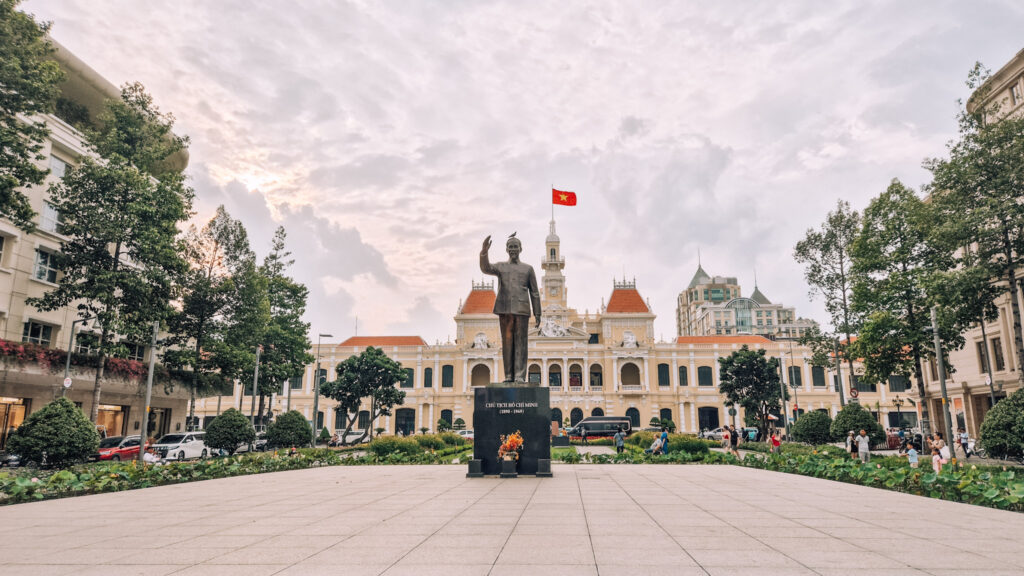
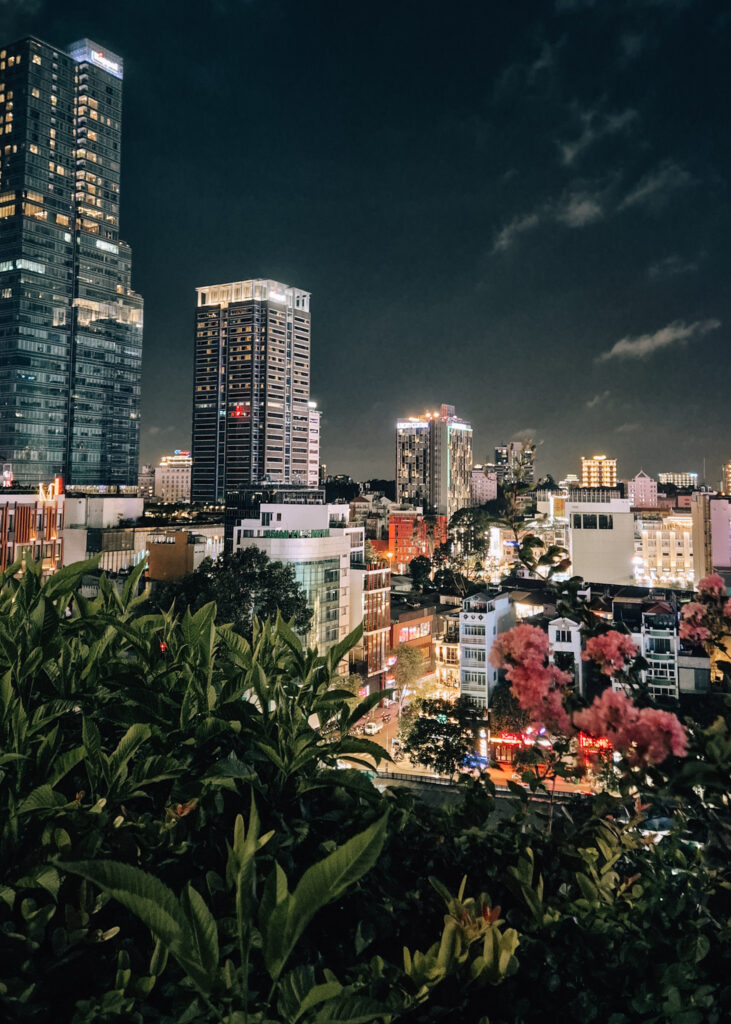
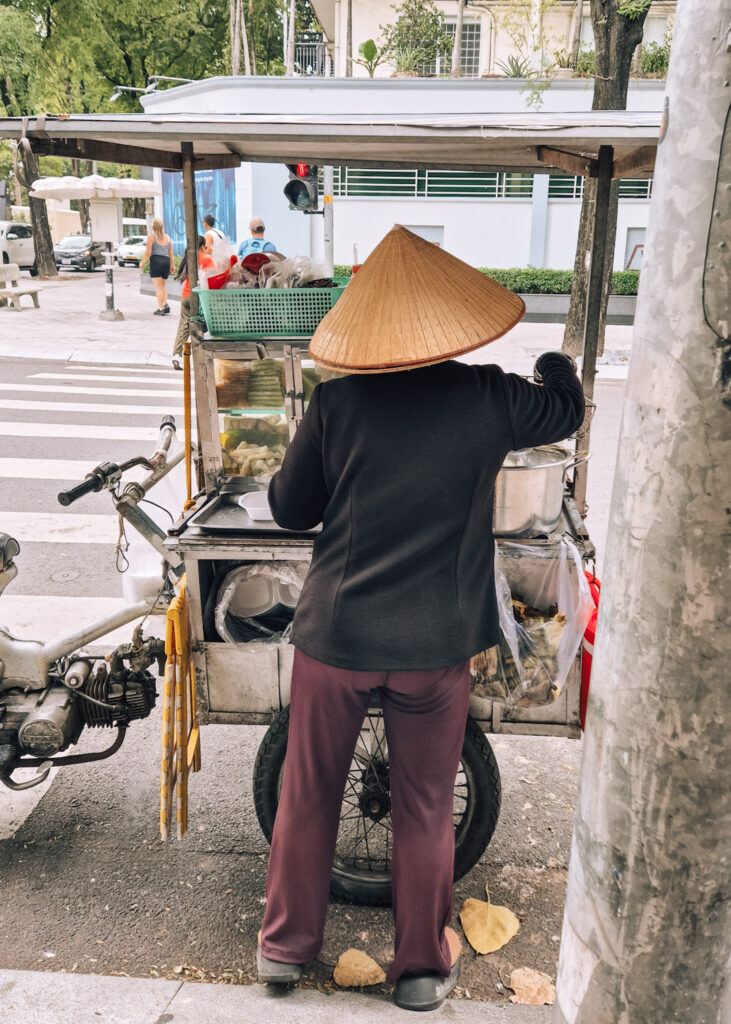
Today, HCMC is a fascinating mix of old and new. Historic buildings and traditional markets sit alongside rooftop bars, modern shopping centres and an ever-growing skyline. But what stood out to me most was the energy. The traffic is relentless, pavements become extensions of shops and cafés, and there always seems to be something happening around you.
It can feel a little overwhelming at first, especially when you are trying to cross the road, but that is also part of the experience. Ho Chi Minh City isn’t a place I would visit just to tick off famous sights. Much of the appeal is simply experiencing the city itself.
Ho Chi Minh City or Saigon?
You will probably hear both Ho Chi Minh City and Saigon while visiting, so what is the difference?
Saigon was the official name of the city until 1976, when it was renamed Ho Chi Minh City after the reunification of North and South Vietnam. Today, Ho Chi Minh City is the official name, often shortened to HCMC.
However, the name Saigon never disappeared. It is still widely used in everyday conversation, by businesses and on signs around the city. You may also see Saigon used specifically for the central part of the city, particularly District 1, while Ho Chi Minh City refers to the much larger city as a whole.
Throughout this article, I mainly use Ho Chi Minh City, but you will also see HCMC and Saigon, just as you will when visiting the city.
Things to do in Ho Chi Minh City
Now, over to the fun stuff! How to make the most of your time in this city so full of contrasts. And as you’ll soon notice, contrasts are also what this list is built on. It covers everything from must-see attractions to nice things to do to disconnect from the, at times, heavy history.
1. The Sights of Saigon Tour
This is the perfect tour to kick-start your days in Ho Chi Minh City. It’s offered by XO Tours, a locally owned, women-run company offering guided group tours around the city by motorbike. And if driving a motorbike in Saigon’s immense traffic sounds overwhelming, don’t be scared. You’ll be teamed up with a female driver who’s pro at manoeuvring the streets.
The Sights of Saigon is a morning tour where you get an overview of the city’s most important attractions, as well as lesser -places and hidden gems, a good understanding of the history and a taste of the local food culture.
Your driver picks you up at your hotel in the morning, before you meet the guide and the rest of the group at the first stop. At the end of the tour, your driver takes you back to your hotel.

2. War Remnants Museum
Not the cheeriest place to visit on your holiday, but in my opinion an absolute must. You just can’t get around the history of the Vietnam/American War when you visit Vietnam. It was so horrific and lasted for so long in all parts of the country, and since it’s not really that long ago – everyone born before 1970 still remembers it and it’s had its effect on everyone.
Over several floors of exhibitions, the War Remnants Museum shows the war from a Vietnamese perspective. The museum displays photographs, personal stories and objects from the war, with a particular focus on civilian victims, war crimes and the effects of Agent Orange. Outside, you will find tanks, helicopters and aircraft.
Some of the exhibitions are very powerful and contain graphic images, so this is not an easy museum visit. Allow around 1.5 to 2 hours, or a little longer if you like to read everything.
3. The Independence Palace
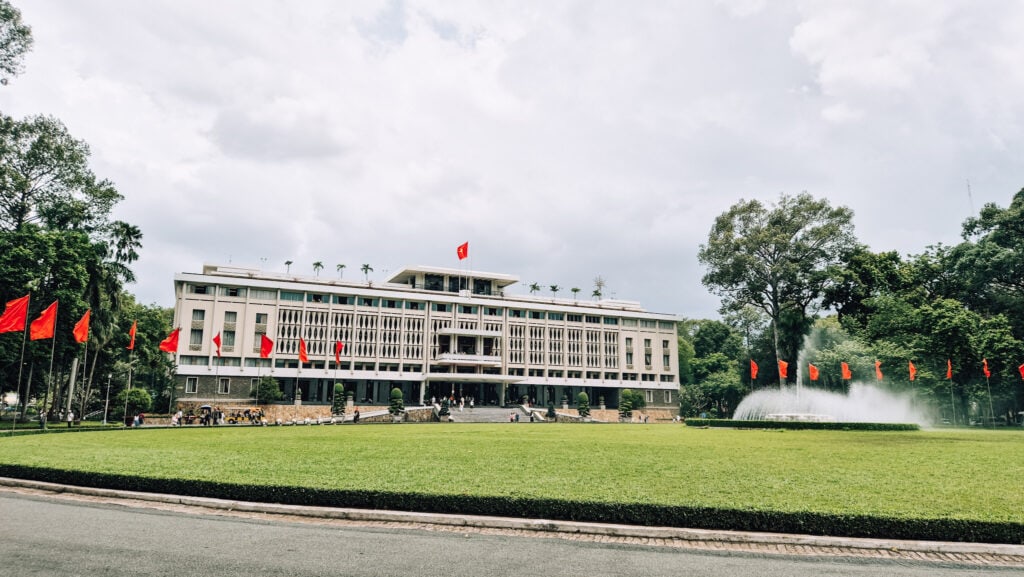
Museum and the Independence Palace from the outside. It’s perfect for exploring more on your own later.
The Independence Palace is also known as the Reunification Palace, and one of the city’s most important historical landmarks. The palace is best known as the place where the war came to an end on 30 April 1975, when a North Vietnamese tank drove through its gates during the Fall of Saigon.
Today, you can explore the remarkably well-preserved rooms, including presidential offices, reception halls, private living quarters and the underground command bunker. Much of the furniture and interior design remains unchanged, making the palace feel like a time capsule from the 1960s and 1970s.
The Independence Palace is just a 10-15-minute walk from the War Remnants Museum and ideal to visit after.

4. Street Food Tour
Food is a big thing in Vietnam. In Ho Chi Minh City too. And the best way to learn about it while trying lots of different things, is by doing a food tour.
If this is your first destination in Vietnam, I even recommend you do a food tour on your first evening. This will make it easier to find your favourites early on, as well as it helps beating jet lag as you need to stay awake till it’s over. I did a street food tour in Hanoi on the first night of my first visit, and it truly was the best decision I could have made.
A food tour won’t just teach you about the food and the tastes, you’ll learn a lot about Vietnamese culture at the same time.
If you do a quick search on GetYourGuide, you’ll see that there are tons of tour options. I didn’t do a food tour in HCMC, but again I want to give a shout-out to XO Tours. The street food tour is their most popular and just like the sightseeing tour, they drive you around the city on motorbike to find the best tastes.
5. Notre-Dame Cathedral Basilica of Saigon
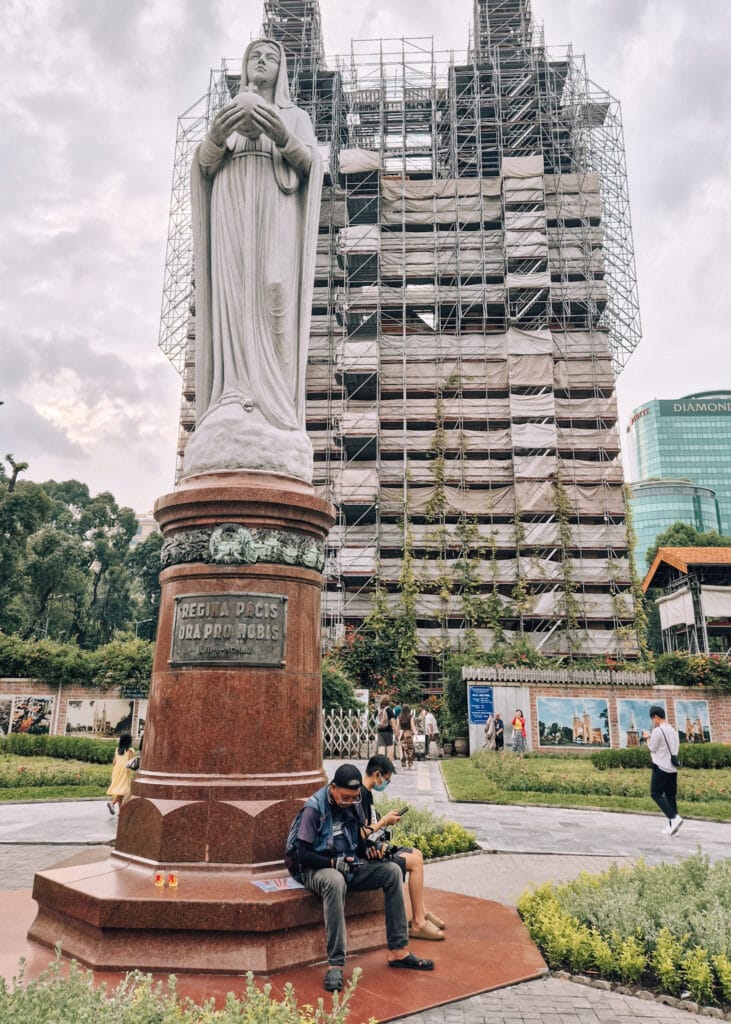
Did you know Ho Chi Minh City has its own version of the Notre Dame Cathedral? It’s not as big as the original, but the red-brick basilica is still one of the city’s best-known landmarks.
The cathedral was built by the French between 1863 and 1880, when the city was still known as Saigon. Many of the materials were brought all the way from France, including the distinctive red bricks. The two bell towers were added later and rise almost 60 metres above the busy streets.
The cathedral has been under renovation since 2017 and unfortunately it was covered with scaffolding when I was there. It is supposed to be completed in 2027, so hopefully you’ll be able to see it properly and go inside soon.
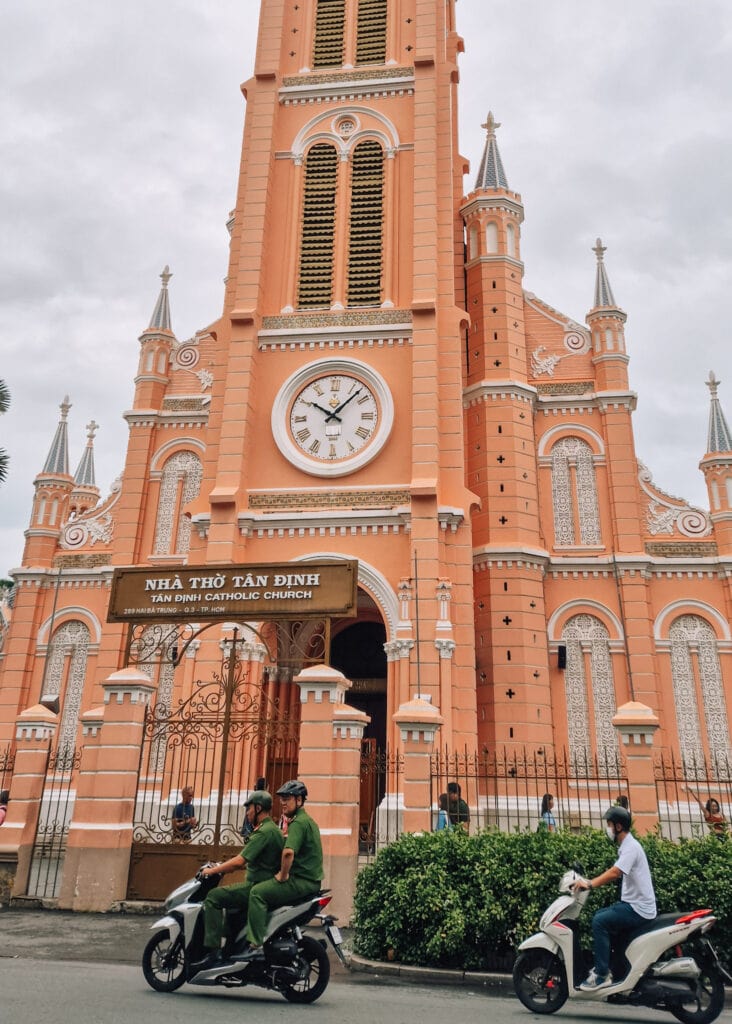
In the meantime, you should check out the instafamous, bright pink, Tan Dinh Church near the Tan Dinh Market.


6. Send a Postcard from Saigon Central Post Office
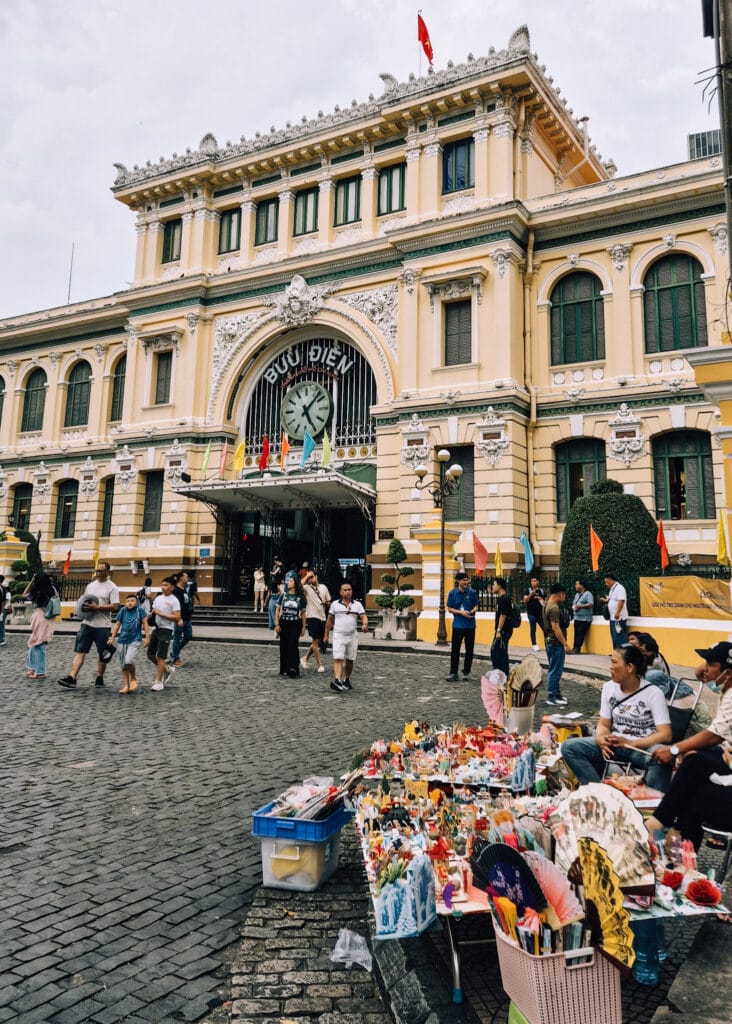
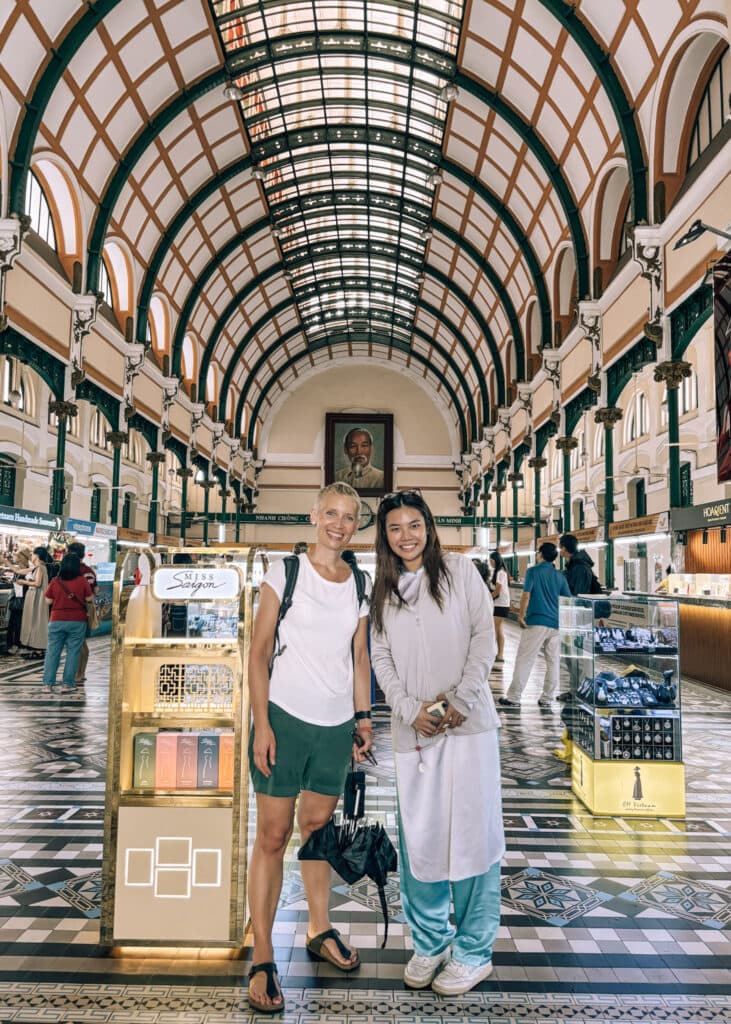
A fun must-do in Ho Chi Minh City is to send a postcard from the historic post office. It’s located right next to the Notre-Dame Cathedral and a city icon worth visiting even if you don’t want to surprise anyone with snail mail.
The Central Post Office was built by the French between 1886 and 1891, when Vietnam was part of French Indochina. Inside, you can still see what it looked like in its glory: the high arched ceiling, iron beams and old maps make it feel more like a historic European railway station than a post office.
And even though it looks like it’s mainly a tourist attraction, it is still a working post office. Buy a postcard from one of the stalls, write something on it and go to the post tills to send it. Just tell them to which country and they’ll give you the stamps. As in most places in Vietnam, cash is king.
I found the perfect card for my father, who was watching my ginger cat while I was away. It took 3-4 weeks to get there.
7. Saigon by Night
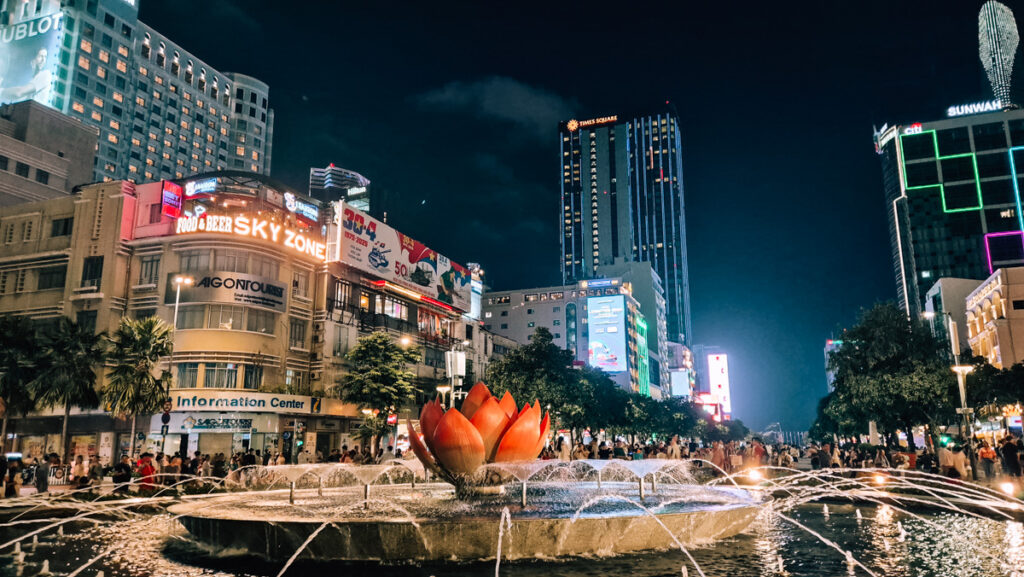
The city really comes to life after sunset. Streets and restaurants fill up with locals and tourists; neon signs are glowing; and the music from Bui Vien bar street can be heard far away.
While it’s easy and fun to walk around District 1 in the evening, why not join a tour that takes you to parts of this massive city that is difficult to visit on your own? That is exactly what you get on this tour.
I promise that this is the last time I’ll mention XO Tours here. I get that by now it may look like this whole article was sponsored by them, but I hope you believe me when I say it wasn’t. Their Instagram channel has been one of my favourite resources for inspiration and information about Vietnam and Vietnamese culture for years, and I loved how well organised the tour I did with them was.
And recommending great female-run companies are never wrong, is it?!
While their Sights of Saigon tour takes you to historical and cultural attractions around the city, the Saigon by Night tour gives unique insights into local life. Female motorbike drivers take you around to four different districts, and you even get to visit a family as well as taste some local specialities.


8. Browse Around the Ben Thanh Market
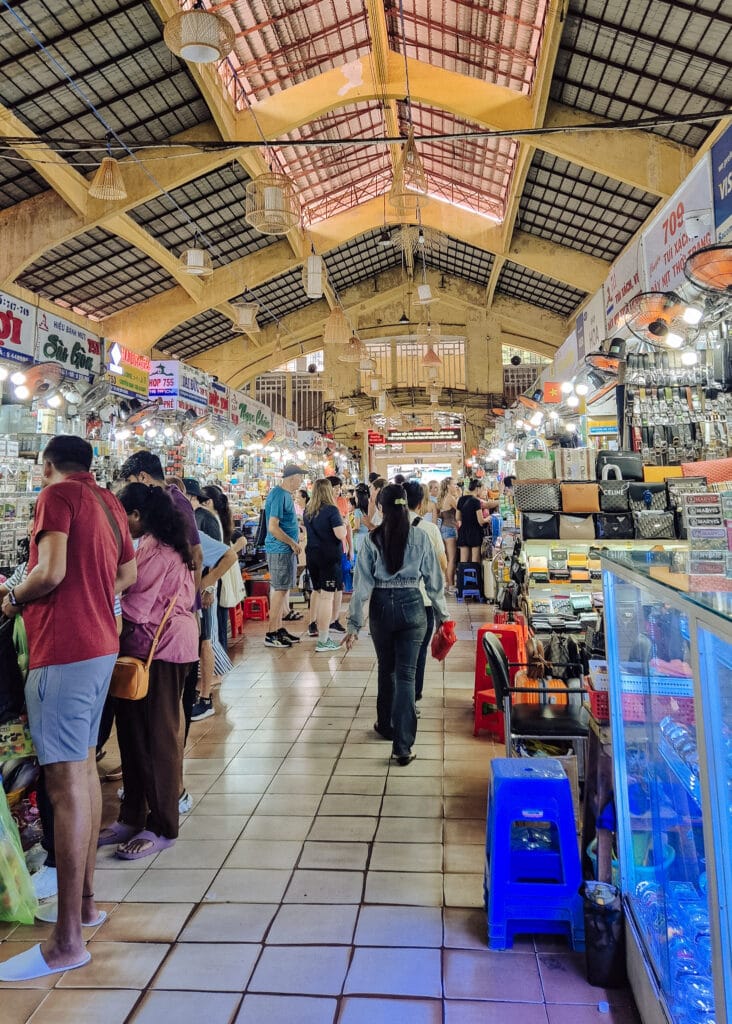
The Ben Thanh Market is not the only market in the city, but the best known and easy to get to. Even if you don’t plan to buy anything, it’s well worth browsing through.
The market hall standing today was built by the French in 1914 and is recognisable by the clock tower above the main entrance. The building is massive, with four entrances in total, all decorated with images showing some of the good traditionally sold inside.
Today, you find stalls selling literally everything in here. From fresh meat and fish to clothes and souvenirs. It’s become quite touristy, so be prepared to bargain if you decide to purchase anything.
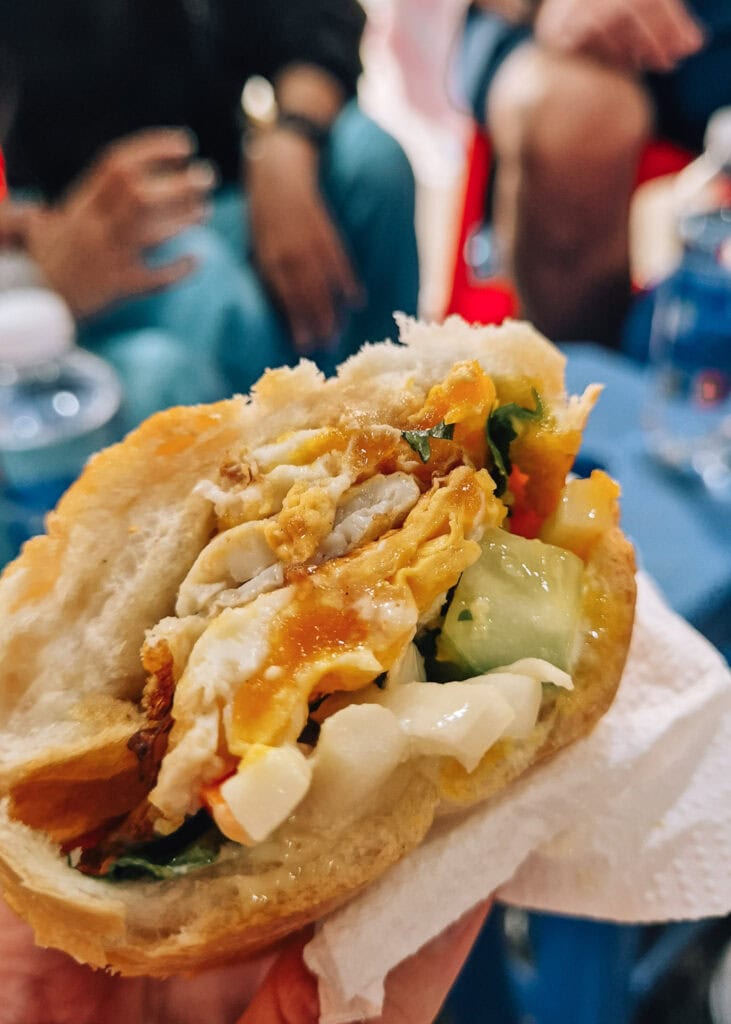
If you want a less touristy market, go to the Tan Dinh Market next to the pink church instead. This is where I had the best banh mi of my whole Vietnam trip!

9. Get Stuffed at Pizza 4P’s
Okey, so this one is a bit random. And a pizza recommendation may not be exactly what you expect from a guide to a Vietnamese city. But if you’re like me, you’ll crave some pizza and pasta between all the tasty noodle soups.
Pizza 4P’s = Pizza for Peace!
Pizza 4P’s isn’t your typical pizza place. It’s a Japanese-founded restaurant chain that first opened in 2011, specialising in an Italian-Japanese-Vietnamese fusion. They even have their own cheese factory, and I highly recommend trying their homemade burrata.
They have several restaurants around Saigon, so find the one closest to you and make sure to book a table!


10. Stop by Café Apartment
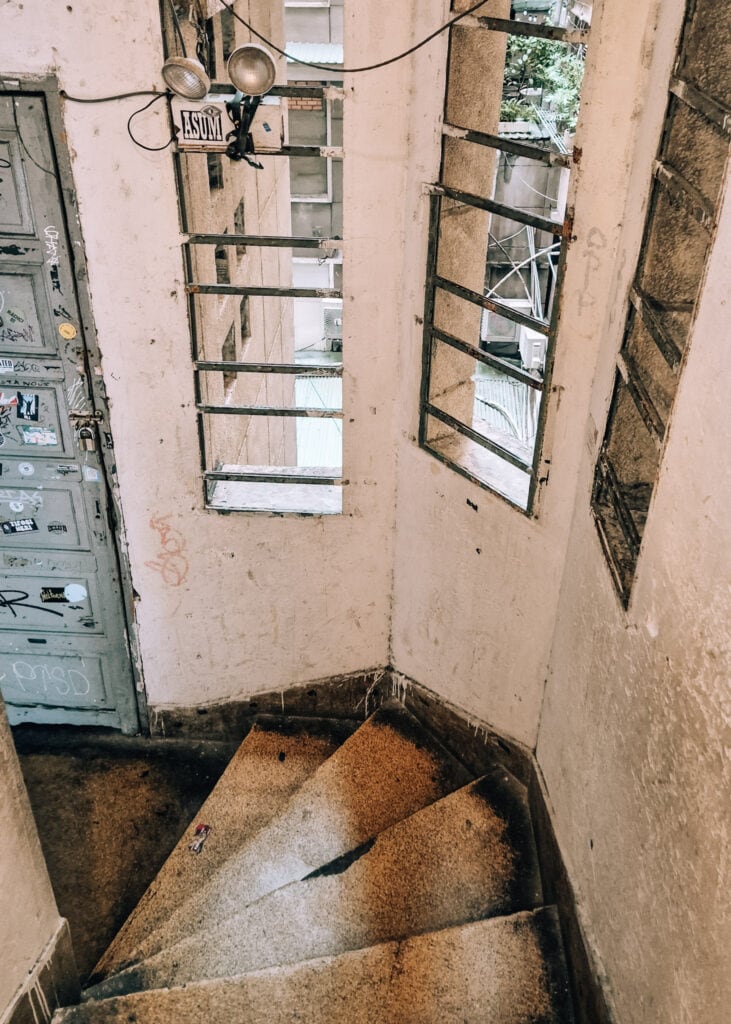
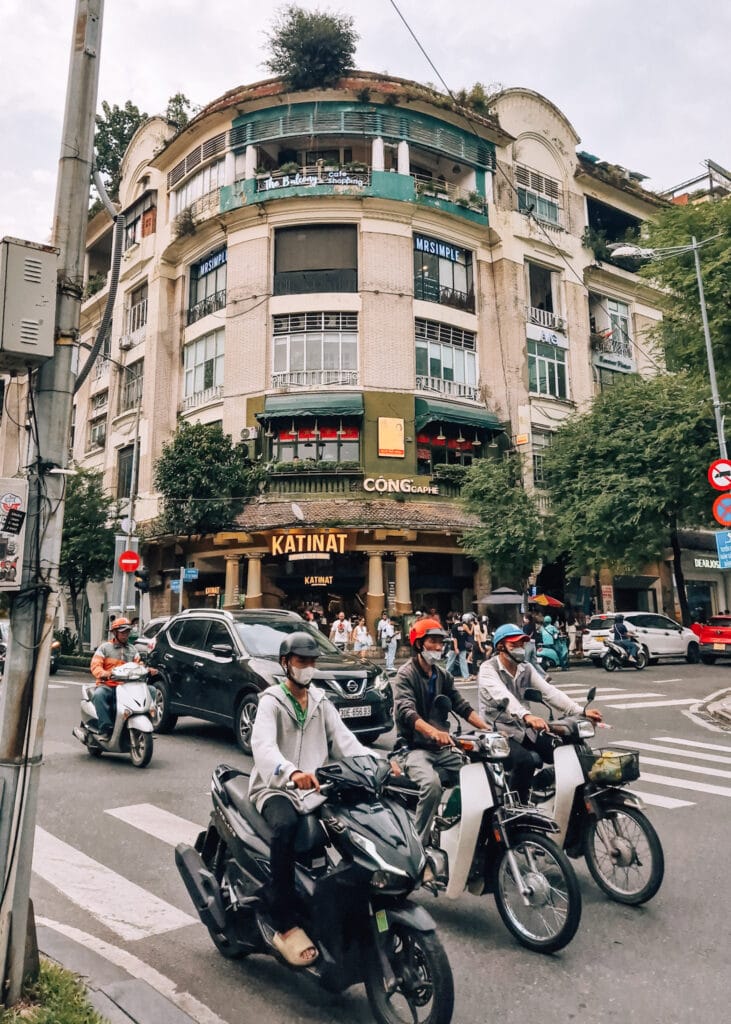
Have you even been to Ho Chi Minh City if you haven’t stopped by Café Apartment? Located at 42 Nguyen Street, this is one of the most unusual buildings in the city. It was built as an apartment block in the 1960s, first housing American military officers and later South Vietnamese government officials.
Now, all the old apartments are turned into small cafés, restaurants and shops. From the walking street below, you can see that all the balconies look different with colourful signs, lights and plants.
When visiting, you can either queue up and pay a small fee to take the lift or climb the stairs for free. I recommend finding a table on a balcony, especially if you come around sunset, and watch life go on on the Nguyen Hue street below.
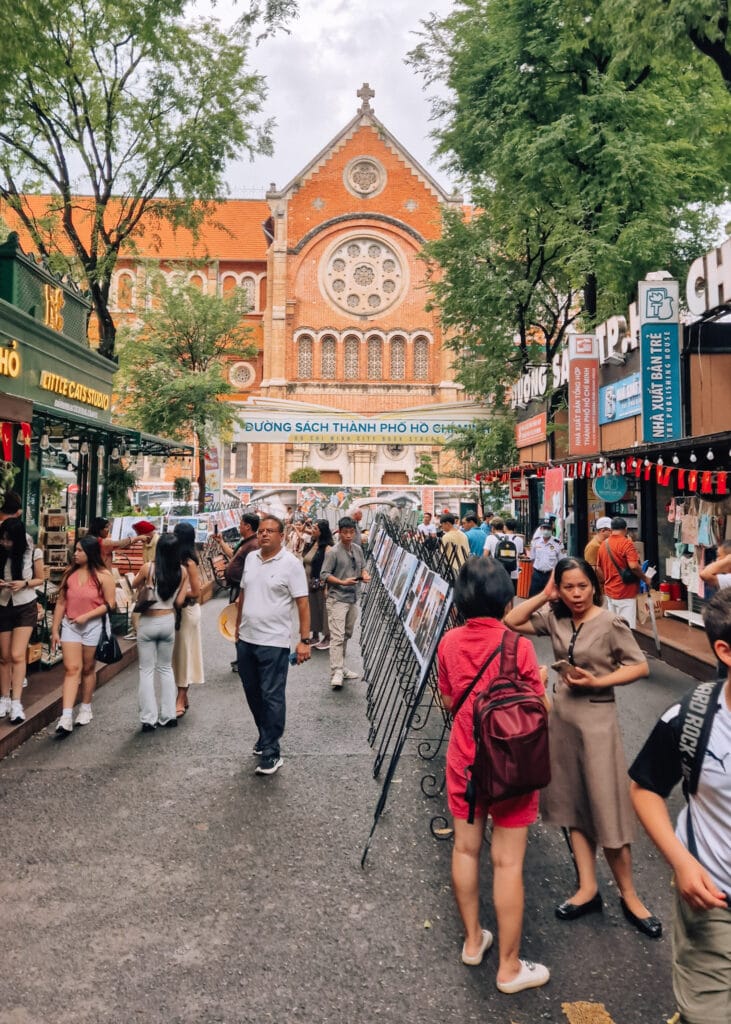

11. Book Street – A Book Lover’s Dream?
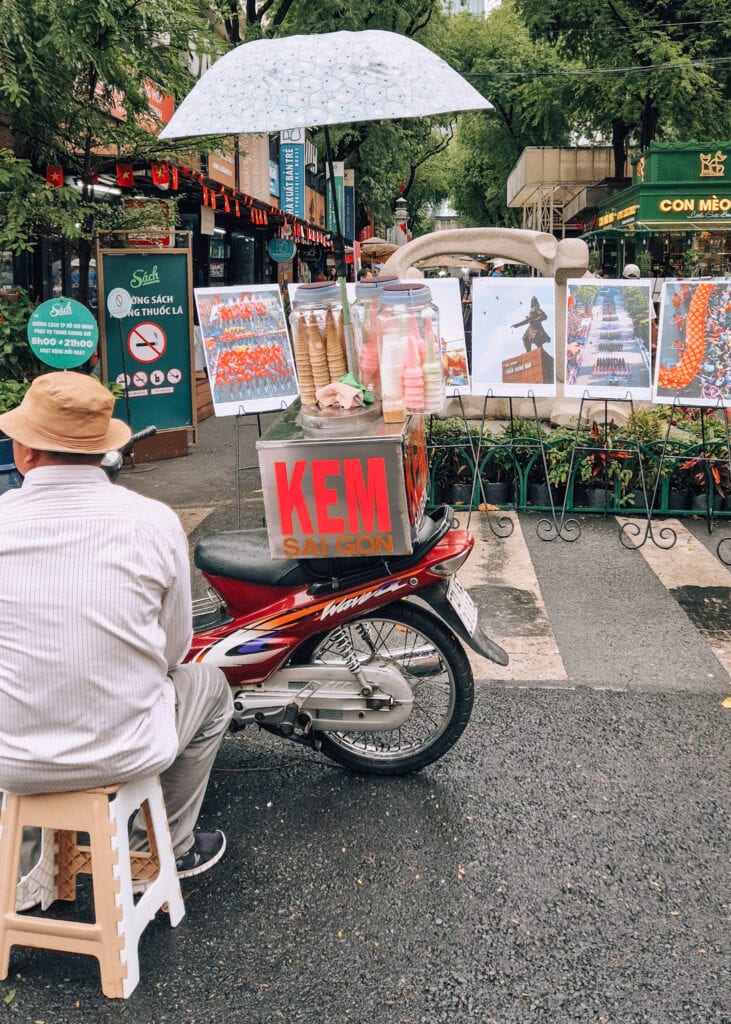
A whole street filled with bookstores and book cafés? Yes, please! Nowadays I mainly travel with my Kindle, but I still love being surrounded by book. And if you do too, Ho Chi Minh City’s book street is a must.
Located next to the old Post Office and the Notre Dame Cathedral, Nguyen Van Binh is a short pedestrian street dedicated to exactly books. It officially opened in 2016 as a space to promote reading and bring publishers, writers ad readers together.
Most of the books sold here are in Vietnamese, but you can also find some in English as well as postcards and other souvenirs.
I didn’t buy anything, but enjoyed just sitting at café, people watching and reading on my Kindle. Although, most of the time was spent chatting with children and students eager to learn English.

12. Relax by the Pool
A visit to Ho Chi Minh City involves some heavy history and lots of walking. And whatever time of the year you visit, it will be hot. So, I recommend booking a hotel with a pool and plan your days wisely with time to enjoy said pool.
My hotel had a rooftop pool with views to the cityscape, and while it wasn’t the best meals I had on my trip, kicking back here for lunch and refreshments after hours og sightseeing was priceless.
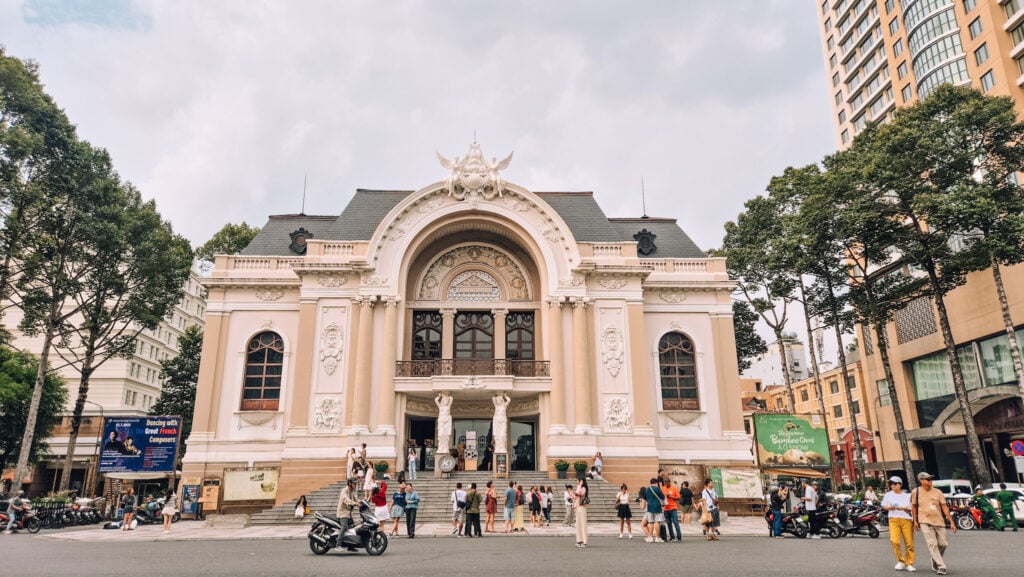
13. Visit the Opera House and See the A O Show
Saigon Opera House is one of the city’s finest French colonial buildings. It opened in 1900 as a venue for opera, theatre and other entertainment primarily for the French population.
From the 1950s it was used as South Vietnam’s National Assembly, before reopening as a performance venue in 1979.
The best way to see the interior of the beautiful opera house today is by purchasing tickets for a live performance. The 60-minute contemporary circus, A O Show, is the most popular. You can buy tickets on GetYourGuide here.
Unfortunately, the show doesn’t run every day, so make sure to check the calendar first. It wasn’t on during the days of my visit, but I really hope I get to see it on my next time!
Other Things to Do in Saigon
If you have more than just a couple of days here, there are of course a lot more to do. From just strolling around the city and getting lost to stopping by Instagram famous cafés or go shopping. Traditional markets isn’t your only option for shopping; you get everything from luxury brands to high street fashion here.
Visiting the Cu Chi Tunnels is a popular half- or full-day trip. The tunnels were used by Viet Cong soldiers as hiding spots, as well as for communication, supply routes, hospitals and more. A trip here gives you a hands-on and interactive take on history.
A full-day trip to the Mekong Delta is another option. Leave the big city in the morning and spend the day exploring life by the river. I thought about doing this, but ended up saving it for when I had time for more than just a day trip.
Browse Activities and Tours in Ho Chi Minh City here


Travel Guide to Ho Chi Minh City
Now that you’ve got an overview of some of all the things there is to do in the city, let’s look at some practical details for visiting. Ho Chi Minh City is huge and as a first time visitor it can feel a bit overwhelming to plan your stay.
Where to stay
If you’re visiting for the first time and only for a few days, look for accommodation in District 1. Here you are within walking distance from most attractions and lots of great places to eat.
You’ll find hotels within every budget, but I must admit I found a bit harder to find a top-notch mid-range budget hotel here compared to for example Hanoi.
In the end, I was lucky and found a great offer for the 5-star rated Au Lac Charner Hotel last minute. It was everything I needed for my last couple of nights in Vietnam, with good location, a large comfy room, soft bed (!) and rooftop pool. That said, I’m not sure it’s worth it at full price compared to some of the much more budget friendly places I stayed during my trip.
My next visit to Saigon is already planned and I’m looking forward to testing a completely different type of hotel.
If you are visiting for longer, it can be worth it to check out District 3 as well.


How much time do you need
This one is a bit tricky, as it comes down to your interests. Compared to Hanoi, I found Ho Chi Minh City to have less attractions and things to do. At the same time, it’s a huge, modern city and if you start venturing outside District 1 there are enough things to do for weeks. Especially if you decide to do some day trips and want to spend time café hopping, shopping and really exploring the food scene.
To see the main sights, you should at least allow 2-3 days in Ho Chi Minh City. Anything less will feel rushed.

How to get around
Within District 1 it’s easy to walk from place to place. But if you’re going further or simply don’t feel like walking, Grab is your best friend. It’s Vietnam (and Southeast-Asia’s) answer to Uber. The app is user-friendly and you always know the final price.
Because traffic can be a mayhem at times, booking a motorbike might be the most efficient. But you can also book cars on Grab, so no worries if you don’t feel comfortable on a bike, carry luggage or want to travel together as a family.
The Hop on Hop off bus is also an excellent way to get around, especially if you’re short on time.
Learn how to cross the street and 14 other things to know before visiting Vietnam here.

How to Get There
Ho Chi Min City isn’t the capital, but it’s Vietnam’s largest city and the country’s economic hub. Hence, getting here is easy.
Tan Son Nhat International Airport is the largest airport in Vietnam, serving both domestic and international routes. It’s not the most modern and efficient airport in the world, but a new airport is under construction and due to open in 2027. On departure, make sure you allow enough time to get to the airport. Tan Son Nhat isn’t far from District 1, it took my taxi 1 hour to drive the 8 kilometres from my hotel to the airport… When I’ve said traffic can be crazy, I’ve meant it.
If you’re travelling domestically, train is also an option. The North-South railway, known as the Reunification Express, operates between Hanoi and Sagon. I wouldn’t recommend going directly between the two cities by train, as it will take you over 30 hours on the fastest schedule. But if you have time and decide to break up the journey and explore other towns in between, I believe the train can be a great and more sustainable way to travel around the country. The train stops in Nha Trang, Da Nang, Hue, Dong Hoi (for Phong Nha), and Ninh Binh enroute Hanoi.
Read my review of the Lotus Train from Hanoi here.
Buses is another alternative. Vietnam’s infamous sleeper buses, where you get a mix between seat and bed no matter what time of the day you travel, are budget friendly and in some cases the only option. If you want to travel overnight to save money on accommodation, it’s recommended to rather get the train. Traffic in Vietnam isn’t exactly like what many of us are used to from home, and statistics show a lot more accidents happening at nights versus daytime.
For shorter distances, a limousine service can also be a good alternative. If you have the budget or travel with enough people to fill it, hiring a private driver is without doubt the most comfortable and fastest way to travel.
Use 12Go to find the best transport options for your destinations and budget.

Fast-Track Service at Tan Son Nhat Airport
As mentioned above, Tan Son Nhat Airport is a large, but not very efficient airport. From my experience, domestic flights are not an issue. For international flights however, you need to calculate extra time. Especially immigration can take hours, both on arrival and departure.
Luckily, there’s a way around it. You can book a fast-track service that allows you to skip the line. I’m not sure I’d bothered paying for it on arrival, but I used it on departure. Queuing for hours and worrying about missing my flight are not how I want to start a 20-something hour trip home.
I contacted Joey Visa on What’s App and the whole process was smooth. Payment happened via a link sent by text. On the day of my travel, I just made sure to be at the airport at the advised time and met a woman who guided me through the whole process. I paid for both express check-in and fast-track through immigration, and it took me less than 30 minutes from arrival to I was through security.
Joey Visa can also help you with speeding up the visa application if needed.

Final Thoughts on Visiting Ho Chi Minh City
I must admit I didn’t fall for Ho Chi Minh City the same way I did for Hanoi. Still, I’m happy I visited and I’m looking forward to my next visit.
The War Remnants Museum and Independence Palace give you plenty to think about, but there’s also room for good food, café stops and simply watching everyday life unfold.
My best advice is to leave some space between the sights. Sit down for a coffee, chat with people when the opportunity comes, and take a break when the heat gets too much.
You don’t have to see everything in one visit. I certainly didn’t, and hopefully next time I’ll finally get to see the A O Show.
Book Your Saigon Activities here
Where Are You Going Next?
Click the links below to find my guides to other great Vietnamese destinations.


Hello Anne
My friend and I are spending 3 weeks in Vietnam in November. We have been planning it since the beginning of the year! The 1st blog I read was yours and I’ve not read another.
When planning or booking we both stop and say…”what did Anne do, where did Anne stay? You’re like our travel buddy now.
Such honest helpful advise.
Thank you so much for your words, pictures and honesty.
Kindest regards,
Denise
Australia
Hi Denise,
Aww, thank you for this kind comment. I feel lucky to be an extra travel buddy!
I hope you have a wonderful trip to Vietnam.
/Anne