


3 weeks in Vietnam: The perfect mix of culture, nature & beach
Planning a trip to Vietnam? This 3-week Vietnam itinerary takes you on a north-to-south journey from Hanoi to Ho Chi Minh City, with stops in Halong Bay, Ninh Binh, Hue, Hoi An and more. Whether you love nature, history, beaches or local food, this route includes it all.
I created this flexible 21-day itinerary after my own solo adventure, perfect for first-time visitors, slow travellers, or anyone wanting a good mix of culture and beach. Below you’ll find a full day-by-day breakdown with tips on where to go, how to get there, and why it’s worth it.

I get it. You’ve finally decided to visit Vietnam, and now you’re trying to figure out where to go. And the more you search and read, the more places end up on your wish-list. Why do I know this? Because I’ve been there.
Vietnam has so much to offer, you could probably spend months trying to explore it all. However, sometimes a few weeks are all you got (and believe me, it’s worth it). Read on to find my itinerary for 3 weeks in Vietnam featuring the ideal combination of culture, nature, history and kicking back on the beach.
Just a heads up: this is a long article. If you’re not interested in the full itinerary, use the table of contents below to find what you’re looking for.
The perfect itinerary for 3 weeks in Vietnam
I’m not exaggerating when I say that Vietnam has something for everyone. From the mountainous Sapa and Ha Giang in the north to the Mekong Delta in the south, and chic, modern cafés and skyscrapers to ancient oldtowns and buffaloes working on radiant green rice fields.
If you’re a bit like me, you’d like to explore a bit of everything. And while going all around Vietnam in just 3 weeks isn’t possible, this itinerary lets you experience a wide variety of what the country offers. Including 7 of Vietnam’s (now) 9 UNESCO World Heritage sites.
So, let’s get to what you’re here for: the actual 3-week Vietnam itinerary.
- 3 nights: Hanoi
- 1 night: Halong Bay
- 2 nights: Ninh Binh
- 1 night: Night train from Ninh Binh to Dong Hoi
- 3 nights: Phong Nha
- 2 nights: Hue
- 7 nights: Hoi An
- 2 nights: Ho Chi Minh City

As you can see, this itinerary doesn’t include any of the mountainous areas in the north, such as Sa Pa, Ha Giang, Mai Chau etc. I chose not to go north of Hanoi partly because of the weather when I visited in July and partly because I didn’t want to backtrack to Hanoi.
If you really want to go to any of these, I have added some information on how to incorporate them in the itinerary further down.
Also, note that the itinerary is based on 21 nights, starting with the arrival day and ending on the departure day. If you only have 3 weeks in total from leaving home, shorten the stay in Hoi An. 5 nights there still allows for relaxing on the beach and exploring the town and the surrounding sights.

Day 1 – 4: Wonderful Hanoi
Kick-start your 3 weeks in Vietnam by arriving in Hanoi. After two visits, I’m not anywhere close to feeling finished with this city. It’s one of those places that wakes all your senses and everywhere you look there’s something interesting to see.
For your first visit, make sure to stay close to Hoan Kiem lake. This and the Old Quarter is where you’ll spend most of your time. And if you can, arrive during the weekend (Friday afternoon – Sunday night) when several streets by the lake is closed for traffic. It makes getting around by foot a bit less intimidating. You’ll understand why as soon as you try to cross a road…
For hotel recommendations and a recipe on how to cross the street plus other tips for first-time visitors to Hanoi, click here.




Things to do in Hanoi
With 3 nights you have two full days to explore, and while it isn’t enough to see everything, you’ll manage to cover a lot without getting burnt out.
Start strong with booking a food tour already the first evening. This way you help beat jet lag AND get a great introduction to Hanoi’s fascinating and tasty food scene.
For the following two days, pick a few attractions you really want to see. For example:
- Temple of Literature
- The UNESCO-listed Imperial Citadel of Thang Long
- Tran Quoc Pagoda
- Temple of the Jade Mountain
- Ho Chi Minh Mausoleum and the One Pillar Pagoda
- Hanoi’s Mural Street
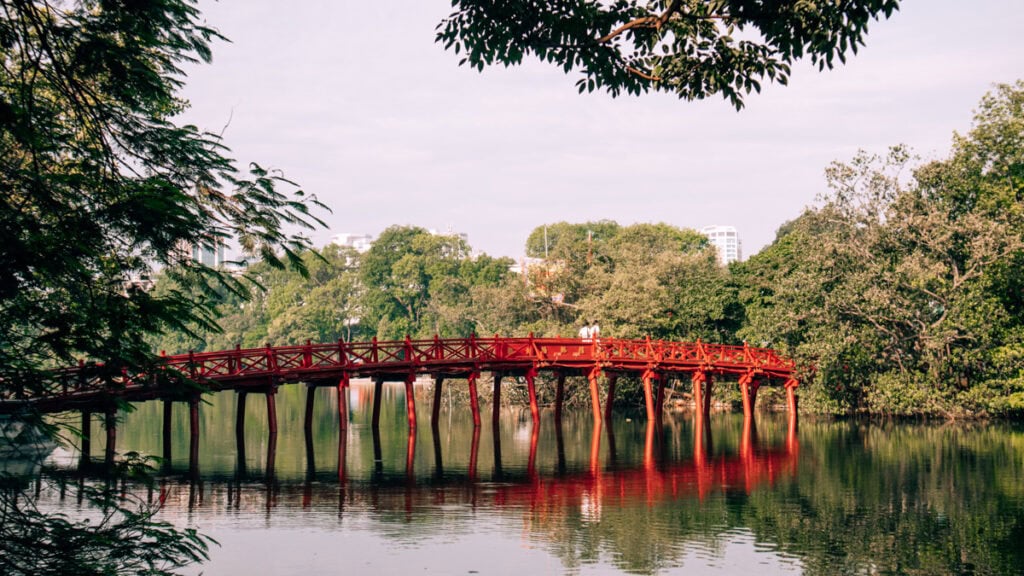
Getting around by foot is fairly easy as soon as you’ve mastered the art of crossing the street. The Grab app is easy and cheap for booking taxi (car and motorbikes), and the hop on – hop off bus covers most of the highlights.
Booking another guided tour can also be a good idea and there are many to choose from. One trip with Local is a local company offering a wide range of tours, from hidden gems in the Old Quarter to real-life stories from the Vietnam/American War.
For one of the next evenings, go see the Water Puppet Theatre. It takes an hour and gives you an excellent introduction to the culture.
And whatever you do, make time for coffee and people watching at one of the many lovely cafés. Vietnamese coffee culture really is something else!

Day 4-5: Cruise the Halong Bay
Is there a more iconic sight in Vietnam than the limestone karsts peaking up from the ocean in Ha Long Bay? However popular it is, I want to argue that no visit to Vietnam is complete without seeing this bay.
There are several ways to do it, but the easiest is to book a cruise including transfer from Hanoi.
What’s not easy is choosing which cruise to pick. There are day cruises, two days and one-night cruises and two-night cruises and nothing less than a sea of operators.
While a day trip from Hanoi is possible, I strongly recommend spending the night on board. Especially after seeing the crowds where the day cruises were docked… Do you have the time and travel together with someone, definitely consider booking 3 days, 2 nights cruise. This will let you explore more of the bay. This is of course also an option when travelling solo, but your experience depends more on the group you end up going with.
Is Halong Bay still worth visiting? Find answers to 9 of the most common Halong Bay questions here.


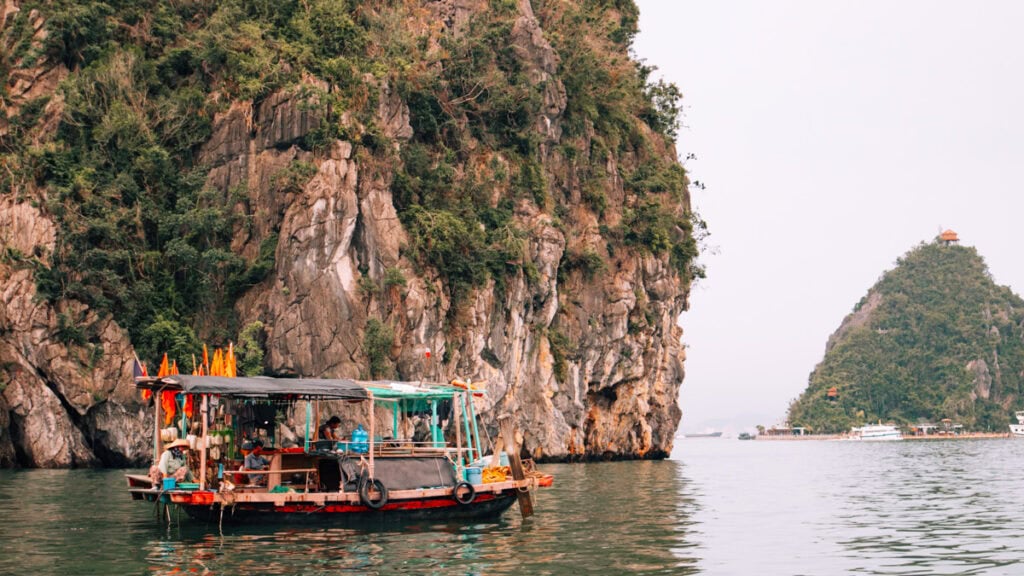
Halong bay, Lan Ha bay or Bai Tu Long bay?
Halong (or Ha Long) Bay is the area originally enlisted as World Heritage, and still by far the most popular to visit. Lan Ha Bay and Bai Tu Long Bay are located a bit further away from Ha Long city and both were included in the UNESCO-protection a few years back.
If you’re afraid that Halong is too crowded, a cruise to Bai Tu Long or Lan Ha Bay can be good options. Just bear in mind that as they are located a bit further away, you may spend more time transferring. If you decide to do a 2 nights cruise, going to either of these two are perfect!
I had originally booked an overnight cruise in Lan Han Bay but missed that this meant approx. minutes by tender boat from/to the quay and more time spent on the ship rather than exploring.

No matter where you go, make sure to check the itinerary thoroughly. It’s also not the part of the trip where you want to skimp.
The Ha Long Bay cruise I ended up going on, when my Lan Ha Bay cruise was cancelled last-minute, was the 5-star Milalux Cruise and I honestly had the best time. We went to all the most popular places in the bay at different times than other ships. For example, we docked at Ten Top Island before anyone else and I was the first person up to the viewpoint that day!

Day 5-7: All about nature in Ninh Binh
When booking your Halong Bay cruise, make sure to also book transfer from Halong to Ninh Binh instead of returning to Hanoi. The drive is about the same length and you’ll be dropped off at your accommodation.
Located just a couple of hours’ away from Hanoi, Ninh Binh is like a different world. Here, you are surrounded by rice fields and nature. And while it certainly isn’t a hidden gem anymore, there’s enough space for everyone.
I recommend booking accommodation near Tam Coc. Even though it’s only a small village, that’s where you’ll find most restaurants, shops, bars etc. I stayed at Tam Coc Village Bungalow and have only good things to say. Being 5-10 minutes’ walk from the main street, it’s close but also quiet.

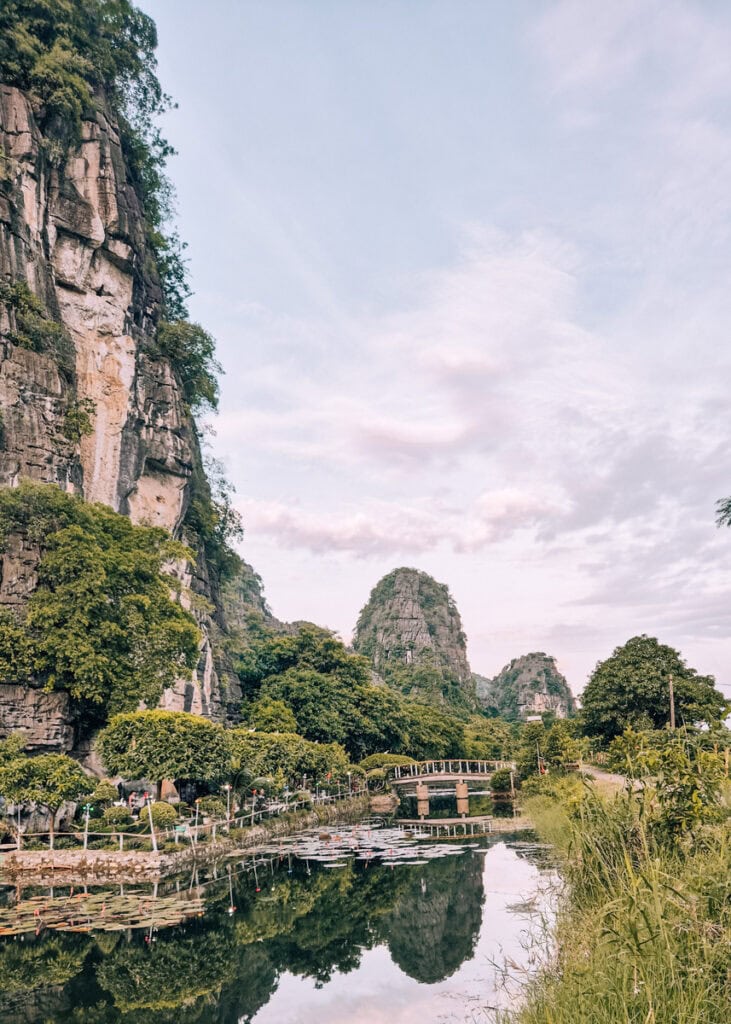


What to do in Ninh Binh
As stated above, Ninh Binh is all about nature. I mean, just look at the photos above…
My best tip is to rent bicycles, or choose accommodation with free bike rental, like I did. This makes it so easy to get around and you’ll experience local life at the same time.
Following this itinerary, you’ll have 2,5 days to explore. This gives you plenty of time for all the must-do attractions:
- Cycle over to the Bich Dong Pagoda and as long as you arrive there before 17:00, walk around the three levels of the temple.
- Walk up the 500 stone steps to the viewpoint at Hang Mua. It’s worth every drop of sweat! Also make sure to check out the lotus fields below if you travel between May – July.
- Take a boat ride in Tam Coc or at the UNESCO-listed Trang An Scenic Landscape Complex. I chose the latter, which is longer than the one in Tam Coc and all 3 routes that you can choose between goes through at least a couple of caves.
- Visit Hoa Lu Ancient Capital near Trang An
- Drop by Tam Coc Ancient House to see how people used to live.
Find all you need to know about things to do in Ninh Binh and much more in my guide here!
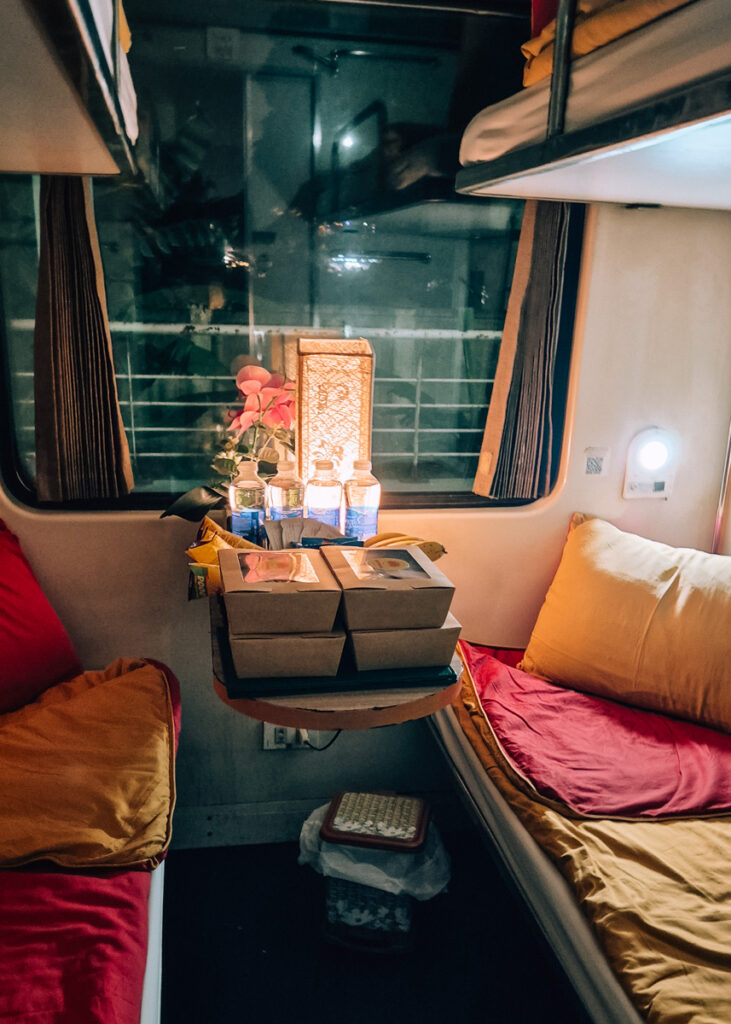

Night train from Ninh Binh to Dong Hoi
To get to your next destination, Phong Nha, from Ninh Binh the easiest and most cost-effective way to travel is by night train.
After hours of research, I decided to book with Lotus Train. It’s a private company operating on public trains. Although it’s technically the same train, their facilities are supposed to be more comfortable than others. You can book tickets on 12 Go Asia, directly on Lotus Train’s website, or directly via WhatsApp. I booked through WhatsApp as I was almost too late to the game and got the last bed available.
The train departs from Ninh Binh Railway Station around 22:00 and you should be there at least 30 minutes before. Just get your accommodation in Tam Coc (or Trang An) to order a taxi for you.


What is the train ride like?
Bording the train and finding my cabin was unproblematic. I shared it with 3 guys, one French, one Belgian and one Japanese. As the French dude came from Hanoi and had already gone to bed, lights were off pretty quickly – but not before the conductor popped in to offer the complimentary beer or wine.
The ride is noisy and bumpy, and the beds are not the softest, but with earplugs I slept surprisingly well.
Waking up early the next morning for the scheduled arrival at 05:40, I got the beautiful view of the sun rising over the countryside. And with good company and the included breakfast box, the one-hour delay went quickly.
Dong Hoi, where you depart the train, is located about 45 kilometres (1 hour drive) from Phong Nha. And even though it’s possible to travel by bus, I highly recommend booking pick-up. Most accommodations in Phong Nha will offer this. Because, who wants to hang around a station waiting for a bus at 6am?
Read my full review of the Lotus Train adventure here!

Day 8-11: The caves of Phong Nha
Phong Nha Ke Bang is the closest you’ll get to a hidden gem on this 3-week Vietnam itinerary. That said, you won’t be the only tourists here either. When I visited in July, there were definitely other western tourists, but the majority were domestic tourists.
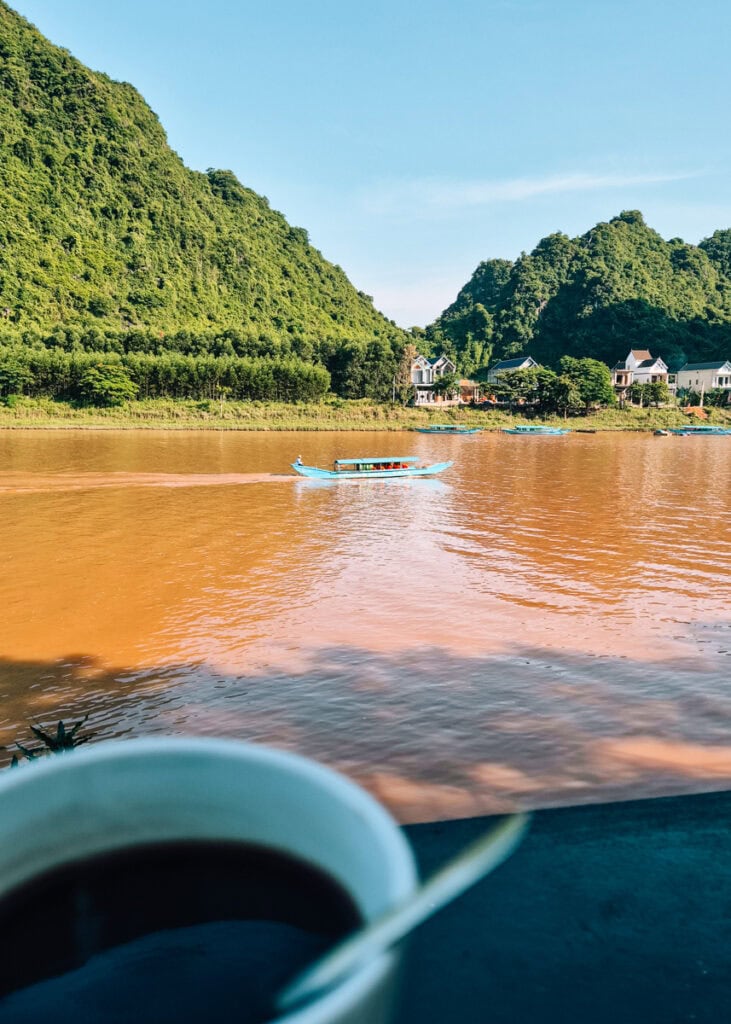
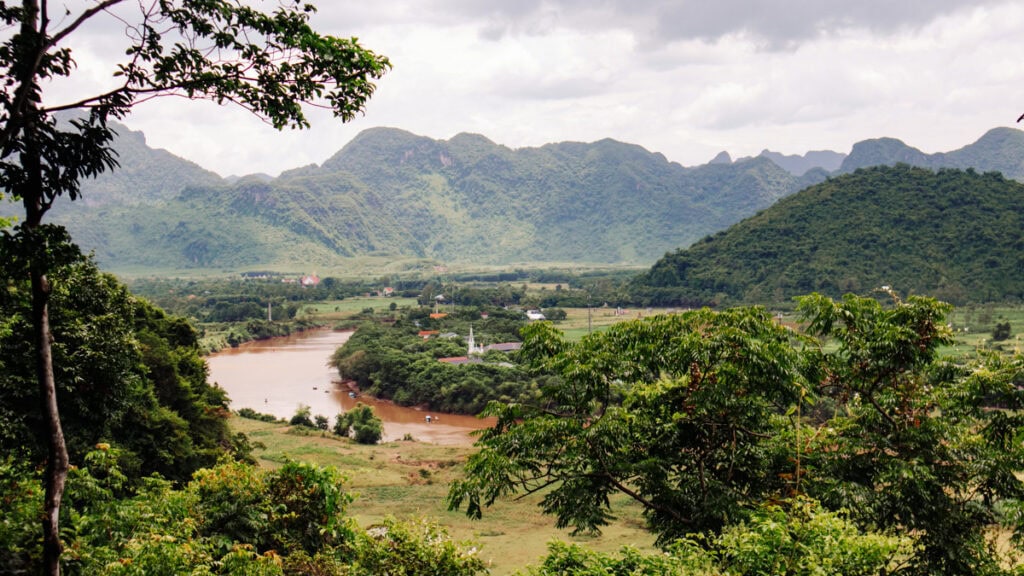
So why have I added this destination to the itinerary? Because of Phong Nha’s truly spectacular nature. Not only are the mountains beautiful to look at from the outside but just wait till you see the inside!
Phong Nha Ke Bang National Park is home to over 400 caves. One of them, the Hang Son Doong, is actually the largest cave in the world.
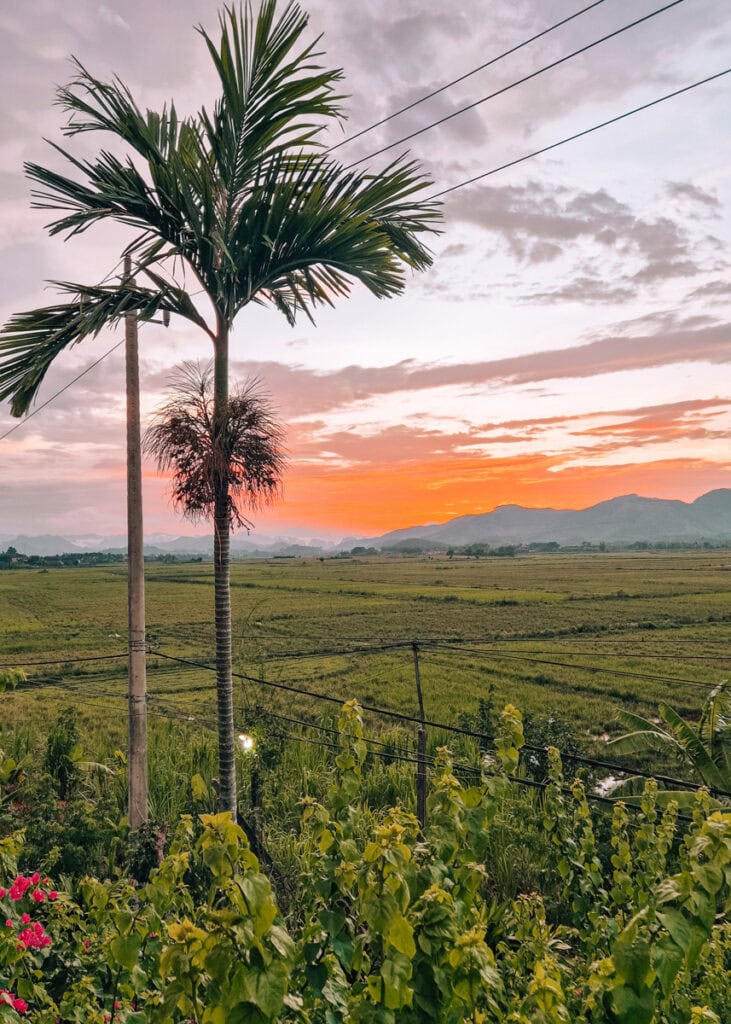
There are various places to stay in the town centre, mainly homestays, and many of them have balconies with scenic views of the river. However, consider staying at Phong Nha Farmstay – situated in rural surroundings, 10 kilometres from the centre. It’s not a typical budget friendly Vietnamese hotel, but well worth every VND for the comfort, amenities, ambience and people.

Things to do in Phong Nha
So, you probably got it. Going underground discovering the caves are the main attraction in Phong Nha. If you want to visit the world’s largest cave, Hang Son Doong, you need to plan well in advance. And let’s be honest, this isn’t the itinerary for you. You can go there on a multi-day guided hiking tour to the cost of 3.000 USD. Per August 2025 it’s fully booked until January 2027.
So, if not the largest, what caves can you visit?
With 3 full days, I recommend:
- Day 1: Visit Phong Nha Cave by boat from the town centre. While you’re there, walk the 500 steps up to the Tien Son Cave (so, so worth it).
- Day 2: Explore the surroundings either by bicycle or motorbike and/or hang out by the pool at Phong Nha Farmstay. You’ll want some down-time after the last week’s sightseeing.
- Day 3: Visit Paradise Cave and the Botanical Garden. The garden is less garden, more easy hiking trails to waterfalls and ponds where you can swim in the National Park. If you want more caves or more action, visit the Dark Cave too. The last one includes swimming and a zipline.
On day 3 you either need a motorbike, an easy driver (a local driver) or booking a tour. I went with one of Farmstay’s easy drivers and will 10/10 recommend it.
Read my guide to Phong Nha here!
What about The Duck Stop?
The Duck Stop is another popular place to visit in Phong Nha (some say more popular than the caves among the younger crowd). I’m not a fan of animal attractions and from what I’ve heard the place has become so busy the ducks get stressed. You do you, but this didn’t sound like something I wanted to contribute to.
Day 11-13: Historic Hue
Next stop is Hue, a semi-large city in Central Vietnam. Getting there from Phong Nha is easy and you don’t need to book it in advance, all accommodations can sort it out for you. Choose between regular bus, limousine bus (minibus with comfy seats), private car or the DMZ bus.
The DMZ bus stops at the Demilitarization Zone on what was the border between North and South Vietnam during the war, approx. half-way. This was one of the most heavily bombed regions, and you get to see some of the underground Vinh Moc tunnels where people lived in for long parts of 6 years up close. I opted for this option, and while it was more expensive than the other buses, it was worth it. And I was still in Hue by lunch time.


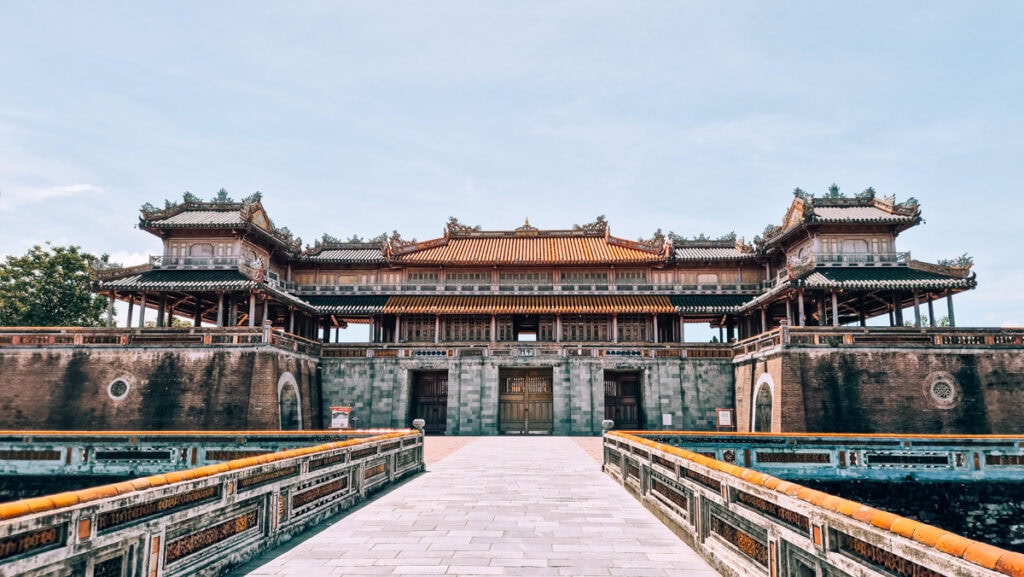
Hue is a real paradise for history buffs. It was the seat of the Nguyen Dynasty, the last imperial dynasty in Vietnam, from 1802 to 1945. In and around the city centre, you find the grand imperial citadel, royal tombs and centuries-old pagodas. Many of them designated by UNESCO.
And while the historic sights may be Hue’s number one attraction, it’s also famous for tasty food. Spend one of your evenings on a food tour to get a sample!
Read my guide to two days in Hue here!

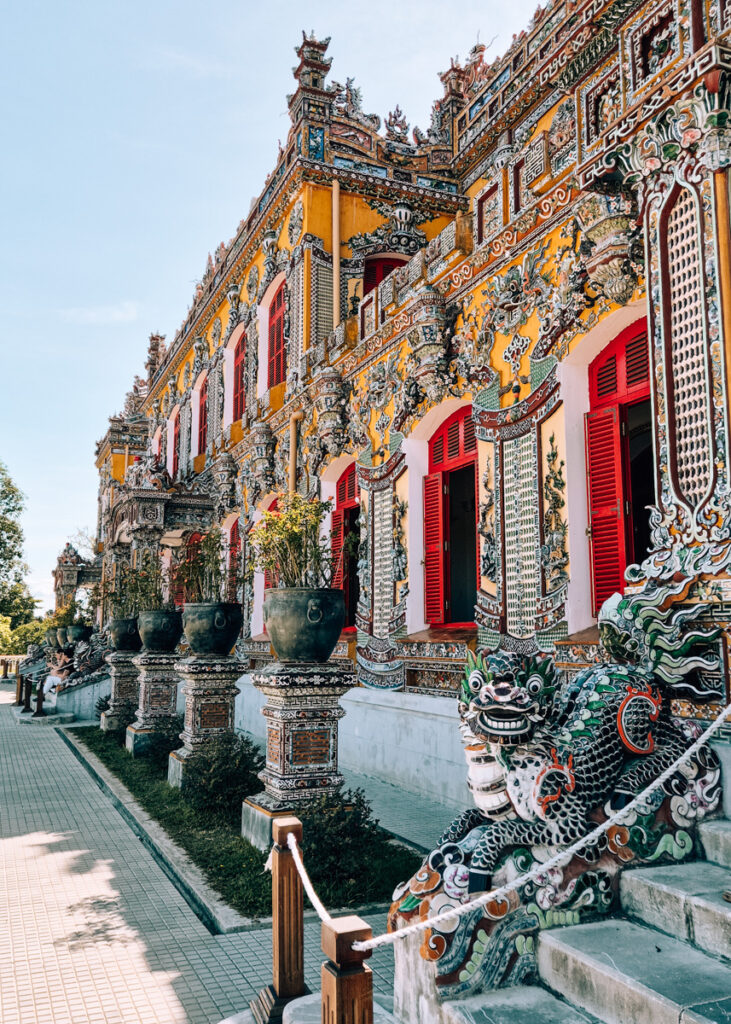


How to spend your time in Hue
1,5 days is just about enough time to see Hue’s major sights without stress. Since you likely arrive mid-day, fuel up with lunch before heading to the Imperial Citadel. The Citadel is huge and it’s possible to spend a full day here, but if you’re like me, 2-3 hours is enough. Especially in 40 degrees Celsius and over 80% humidity…
I recommend booking a guide (I didn’t and wish I had), but if not, at least rent an audio guide (this, I did).
For your full day, it’s time to see the places outside of the city centre. You’ll need a driver or a guided tour to get around. If you go for a private tour with a driver, it’s a big plus if they also guide. I booked a driver through I love Hue tours, which is a network of professional female guides / drivers on motorbikes.
The highlight of this day is exploring the tombs of the former Nguyen emperors. Pick 2-3 and purchase a combination ticket at the Citadel the day before. I went to the tombs of Khai Dinh and Tu Duc, which are both beautiful and showed great variation.
In addition to the tombs, a visit to the Thien Mu Pagoda is a must. The Thanh Toan tile-roofed bridge is an interesting place, and if you come here in the morning, you can drop by an authentic local market with no other tourist in sight.

Day 13-20: Unwind in Hoi An
After close to 2 weeks filled with sightseeing, it’s now time to relax for a bit. In this itinerary for 3 weeks in Vietnam, I have allowed a full week in Hoi An. If you’re short on time, you can easily reduce this to 5 days and still have time for both exploration and chilling on the beach.
But first, you need to get to Hoi An from Hue. There are several alternatives some more scenic than the others. Between the two destinations are the Hai Van Pass, and this is the route to take if you want spectacular scenery. If this is you, choose between bus tour, tour by private car, self-drive by motor bike or book a tour with an easy rider. The tours normally take a full day with several stops.
The train also offer great views, but bear in mind that it stops in Da Nang close to an hour’s taxi tour from Hoi An.
I really wanted to do an easy rider tour over the mountain pass, but it was so hot I opted for the quickest route to the beach. This means bus, limousine bus, private car or, as I did, a shared private car going on the highway between the two cities. It takes approx. 3 hours from door to door.
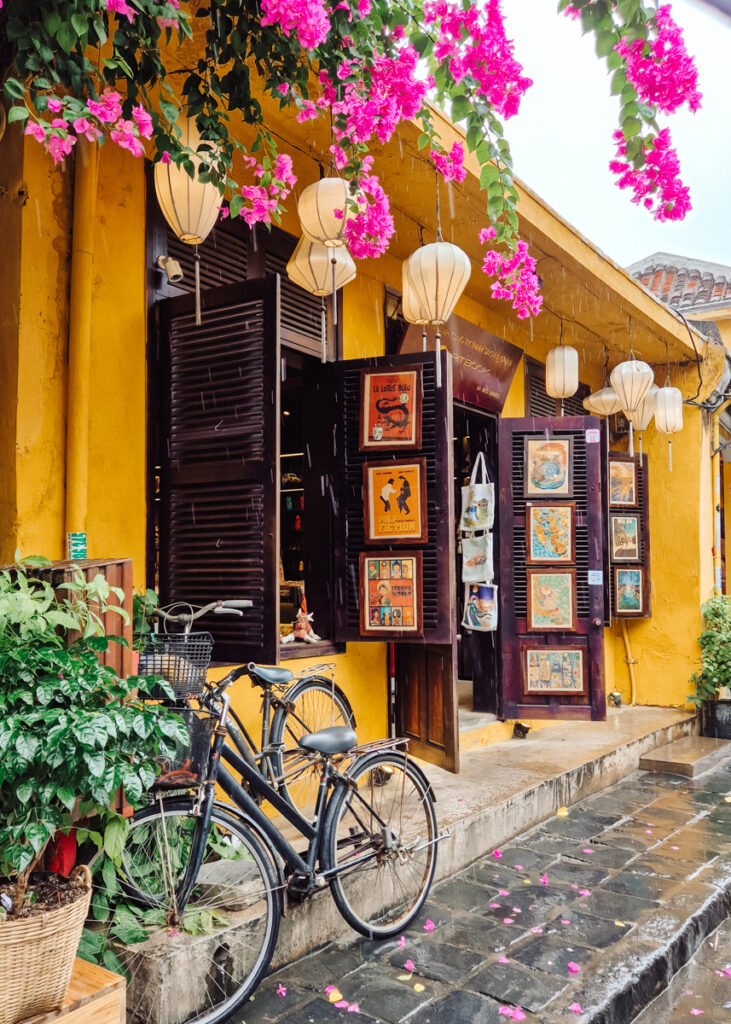
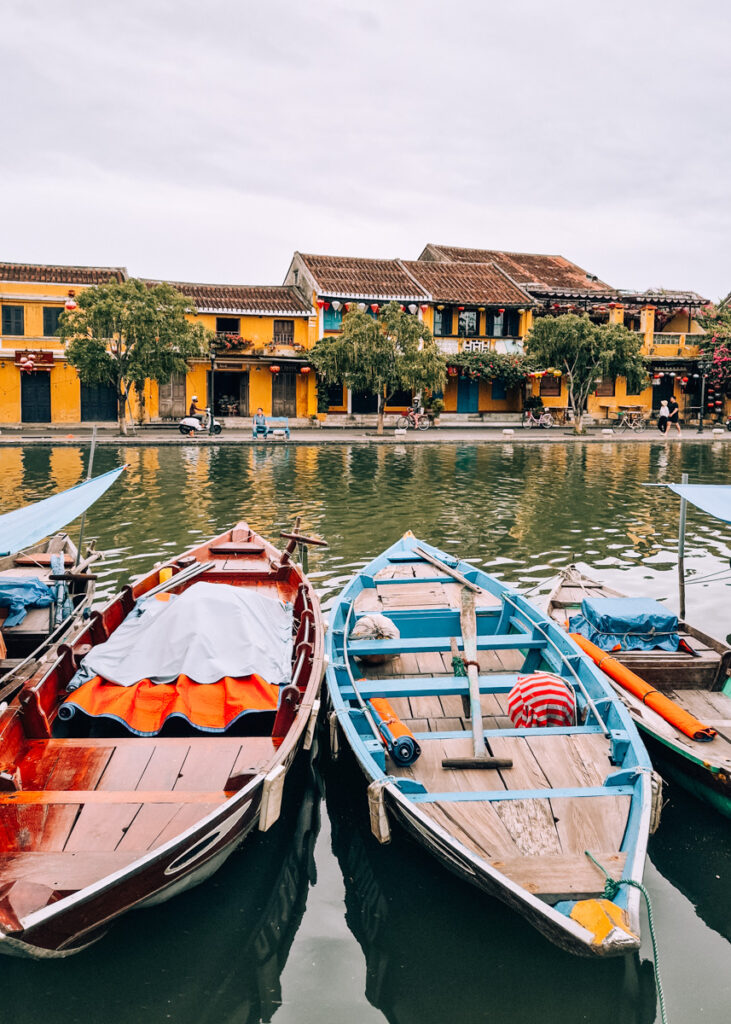

Why spend a full week in Hoi An?
In my opinion, Hoi An is the perfect place to use as a base to explore the surrounding area. The ancient town is undeniably stunning, but it’s also undeniably busy. Some may say that because of this a day trip is enough. Well. I’d say, because of this you need more time so that you can visit at different times of the day.
In addition to the old town, An Bang Beach is just a short bike ride away and the city is surrounded by rice fields and farmland. There are also so many attractions to visit in the vicinity worth seeing.
I’d planned to stay here 5 nights, but on day 3 I change my plans and extended my stay till 8 nights. And I could easily have spent another week!
So, where should you stay? Near the ancient town or at the beach? My recommendation is to stay between the two. I stayed at Hoi An Golden Holiday Hotel & Spa and cannot recommend it enough. They have plenty of bicycles to borrow free of charge, making it easy to go back and forth between the town centre and the beach.
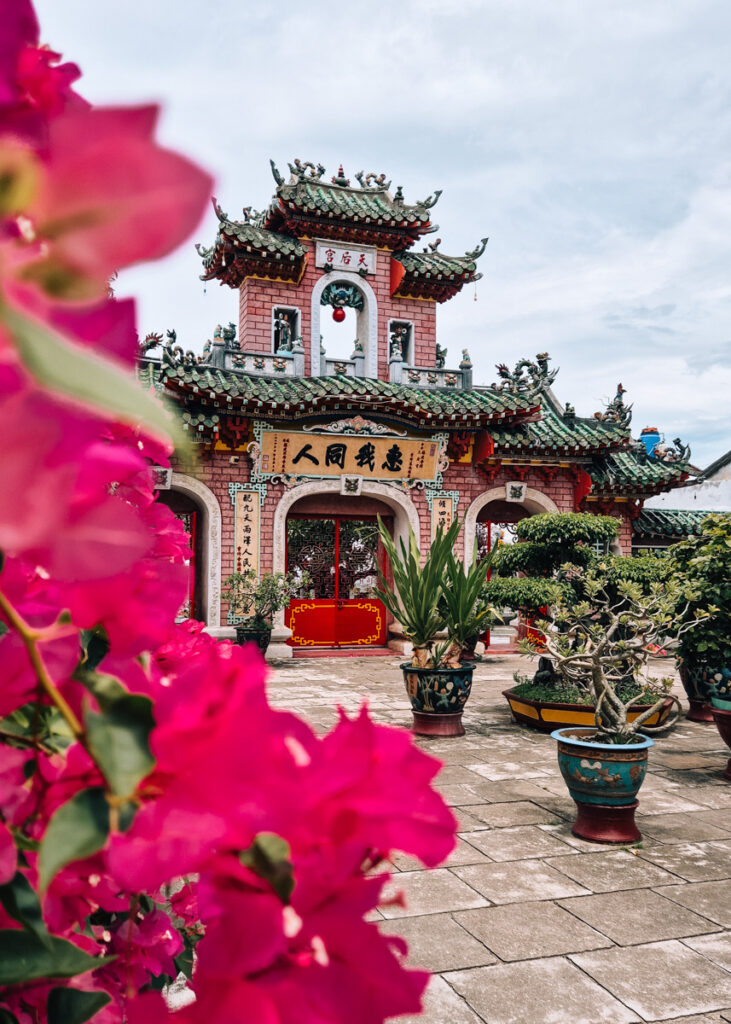



What to do in Hoi An
What I really loved about Hoi An, was how easy it was to do several different things in one day without it feeling rushed.
Other than lounging on the beach and strolling around the charming centre, here are some examples of fun and interesting things to do in Hoi An:
- Guided tour of the Ancient Town: The best way to understand the city’s long and interesting history
- Cycle tour in the countryside: Preferably a guided tour with stops at different craft families
- Boat trip in the Coconut Forest: If you can, try to find a tour away from the most popular areas
- Visit My Son Sanctuary: A UNESCO World Heritage site an hour’s drive from town
- Day trip to the Cham Island: A fun day out with snorkling and beach life
- Half-day trip to Da Nang: visit Marble Mountains, Lady Buddha, Monkey Island and the An Phu Cave
- Get tailor-made clothes: Hoi An is famous for its many excellent tailors
- Full or half day tour to Ba Na Hills and the Golden Bridge: Some say afternoons are less crowded
- Lantern making workshop: Instead of just buying a lantern, why not make it yourself?
- Join a cooking class: Test your cooking skills and learn the secrets behind Vietnam’s fantastic cuisine.


Most days, I spent the morning exploring before I cycled out to the beach for a relaxing afternoon. Then, after a shower and some down-time at the hotel, I walked into the town centre for a rooftop drink and dinner and took a Grab back in time for bed.
Tip: If you feel stressed about the evening crowds in the centre, head up to one of the many rooftop bars (just not Faifo, it’s equally crowded). The restaurants were also surprisingly chill compared to the busy streets.

Day 20-22: Big city vibes in Ho Chi Minh City
Your Vietnam adventure is about to come to an end, but luckily you have a couple of days left to explore Ho Chi Minh City. Vietnam’s largest city. If you thought traffic was crazy in Hanoi, wait till you see Saigon’s streets!
I usually don’t like to do domestic flights when I travel, but following this itinerary there isn’t much of a choice. Although Da Nang is an international airport, I couldn’t find any good alternatives from there to Europe without stopping in Hanoi or HCMC.
How much time you have available here depends on when your flight from Da Nang arrives and your flight home departs on the last day. I arrived at lunch time and departed in the evening, and had just over 2 days in total.
The airport in HCMC is infamous for being slow on international arrivals and departures (domestic is fine), combined with the already mentioned traffic, this means you should plan to leave your hotel 3-4 hours before your flight home. It took me 60 minutes to travel the 7,5 kilometres from my hotel to the airport by taxi at rush hour…


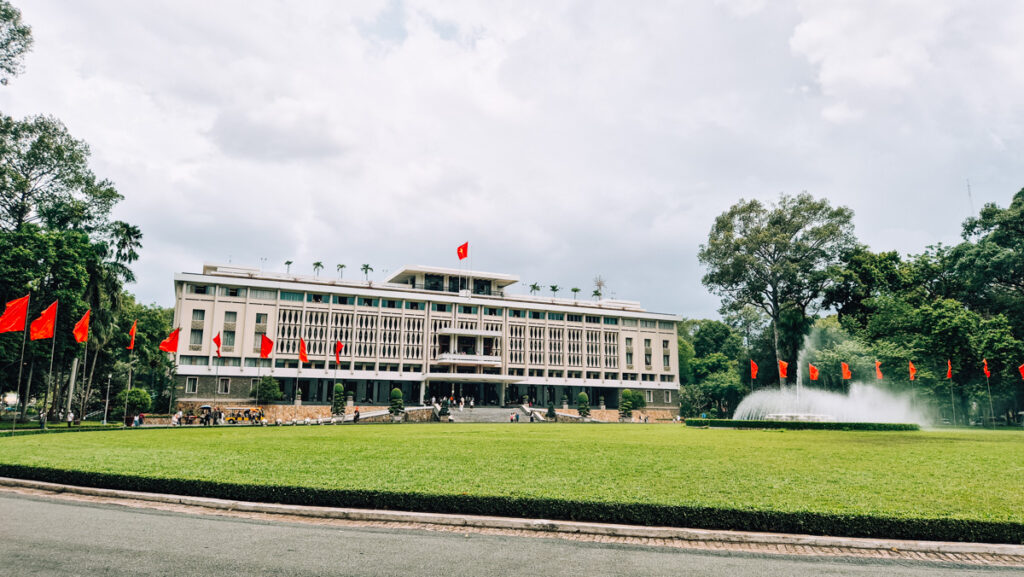
Things to do in Saigon
No matter when you land on the first day and leave on the last day, you still have one full day in the city. How you want to spend it is up to you. If you’re up for more adventures and seeing more of the southern part of the country, you can book a day trip to the Mekong Delta.
I chose to just stay in the city centre and explore at my own pace and relax by my hotel’s rooftop pool. If I were to re-live these days, this is what I’d do:
Day 1 (afternoon/evening): Walk around and get to know the city, drop by Ben Thanh market and have a drink at the Café Apartment building before joining a food tour in the evening
Day 2: Book XO Tour’s The Sight of Saigon tour in the morning. The tour takes you to some famous landmarks as well as places you’re unlikely to find on your own.
In the afternoon, visit the War Remnants Museum and the Independence Palace. The museum is though, but in my eyes a must to visit.
For dinner, head to one of the Pizza 4P’s. I know it’s your last day, but if you like pizza you should at least visit one of their restaurants during this tour. The burrata is fantastic!
Day 3: Book a morning tour to the Cu Chi Tunnels for more war history and relax or do some last-minutes shopping before it’s time to leave.
My best tip for an evening flight
Book acommodation for the last night, even if you check out in the afternoon. Hotel prices in HCMC are a bit steeper than the rest of the country, but having your room untill it’s time to leave for the airport is gold!

Would you rather see more of the north?
I get it, the mountain regions in northern Vietnam looks nothing but spectacular. And if you travel at a time of the year where going there makes more sense than spending a lot of time in central Vietnam (autumn), I definitely think you should consider it. At least I would.
If you want to spend most of your time up north, you should find a completely different itinerary to follow. If you just want a few days in Sa Pa seeing the ricefields and do some hiking or do a tour on the Ha Giang loop, you should go there directly from Hanoi. Then continue with this itinerary, but instead of taking the train to Dong Hoi and visit Phong Nha, go straight to Hue or Da Nang / Hoi An depending on how many extra days you spent in the north.
Another alternative, if backtracking to Hanoi sounds like a waste of time, is to go from Hanoi to Mai Chau and/or Pu Luong. These two regions are not as well known as Sapa (especially Pu Luong) but are known for their beautiful ricefields and hiking as well as authentic villages. From there, you can go directly to Ninh Binh and continue south from there. You may want to skip or reduce your time in Phong Nha. This alternative means you will miss Ha Long Bay.
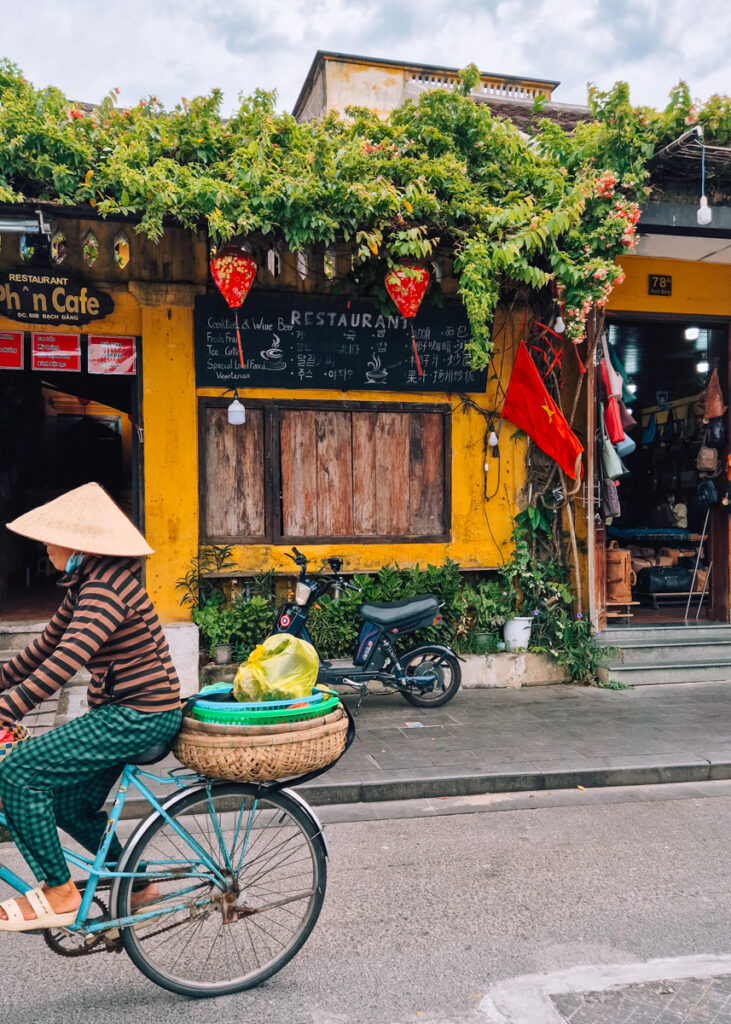
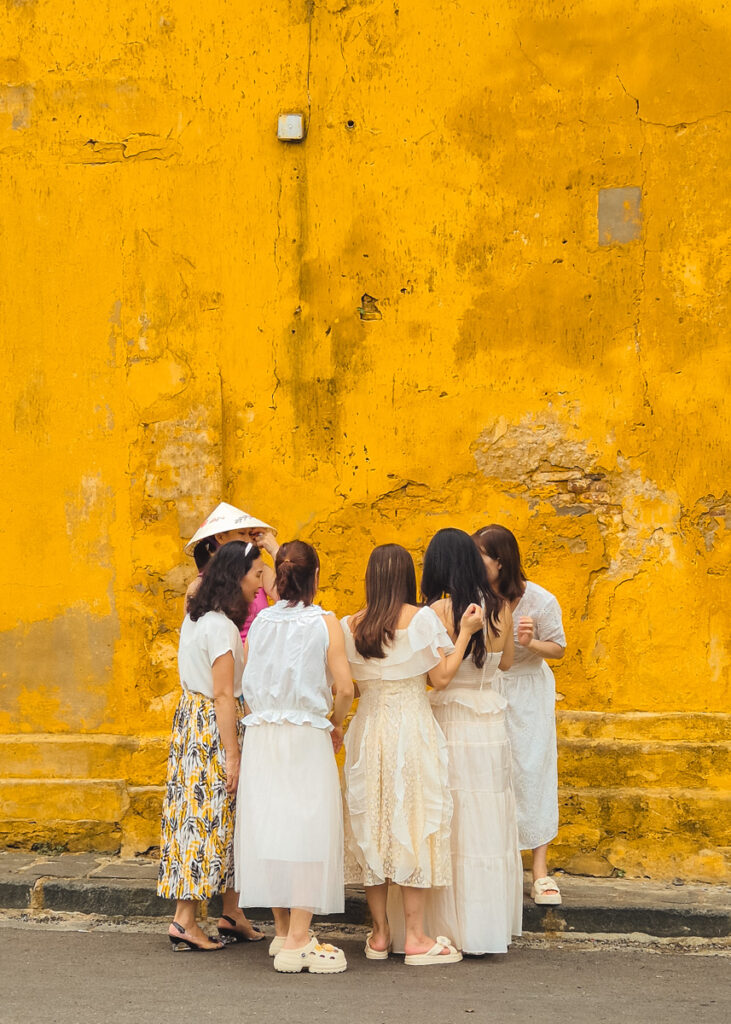
What is the best time to do this Vietnam itinerary?
Vietnam is a difficult country to plan a holiday in when it comes to the weather. The three regions, North, Central and South, have different climates. Where the North has 4 seasons and gets quite cold in winter, the central and southern part have wet and dry seasons at different times. That said, as long as there are no big storms coming in and you’re prepared for some rain, you can do it all year.
The absolute best chance for good weather throughout the whole country is in Mid-February – April.
I visited in July when it’s hot and dry on Central Vietnam and wet season in North and South. However, according to what I’ve heard it isn’t too rainy or stormy in the North untill the second part of July. Meaning June – mid-July is fine. This is also my experience from the summer 2025, I only experiences a couple of brief showers in Hanoi.
If you decide to travel during the summer, June – August, be prepared for high temperatures and high humidity. But if I, used to Norwegian climate, can do it without problems, I believe most people can.
How to survive the summer heath and humidity?
Early mornings are your best friend! Try to get up when the locals do (or at least not long after) and take a siesta after lunch instead. Staying out all day trying to do and see everything will burn you out fast. And yes, I’m speaking from experience…

Conclusion
If you’ve read this far, I hope the article has helped you plan your own Vietnam adventure. It is such an incredible country with so much to see and do, from stunning nature to interesting historic cities to beautiful beaches. The largest problem when travelling here, is narrowing down the number of places to visit.
Because even though you technically can fit more destinations into your itinerary, visiting Vietnam is not just about ticking attractions off a list. It’s about getting to know the people and the culture in the places you visit too.
You need time to drink the coffee, eat the food, meet people, ask questions, say yes to invitations and do the guided tours.
And you need time to process everything as you go.
I did this exact 3 week Vietnam itinerary in July 2025. And looking back now, I wouldn’t have changed a thing.
I’m definitely not finished with Vietnam though. Next time, I want to explore more of the northern parts!
For more information and inspiration, check out the rest of my Vietnam articles and feel free to contact me in a comment below, by e-mail or on Instagram with any questions!


Very interesting- thank you .
Any advice for a peaceful few days by a gorgeous beach after a frenetic time in ho chin minh ?